

Is DTE’s Detroit Microgrid Partnership Quietly Reframing Its Grid Modernization Story (DTE)?
DTE Energy Company DTE | 0.00 |
- In May 2026, Delta Electronics announced it had commissioned a Detroit-area microgrid at its own facility, built with DTE Energy and DOE support, combining 425 kW of solar, on-site battery storage, advanced power electronics, and EV charging through a 13.2 kV DTE medium-voltage interconnection.
- This setup not only cuts the site’s grid usage by about half but also creates a live testbed for grid-interactive technologies that can inform how commercial users and utilities manage reliability, costs, and clean energy integration.
- Next, we’ll assess how this live medium-voltage microgrid partnership could influence DTE Energy’s investment narrative around grid modernization and renewables.
Explore 27 top quantum computing companies leading the revolution in next-gen technology and shaping the future with breakthroughs in quantum algorithms, superconducting qubits, and cutting-edge research.
DTE Energy Investment Narrative Recap
To own DTE Energy, you need to be comfortable with a regulated utility leaning into large, capital intensive grid and clean energy projects, while still relying on steady earnings and dividends. The new Delta microgrid looks directionally helpful for DTE’s grid modernization and data center ambitions, but it does not appear to change the near term earnings catalyst from rising electric demand, nor the biggest current risk around cost recovery and regulatory lag on its large capex plan.
The most relevant recent announcement alongside this microgrid news is DTE’s Q1 2026 earnings and reaffirmed 2026 operating EPS guidance of US$7.59 to US$7.73, which anchors expectations as these grid modernization and renewable projects progress. That guidance gives investors a concrete reference point while DTE pursues advanced technologies like medium voltage microgrids that could shape how it eventually serves high load customers such as data centers.
Yet investors also need to weigh the risk that future rate cases may not fully keep pace with DTE’s rising capital needs...
DTE Energy’s narrative projects $16.8 billion revenue and $2.1 billion earnings by 2029. This assumes fairly flat yearly revenue growth and roughly a $0.8 billion earnings increase from $1.3 billion today.
Uncover how DTE Energy's forecasts yield a $160.25 fair value, a 10% upside to its current price.
Exploring Other Perspectives
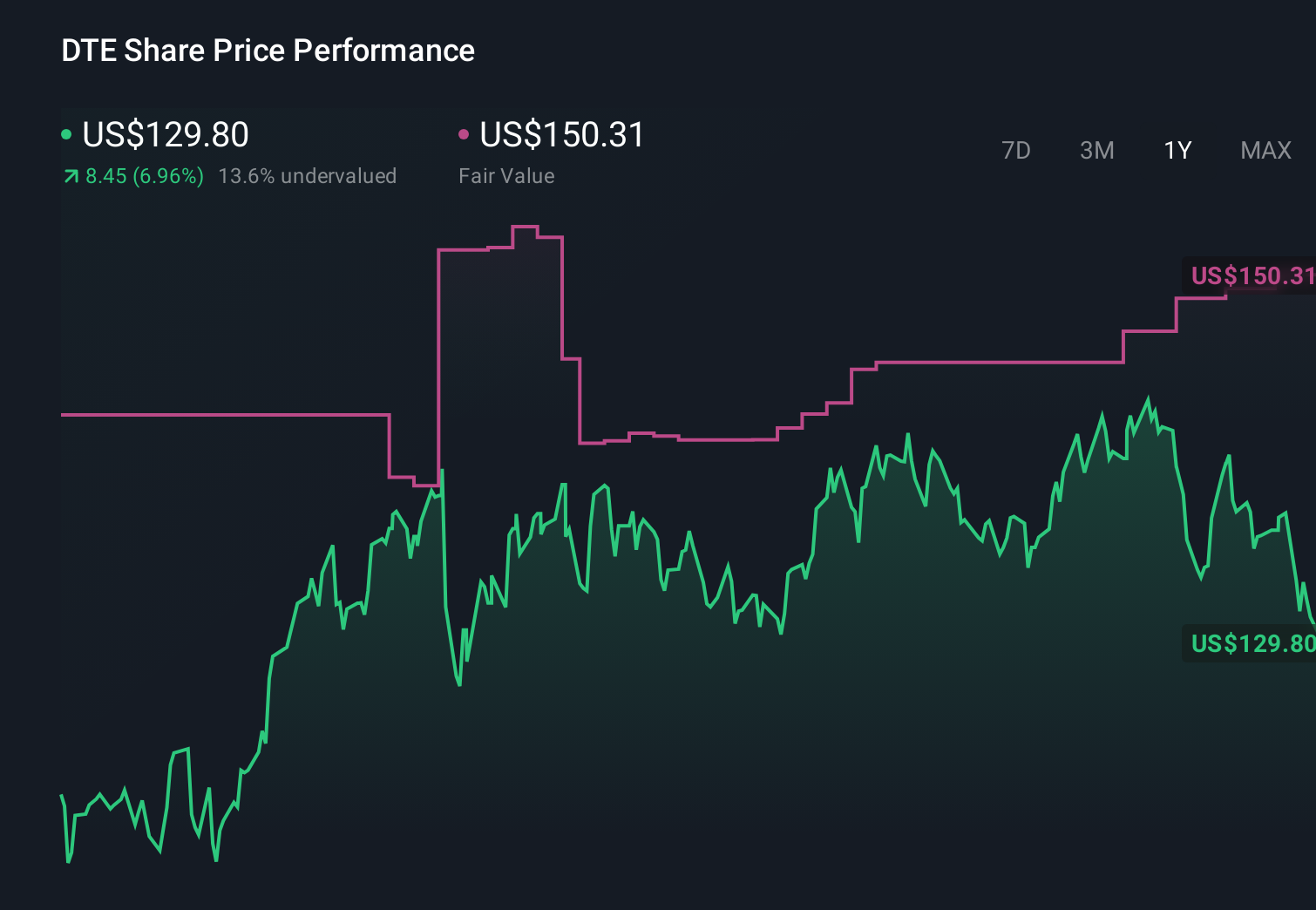
Four members of the Simply Wall St Community currently see DTE’s fair value between US$106.08 and US$160.25, showing a wide spread of conviction. You can set those views against DTE’s heavy grid investment plans, where any regulatory pushback on cost recovery could matter a lot for future returns.
Explore 4 other fair value estimates on DTE Energy - why the stock might be worth 27% less than the current price!
Reach Your Own Conclusion
Disagree with existing narratives? Extraordinary investment returns rarely come from following the herd, so go with your instincts.
- A great starting point for your DTE Energy research is our analysis highlighting 2 key rewards and 3 important warning signs that could impact your investment decision.
- Our free DTE Energy research report provides a comprehensive fundamental analysis summarized in a single visual - the Snowflake - making it easy to evaluate DTE Energy's overall financial health at a glance.
Searching For A Fresh Perspective?
Early movers are already taking notice. See the stocks they're targeting before they've flown the coop:
- Uncover the next big thing with 25 elite penny stocks that balance risk and reward.
- Find 49 companies with promising cash flow potential yet trading below their fair value.
- We've uncovered the 10 dividend fortresses yielding 5%+ that don't just survive market storms, but thrive in them.
This article by Simply Wall St is general in nature. We provide commentary based on historical data and analyst forecasts only using an unbiased methodology and our articles are not intended to be financial advice. It does not constitute a recommendation to buy or sell any stock, and does not take account of your objectives, or your financial situation. We aim to bring you long-term focused analysis driven by fundamental data. Note that our analysis may not factor in the latest price-sensitive company announcements or qualitative material. Simply Wall St has no position in any stocks mentioned.