

Assessing Disc Medicine (IRON) Valuation After New Trial Data And Expanded Access Program News
Disc Medicine IRON | 0.00 |
Disc Medicine (IRON) has drawn fresh attention after presenting updated Phase 2 RALLY-MF data on DISC-0974 at ASCO, alongside launching a U.S. expanded access program for bitopertin in rare erythropoietic disorders.
The updated trial data and expanded access program arrive after a softer patch for the stock, with the share price at US$67.0 and a year to date share price return down 15.29%. However, the 1 year total shareholder return of 30.30% and 3 year total shareholder return of 37.15% indicate that longer term holders have still seen positive outcomes as the market responds to shifting expectations around Disc Medicine’s clinical pipeline and risk profile.
If this kind of clinical momentum interests you, it can be worth scanning other potential opportunities through the Simply Wall St screener for 38 healthcare AI stocks
Disc Medicine is trading at US$67.0 after a softer run, yet still carries solid multi year shareholder returns and a large apparent discount to analyst and intrinsic estimates. The key question for investors is whether there is still a buying opportunity here or if the market is already pricing in future growth.
Preferred Price to Book Ratio of 3.7x: Is it justified?
Disc Medicine is trading on a P/B of 3.7x, compared with a peer average of 5.2x and a broader US Biotechs industry average P/B of 2.3x.
The P/B ratio compares the market value of the equity to its book value on the balance sheet, which can be a useful reference point for pre revenue and loss making biopharmaceutical companies where earnings based multiples are less meaningful.
Based on Simply Wall St data, Disc Medicine is considered good value relative to its peer group at 3.7x versus 5.2x. However, it looks expensive compared with the wider US Biotechs industry at 2.3x. The SWS DCF model also indicates the stock is trading at a very large discount to an estimated future cash flow value of $152.95. This suggests the market is weighing up a mix of high forecast revenue growth, ongoing losses and clinical risk when assigning the current multiple.
Result: Price-to-book of 3.7x (ABOUT RIGHT)
However, current losses of US$241.603 million and the continued share price fall of 15.29% year to date could quickly challenge any optimistic valuation thesis.
Another View: DCF paints a very different picture
While the P/B of 3.7x looks roughly in line with what you might expect for a higher risk biotech, the SWS DCF model is far more aggressive and suggests fair value around $152.95 per share versus the current $67.0. That gap raises a simple question: is the market too cautious about Disc Medicine’s future cash flows, or is the model too optimistic?
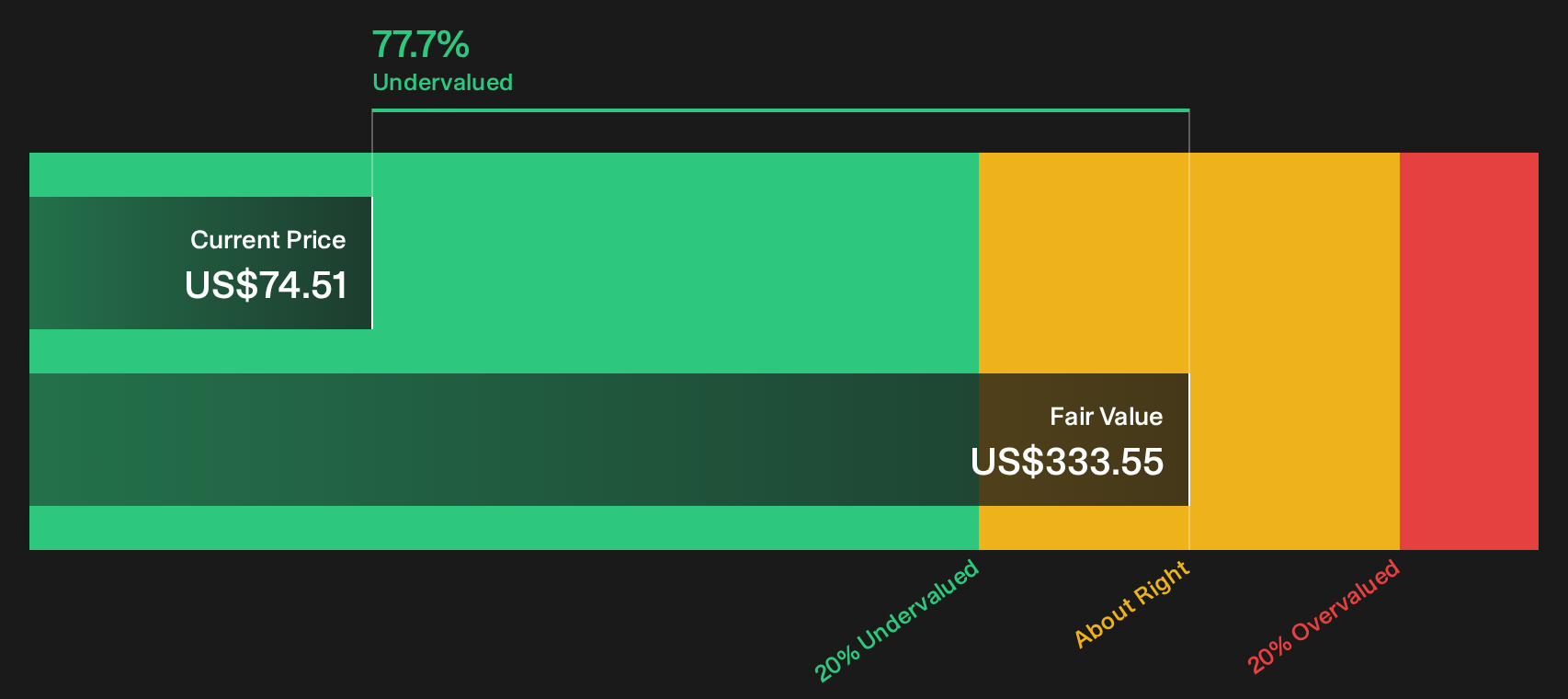
Simply Wall St performs a discounted cash flow (DCF) on every stock in the world every day (check out Disc Medicine for example). We show the entire calculation in full. You can track the result in your watchlist or portfolio and be alerted when this changes, or use our stock screener to discover 48 high quality undervalued stocks. If you save a screener we even alert you when new companies match - so you never miss a potential opportunity.
Next Steps
With mixed signals across valuation, clinical progress and recent share price moves, it helps to see the full picture yourself rather than rely on a single metric. To weigh up both the upside potential and the issues investors are worried about, start by reviewing the 2 key rewards and 2 important warning signs
Looking for more investment ideas?
If you are serious about finding your next opportunity, do not stop at one stock. Use targeted screens to spot setups that fit your style before others do.
- Zero in on potential high risk high reward opportunities by reviewing 24 elite penny stocks with strong financials early in their journey.
- Focus on quality at a reasonable price by using the 48 high quality undervalued stocks to see which stocks combine fundamentals with attractive pricing.
- Prioritize sleep at night holdings by scanning the 63 resilient stocks with low risk scores that score well on resilience and downside protection.
This article by Simply Wall St is general in nature. We provide commentary based on historical data and analyst forecasts only using an unbiased methodology and our articles are not intended to be financial advice. It does not constitute a recommendation to buy or sell any stock, and does not take account of your objectives, or your financial situation. We aim to bring you long-term focused analysis driven by fundamental data. Note that our analysis may not factor in the latest price-sensitive company announcements or qualitative material. Simply Wall St has no position in any stocks mentioned.