

Is Warner Music Group’s AI Licensing Fight With Musicians Reframing Its Artist Partnership Model (WMG)?
Warner Music Group WMG | 0.00 |
- Warner Music Group recently faced a lawsuit from the American Federation of Musicians, which claims the company licensed sound recordings for AI training without properly compensating or informing union musicians about how their work was used.
- Beyond potential financial exposure, the dispute highlights how Warner Music’s push into AI-related licensing could test its relationships with artists and unions at a time when control over music data is increasingly sensitive.
- Next, we’ll examine how this AI licensing lawsuit, and its implications for artist relations, could reshape Warner Music Group’s investment narrative.
Capitalize on the AI infrastructure supercycle with our selection of the 48 best 'picks and shovels' of the AI gold rush converting record-breaking demand into massive cash flow.
Warner Music Group Investment Narrative Recap
To own Warner Music Group, you need to believe its global catalog and artist roster can keep turning streaming and licensing into durable cash flows, while heavy A&R and catalog investment eventually pay off. In the near term, the most important catalyst is how effectively WMG monetizes new formats like AI and film or TV tie ins. The AFM lawsuit adds a meaningful risk around AI licensing practices and artist relations, but it does not yet alter the core streaming focused thesis.
One recent move that ties directly into this story is WMG’s early partnerships with AI music platforms such as Suno and Udio, now at the center of the AFM complaint. These AI licensing deals had been viewed as a potential new, higher margin revenue stream, complementing traditional streaming and content partnerships with Netflix and Paramount. How the lawsuit is resolved could influence both the economics and the terms of any future AI related agreements...
Warner Music Group's narrative projects $8.3 billion revenue and $974.4 million earnings by 2029. This requires 5.4% yearly revenue growth and about a $527 million earnings increase from $447.0 million today.
Uncover how Warner Music Group's forecasts yield a $38.12 fair value, a 27% upside to its current price.
Exploring Other Perspectives
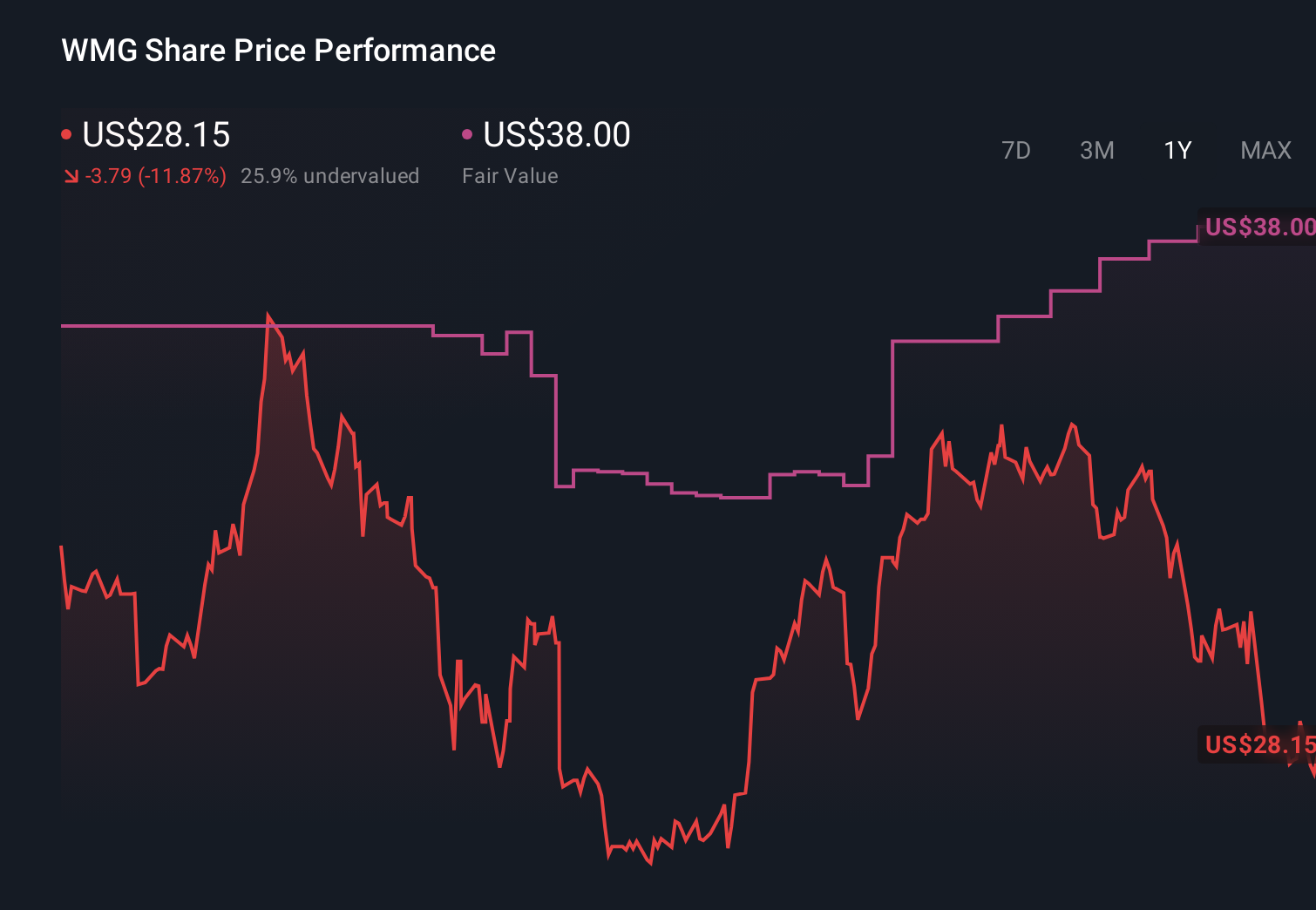
Yet the most optimistic analysts, who were modeling revenue of about US$8.4 billion and earnings near US$1.2 billion by 2029, also leaned heavily on AI driven upside. If you are comparing those bullish assumptions to today’s AI licensing lawsuit and the risk that AI generated music could dilute attention and pricing power, it is a useful reminder that even well informed views can differ sharply and may need to be revisited as new facts emerge.
Explore 2 other fair value estimates on Warner Music Group - why the stock might be worth just $38.12!
Form Your Own Verdict
Don't just follow the ticker - dig into the data and build a conviction that's truly your own.
- A great starting point for your Warner Music Group research is our analysis highlighting 4 key rewards and 3 important warning signs that could impact your investment decision.
- Our free Warner Music Group research report provides a comprehensive fundamental analysis summarized in a single visual - the Snowflake - making it easy to evaluate Warner Music Group's overall financial health at a glance.
Interested In Other Possibilities?
Our top stock finds are flying under the radar-for now. Get in early:
- AI is about to change healthcare. These 39 stocks are working on everything from early diagnostics to drug discovery. The best part - they are all under $10b in market cap - there's still time to get in early.
- The latest GPUs need a type of rare earth metal called Neodymium and there are only 27 companies in the world exploring or producing it. Find the list for free.
- Find 49 companies with promising cash flow potential yet trading below their fair value.
This article by Simply Wall St is general in nature. We provide commentary based on historical data and analyst forecasts only using an unbiased methodology and our articles are not intended to be financial advice. It does not constitute a recommendation to buy or sell any stock, and does not take account of your objectives, or your financial situation. We aim to bring you long-term focused analysis driven by fundamental data. Note that our analysis may not factor in the latest price-sensitive company announcements or qualitative material. Simply Wall St has no position in any stocks mentioned.