

Why Micron Technology (MU) Is Down 11.0% After Nvidia HBM4 Nod Amid AI Chip Spending Jitters
Micron Technology MU | 0.00 |
- Earlier this month at COMPUTEX 2026, Micron Technology showcased a full stack of AI-optimized memory and storage products, from HBM4 and advanced DRAM to ultra–high-capacity SSDs, aimed at data center and edge AI workloads, while concurrently signing multi-year supply agreements to secure long-term demand during an industry-wide memory shortage.
- At the same time, sector-wide concern about the pace of AI chip spending, sparked by Broadcom’s cautious outlook, triggered heavy profit-taking in semiconductor stocks, highlighting how quickly sentiment can swing even as Nvidia formally certified Micron as an HBM4 supplier for its next-generation Vera Rubin AI platform.
- We’ll now examine how Micron’s new long-term supply contracts and HBM4 role with Nvidia may reshape its AI-driven investment narrative.
The latest GPUs need a type of rare earth metal called Terbium and there are only 27 companies in the world exploring or producing it. Find the list for free.
Micron Technology Investment Narrative Recap
To own Micron today, you need to believe that AI keeps memory at the center of the stack and that current HBM shortages support healthy economics, even if sentiment around AI spending stays volatile. The key short term catalyst is Micron’s upcoming Q3 earnings and guidance against very high expectations, while the biggest risk is that sector wide AI infrastructure spending slows faster than current order books and long term contracts imply. Recent news does not materially change that risk, but it spotlights it.
What does change the story a bit is Micron’s move to multi year Strategic Customer Agreements, announced alongside the COMPUTEX portfolio update and reinforced by commentary that new fabs will not add meaningful capacity until fiscal 2028. Those contracts cut both ways for shareholders: they can support visibility and margins in a tight market, but they may also cap upside if memory prices keep surprising to the upside.
Yet beneath the excitement, investors should also be aware that Micron’s new long term contracts could...
Micron Technology's narrative projects $135.0 billion revenue and $61.3 billion earnings by 2029.
Uncover how Micron Technology's forecasts yield a $584.62 fair value, a 32% downside to its current price.
Exploring Other Perspectives
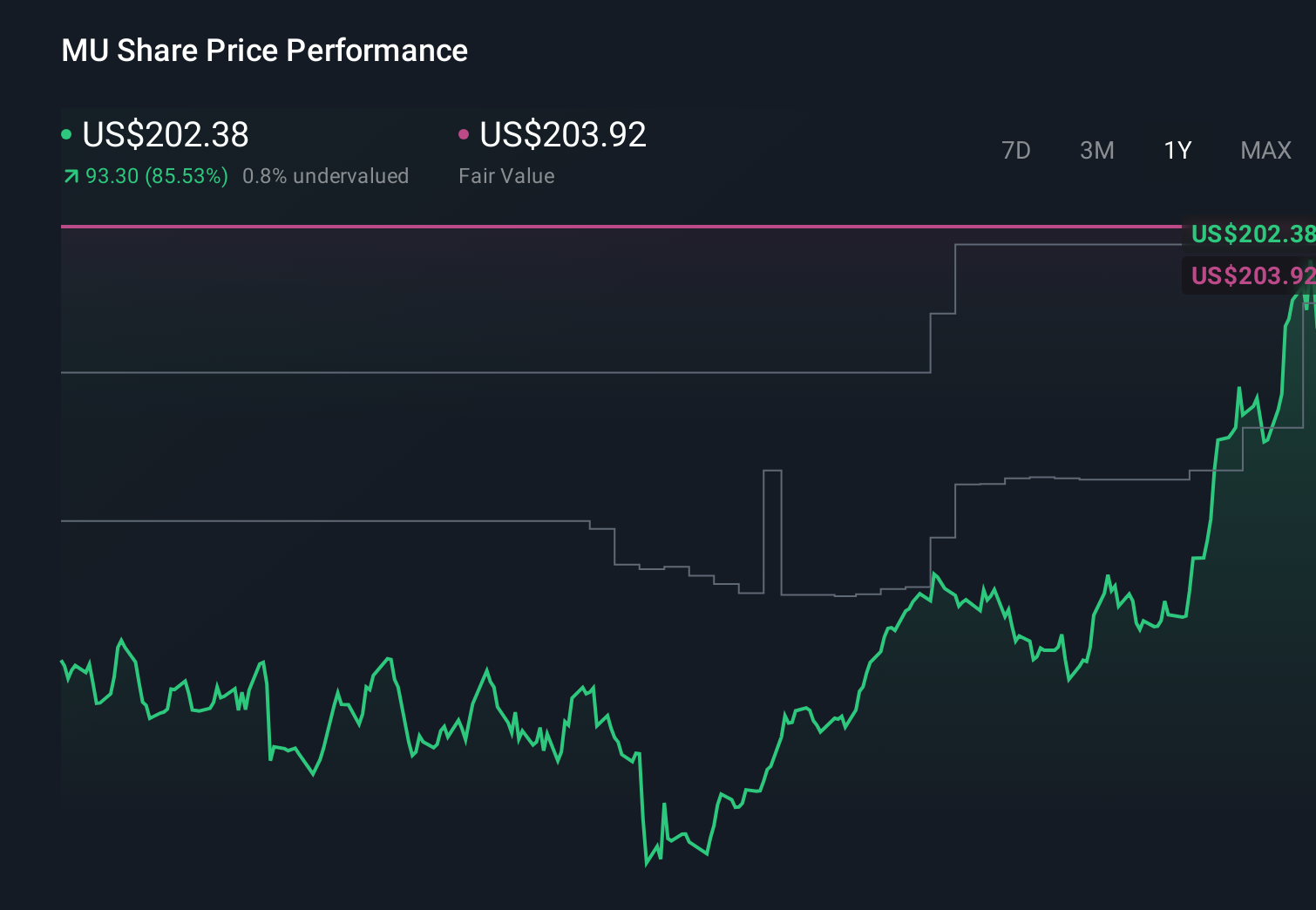
While consensus sees Micron on a strong path, the most pessimistic analysts were assuming only about US$92.3 billion of revenue and US$33.1 billion of earnings by 2029, so this latest AI memory news could either ease their worries about demand or reinforce concerns about future oversupply and margin pressure.
Explore 25 other fair value estimates on Micron Technology - why the stock might be worth less than half the current price!
The Verdict Is Yours
Disagree with existing narratives? Extraordinary investment returns rarely come from following the herd, so go with your instincts.
- A great starting point for your Micron Technology research is our analysis highlighting 4 key rewards and 3 important warning signs that could impact your investment decision.
- Our free Micron Technology research report provides a comprehensive fundamental analysis summarized in a single visual - the Snowflake - making it easy to evaluate Micron Technology's overall financial health at a glance.
Ready To Venture Into Other Investment Styles?
Don't miss your shot at the next 10-bagger. Our latest stock picks just dropped:
- Explore 30 top quantum computing companies leading the revolution in next-gen technology and shaping the future with breakthroughs in quantum algorithms, superconducting qubits, and cutting-edge research.
- Capitalize on the AI infrastructure supercycle with our selection of the 48 best 'picks and shovels' of the AI gold rush converting record-breaking demand into massive cash flow.
- The future of work is here. Discover the 33 top robotics and automation stocks leading the charge in AI-driven automation and industrial transformation.
This article by Simply Wall St is general in nature. We provide commentary based on historical data and analyst forecasts only using an unbiased methodology and our articles are not intended to be financial advice. It does not constitute a recommendation to buy or sell any stock, and does not take account of your objectives, or your financial situation. We aim to bring you long-term focused analysis driven by fundamental data. Note that our analysis may not factor in the latest price-sensitive company announcements or qualitative material. Simply Wall St has no position in any stocks mentioned.