


يرجى استخدام متصفح الكمبيوتر الشخصي للوصول إلى التسجيل - تداول السعودية
حسنًا
Institutional investors control 28% of NACCO Industries, Inc. (NYSE:NC) and were rewarded last week after stock increased 11%
NACCO Industries, Inc. Class A NC | 57.06 | +1.62% |
A look at the shareholders of NACCO Industries, Inc. (NYSE:NC) can tell us which group is most powerful. With 28% stake, institutions possess the maximum shares in the company. That is, the group stands to benefit the most if the stock rises (or lose the most if there is a downturn).
And last week, institutional investors ended up benefitting the most after the company hit US$367m in market cap. The one-year return on investment is currently 75% and last week's gain would have been more than welcomed.
Let's delve deeper into each type of owner of NACCO Industries, beginning with the chart below.
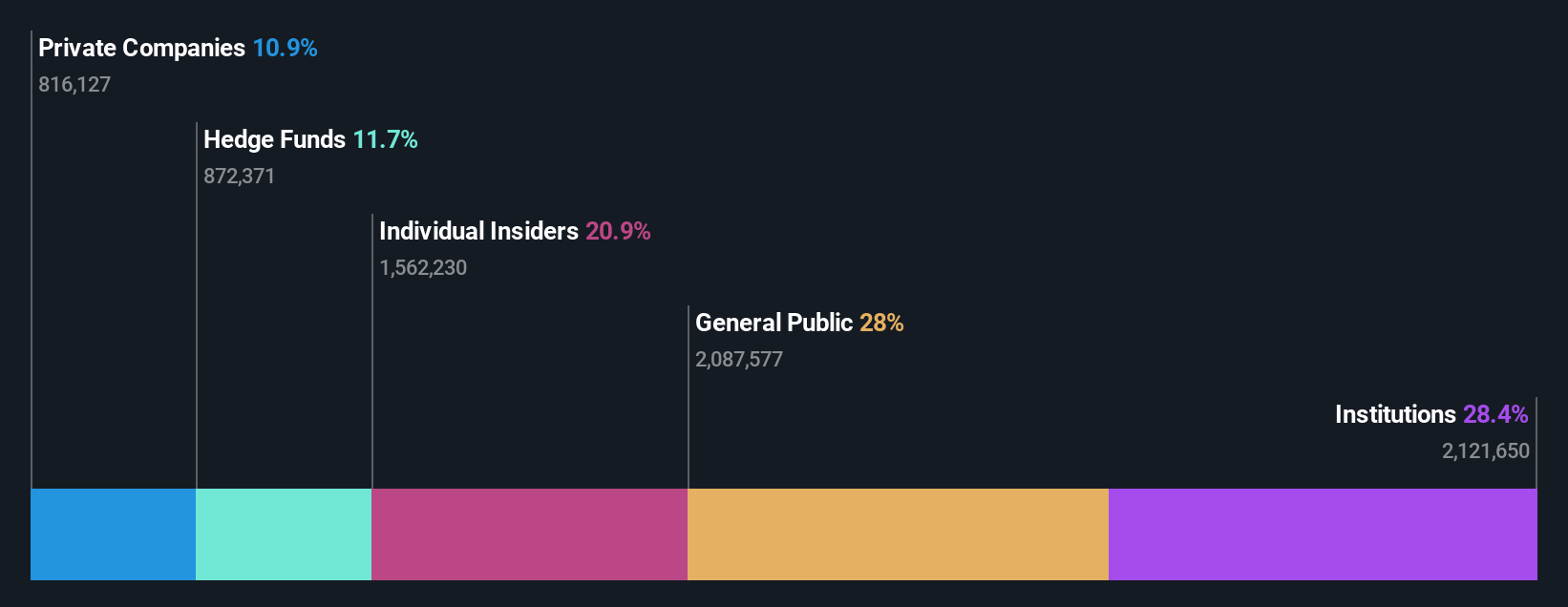
Institutions typically measure themselves against a benchmark when reporting to their own investors, so they often become more enthusiastic about a stock once it's included in a major index. We would expect most companies to have some institutions on the register, especially if they are growing.
NACCO Industries already has institutions on the share registry. Indeed, they own a respectable stake in the company. This implies the analysts working for those institutions have looked at the stock and they like it. But just like anyone else, they could be wrong. When multiple institutions own a stock, there's always a risk that they are in a 'crowded trade'. When such a trade goes wrong, multiple parties may compete to sell stock fast. This risk is higher in a company without a history of growth. You can see NACCO Industries' historic earnings and revenue below, but keep in mind there's always more to the story.

Our data indicates that hedge funds own 12% of NACCO Industries. That catches my attention because hedge funds sometimes try to influence management, or bring about changes that will create near term value for shareholders. Rankin Management, Inc is currently the company's largest shareholder with 12% of shares outstanding. Dimensional Fund Advisors LP is the second largest shareholder owning 5.4% of common stock, and John Butler holds about 5.1% of the company stock. John Butler, who is the third-largest shareholder, also happens to hold the title of Member of the Board of Directors.
After doing some more digging, we found that the top 13 have the combined ownership of 51% in the company, suggesting that no single shareholder has significant control over the company.
Researching institutional ownership is a good way to gauge and filter a stock's expected performance. The same can be achieved by studying analyst sentiments. Our information suggests that there isn't any analyst coverage of the stock, so it is probably little known.
The definition of company insiders can be subjective and does vary between jurisdictions. Our data reflects individual insiders, capturing board members at the very least. Company management run the business, but the CEO will answer to the board, even if he or she is a member of it.
Insider ownership is positive when it signals leadership are thinking like the true owners of the company. However, high insider ownership can also give immense power to a small group within the company. This can be negative in some circumstances.
Our information suggests that insiders maintain a significant holding in NACCO Industries, Inc.. Insiders own US$77m worth of shares in the US$367m company. This may suggest that the founders still own a lot of shares. You can click here to see if they have been buying or selling.
With a 28% ownership, the general public, mostly comprising of individual investors, have some degree of sway over NACCO Industries. This size of ownership, while considerable, may not be enough to change company policy if the decision is not in sync with other large shareholders.
Our data indicates that Private Companies hold 11%, of the company's shares. It's hard to draw any conclusions from this fact alone, so its worth looking into who owns those private companies. Sometimes insiders or other related parties have an interest in shares in a public company through a separate private company.
While it is well worth considering the different groups that own a company, there are other factors that are even more important. Like risks, for instance.
Of course this may not be the best stock to buy. So take a peek at this free free list of interesting companies.
NB: Figures in this article are calculated using data from the last twelve months, which refer to the 12-month period ending on the last date of the month the financial statement is dated. This may not be consistent with full year annual report figures.
This article by Simply Wall St is general in nature. We provide commentary based on historical data and analyst forecasts only using an unbiased methodology and our articles are not intended to be financial advice. It does not constitute a recommendation to buy or sell any stock, and does not take account of your objectives, or your financial situation. We aim to bring you long-term focused analysis driven by fundamental data. Note that our analysis may not factor in the latest price-sensitive company announcements or qualitative material. Simply Wall St has no position in any stocks mentioned.