

3 US Oil Stocks With Fair Value Gaps And Funding Risk
PBF Energy PBF | 0.00 |
The Dallas Fed’s research on oil shock resilience suggests U.S. markets may now react very differently to the kind of supply disruption that once rattled portfolios. With oil expenditures at roughly 3% of GDP and the U.S. positioned as a net exporter, companies tied to domestic energy advantages can see their risk profile change when global supply is strained. This article looks at three U.S. Oil Resilience Stocks Leveraging Domestic Energy Advantages that are closely exposed to this theme, helping you decide whether they deserve a closer look or a place on your watchlist as oil geopolitics evolve.
Occidental Petroleum (OXY)
Overview: Occidental Petroleum is a large U.S. oil and gas company that explores for, produces, transports, and markets oil, natural gas liquids, and natural gas, with additional midstream operations that gather, process, and store energy products and carbon dioxide. Founded in 1920 and headquartered in Houston, it has a sizeable presence in shale and related infrastructure.
Operations: Occidental generates most of its roughly US$21.2b in revenue from Oil and Gas operations (about US$20.2b), with around US$1.5b from Midstream and Marketing, and the vast majority of sales coming from the United States at about US$17.7b, alongside roughly US$4.2b from international markets.
Market Cap: US$51.7b
Occidental Petroleum sits at the center of the Dallas Fed’s oil shock resilience story, with a short cycle U.S. shale portfolio, large Permian footprint, and a growing carbon capture business that aims to turn policy support into new revenue streams. At the same time, earnings have recently come under pressure, profit margins sit at 3.5%, and a high P/E together with reliance on external borrowing mean this is not a low risk balance sheet. For investors who think resilient U.S. oil supply, deleveraging, and carbon management could outweigh concerns around oil volatility and dividend cover, this is a stock that may warrant closer examination before moving on to the next idea in this screener.
Occidental Petroleum’s mix of U.S. shale exposure, carbon capture goals, and a balance sheet that still leans on borrowing can look like a puzzle, and the missing piece may sit inside the 3 key rewards and 2 important warning signs
Pioneer Insurance (DSE:PIONEERINS)
Overview: Pioneer Insurance is a non life insurer in Bangladesh that covers everything from fire, marine, motor and engineering risks to aviation, liability, health, personal accident and niche products such as migrant worker and livestock policies, serving both corporate and retail customers.
Operations: Pioneer Insurance generates all of its roughly BDT2.1b in revenue from property and casualty insurance in Bangladesh.
Market Cap: BDT6.6b
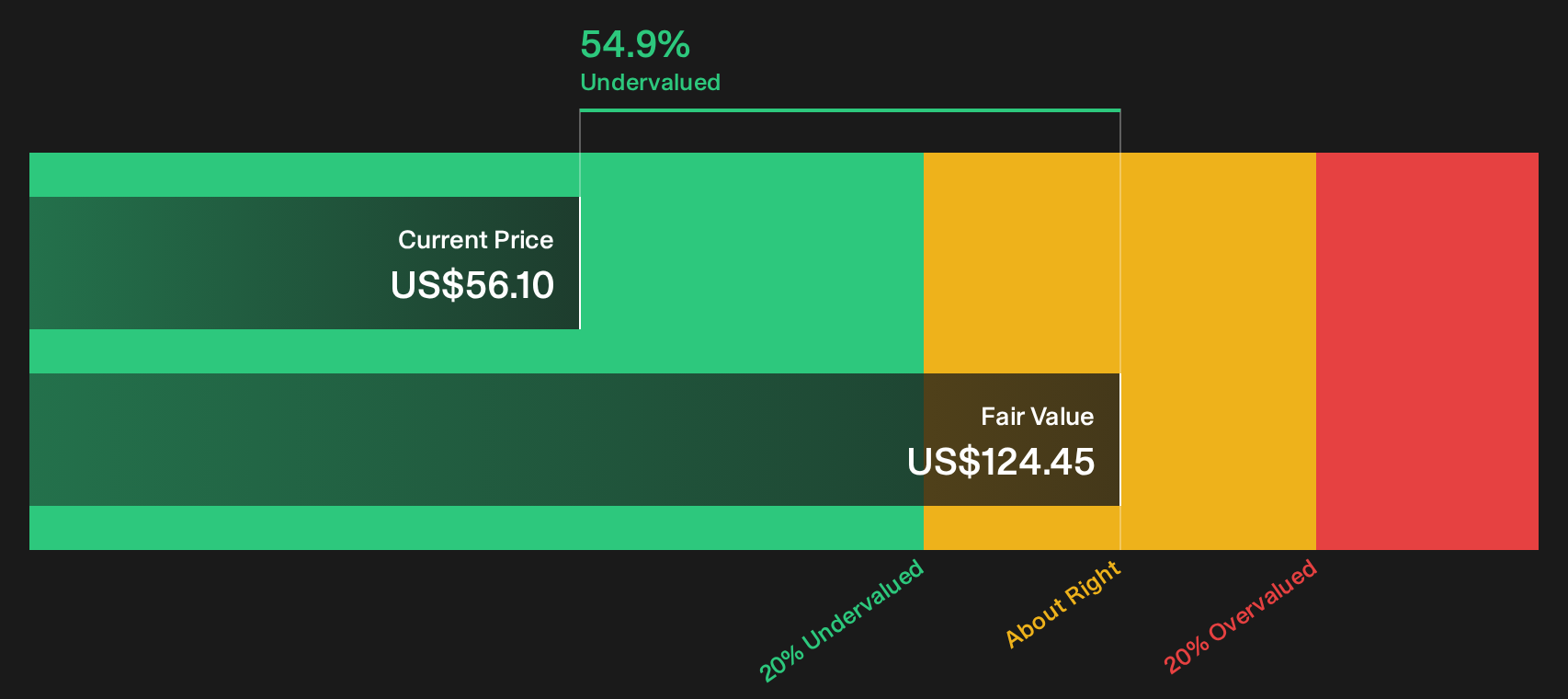
Pioneer Insurance catches the eye because it combines a 3.7% dividend yield with a P/E of 15.2x that sits below both the broader Bangladesh market and the local insurance sector. It also delivers a 21% profit margin. At the same time, earnings have declined over the past five years and funding is entirely reliant on external borrowing, which raises questions about resilience if claims or investment income disappoint. Adding in share price volatility, a board with only 13% independent directors, and a return on equity of 9.5%, this is a stock where income appeal and profit quality are clear, but the balance between value and risk needs a closer look before deciding whether it fits alongside more oil linked holdings in this screener.
Pioneer Insurance’s mix of 3.7% yield, 15.2x P/E and 21% profit margin can look like income strength, while also raising deeper questions. Get the full story in the 2 key rewards and 2 important warning signs (1 is major!)

PBF Energy (PBF)
Overview: PBF Energy is a U.S. based independent refiner that turns crude oil into everyday fuels and products such as gasoline, diesel, jet fuel, heating oil, lubricants, petrochemicals, and asphalt, supplying customers across key regions of the United States and select international markets from its network of refining and logistics assets.
Operations: PBF Energy generates the vast majority of its roughly US$30.1b in revenue from Refining at about US$30.1b, with roughly US$0.4b from its Logistics segment and a small offset from eliminations.
Market Cap: US$4.7b
PBF Energy stands out in this U.S. oil resilience theme because it is tightly linked to domestic crude supply and product exports, which the Dallas Fed research suggests are better insulated when global trade routes are stressed. Tight refining capacity, a fully running Martinez refinery, and growing renewable fuels provide potential support for margins. At the same time, recent profitability, a P/E below industry averages, and a share price well under one estimate of future cash flow value point to possible mispricing. On the flip side, heavy reliance on external borrowing, dividend cover concerns, and exposure to stricter coastal regulations keep risk firmly on the table. This combination is one reason many investors look for a deeper read before deciding how PBF fits into a resilient energy portfolio.
PBF Energy’s low P/E and ties to resilient U.S. crude look like a valuation story that many investors may be underpricing, yet the real tension sits inside the 4 key rewards and 3 important warning signs

Take Control of Your Investment Journey
If Pioneer Insurance or any of these companies sound like a great opportunity, register for FREE with Simply Wall St and add your companies to a Watchlist to monitor the share price against the fair value the ideal entry point. Once you've made your move, manage your holdings with our Portfolio Command Center that filters out the noise to deliver only the most critical, actionable updates. Throughout your journey, our Community allows you to filter the best ideas from thousands of investor perspectives. By uncovering hidden catalysts and risks early, you'll accelerate your decision-making and stay one step ahead of the market.
Seeking Fresh Alternatives Before Others Pounce?
Some of the sharpest breakouts start quietly, while momentum is building and prices are still under the radar for now. Instead of reacting late, consider identifying opportunities earlier.
- Explore income potential while dividends are still flying under most radars by scanning a curated group of income heavyweights with the 7 dividend fortresses
- Look for the next wave of computing momentum by zeroing in on under the radar leaders in the 30 quantum computing stocks
- Identify early trends in resilient balance sheets before the crowd catches on by running the list of solid balance sheet and fundamentals (48 results)
This article by Simply Wall St is general in nature. We provide commentary based on historical data and analyst forecasts only using an unbiased methodology and our articles are not intended to be financial advice. It does not constitute a recommendation to buy or sell any stock, and does not take account of your objectives, or your financial situation. We aim to bring you long-term focused analysis driven by fundamental data. Note that our analysis may not factor in the latest price-sensitive company announcements or qualitative material. Simply Wall St has no position in any stocks mentioned.