

Assessing Delta Air Lines (DAL) Valuation After New Amex SkyMiles Perks And Card Refresh
Delta Air Lines, Inc. DAL | 0.00 |
Delta Air Lines (DAL) is back in focus after rolling out new American Express SkyMiles Card perks, including a complimentary second checked bag on domestic flights and annual rideshare credits for enrolled Gold Card holders.
The card perk refresh lands at a time when Delta’s share price has risen 34.74% over the past 90 days and delivered a 64.75% total shareholder return over 1 year, suggesting momentum has been building alongside other recent headlines on record revenue and new partnerships.
If you are comparing Delta’s setup with other future focused opportunities, it could be worth scanning 33 power grid technology and infrastructure stocks
With the stock up 34.74% in 90 days and trading only about 3% below the average analyst price target, yet flagged with an estimated 23% intrinsic discount, are you looking at a fresh buying window or a market that is already pricing in future growth?
Most Popular Narrative: 25.8% Overvalued
According to the most followed narrative, Delta Air Lines’ fair value of $63.21 sits below the last close at $79.51, setting up a clear valuation gap for investors to weigh.
Atlanta's flag carrier, so to speak, remains the lode star in the US network carrier heaven, with its profitability the current envy of the industry. Total revenue per available seat mile (TRASM) in Q4/25 stood at 21.94 cents, with total cost per available seat mile (CASM) at 19.93 cents, thus yielding a net profit of some 2 cents per available seat mile. This is simply oustanding, particularly for a legacy carrier. As such, Delta shares have kept climbing, if a bit too steep even for results as stellar as these. Point is: As of now, the recovery from last year's "Liberation Day" shock is complete, with all the good news priced in.
The narrative from PittTheYounger hinges on robust unit economics, modest long run revenue growth assumptions and a profit multiple that prices in a mature, not hyper growth, phase. Curious which specific earnings margin and valuation inputs combine to pull that fair value well below today’s price and how sensitive it is to small shifts in demand or pricing power.
Result: Fair Value of $63.21 (OVERVALUED)
However, the story could change quickly if travel demand softens further or if new shocks hit already thin industry margins and the company’s stretched balance sheet.
Wall Street's queuing for one rocket. While SpaceX counts down to its IPO, other companies tied to the new space race are already in orbit. → 20 Compelling Space Companies watchlist · Global Space Race Investing Ideas screener · Scan the sector by valuation on Rocket Lab's valuation page.
Another View: Cash Flows Point The Other Way
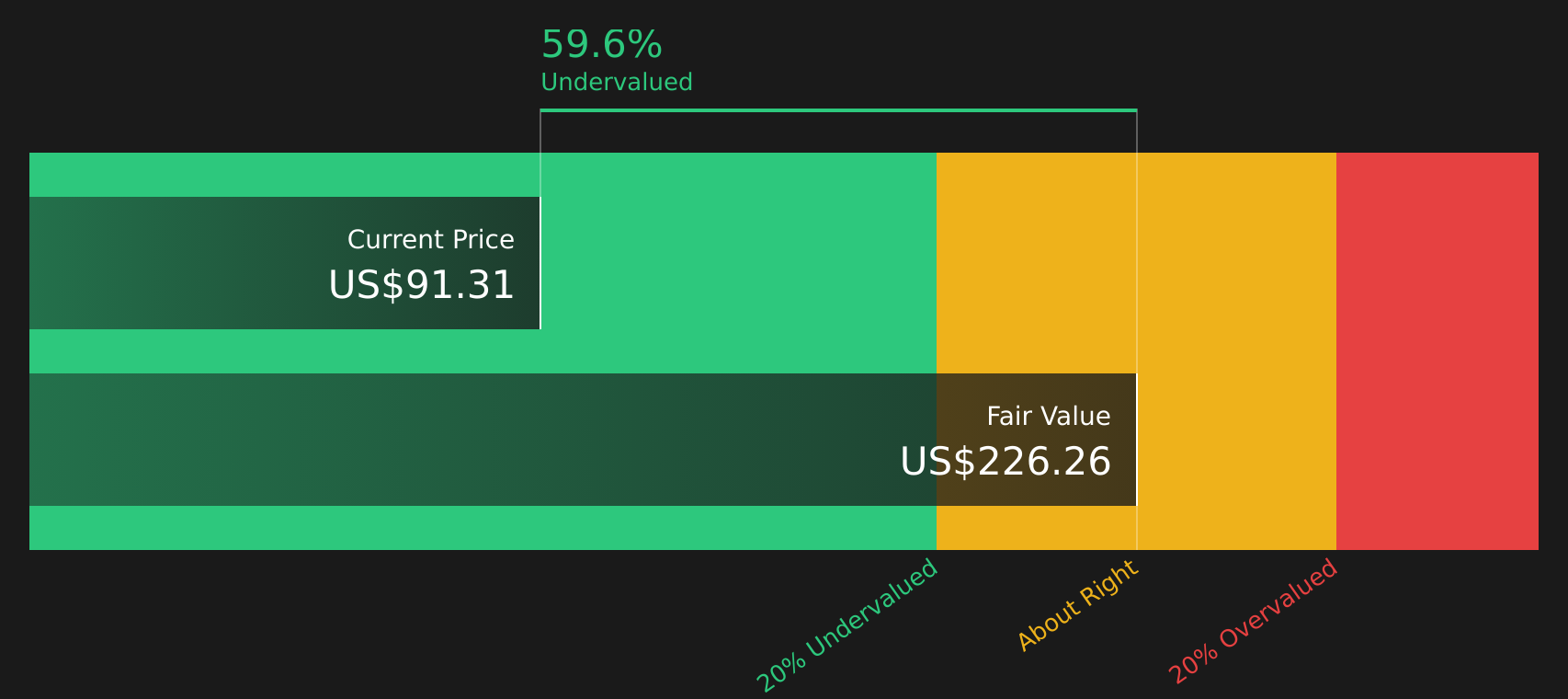
While the popular narrative sees Delta as about 25.8% overvalued at $79.51 versus a $63.21 fair value, the SWS DCF model comes to a very different conclusion. It estimates a future cash flow value of $103.11, suggesting the stock trades at a 22.9% discount. Which story do you lean toward when price and cash flows disagree?
Next Steps
With bullish and cautious voices both in the mix, this is the moment to look through the data yourself and decide where you stand. To help frame that view, focus on the 3 key rewards and 2 important warning signs
Looking for more investment ideas?
If Delta has your attention, do not stop there. Broaden your watchlist now so you are not looking back wishing you had acted sooner.
- Target quality at a discount by scanning 47 high quality undervalued stocks that combine solid fundamentals with pricing that may sit below many investors’ radars.
- Strengthen your portfolio’s income stream by reviewing 10 dividend fortresses that offer higher yields alongside a focus on durability.
- Dial down risk while staying invested by checking 65 resilient stocks with low risk scores built around resilience and more conservative risk scores.
This article by Simply Wall St is general in nature. We provide commentary based on historical data and analyst forecasts only using an unbiased methodology and our articles are not intended to be financial advice. It does not constitute a recommendation to buy or sell any stock, and does not take account of your objectives, or your financial situation. We aim to bring you long-term focused analysis driven by fundamental data. Note that our analysis may not factor in the latest price-sensitive company announcements or qualitative material. Simply Wall St has no position in any stocks mentioned.