

Does Heartland Express’ (HTLD) Smaller Loss and Leadership Shift Reframe Its Post-Acquisition Integration Story?
Heartland Express, Inc. HTLD | 0.00 |
- Heartland Express, Inc. previously reported first-quarter 2026 results showing sales of US$176.26 million versus US$219.42 million a year earlier, with net loss narrowing to US$4.82 million and no share repurchases during the period under its existing buyback programs.
- Alongside the smaller loss, investors also learned that long-time executive David P. Millis retired as President of Millis Transfer while remaining on Heartland’s board, a leadership shift that may influence how integration and operations evolve.
- With earnings revealing lower revenue but a smaller loss, we’ll examine what this means for Heartland Express’s investment narrative and future positioning.
We've uncovered the 13 dividend fortresses yielding 5%+ that don't just survive market storms, but thrive in them.
What Is Heartland Express' Investment Narrative?
To own Heartland Express today, you have to believe the company can turn a shrinking top line into a sustainable return to profitability, while managing integration and cost discipline in a still-challenging trucking market. The latest quarter reinforced that trade-off: revenue fell to US$176.26 million but losses narrowed to US$4.82 million, hinting at some operational progress even as demand pressure persists. The absence of fresh buybacks in early 2026, after years of activity, suggests management is prioritizing balance sheet resilience over capital returns in the near term, which slightly softens the previous buyback-led catalyst. Leadership changes, including David P. Millis stepping back from running Millis Transfer but staying on the board, look more evolutionary than disruptive, so the core risks around persistent losses, pricing pressure and integration execution remain largely intact.
However, short-term earnings still carry meaningful downside risk that investors should be aware of. Despite retreating, Heartland Express' shares might still be trading above their fair value and there could be some more downside. Discover how much.Exploring Other Perspectives
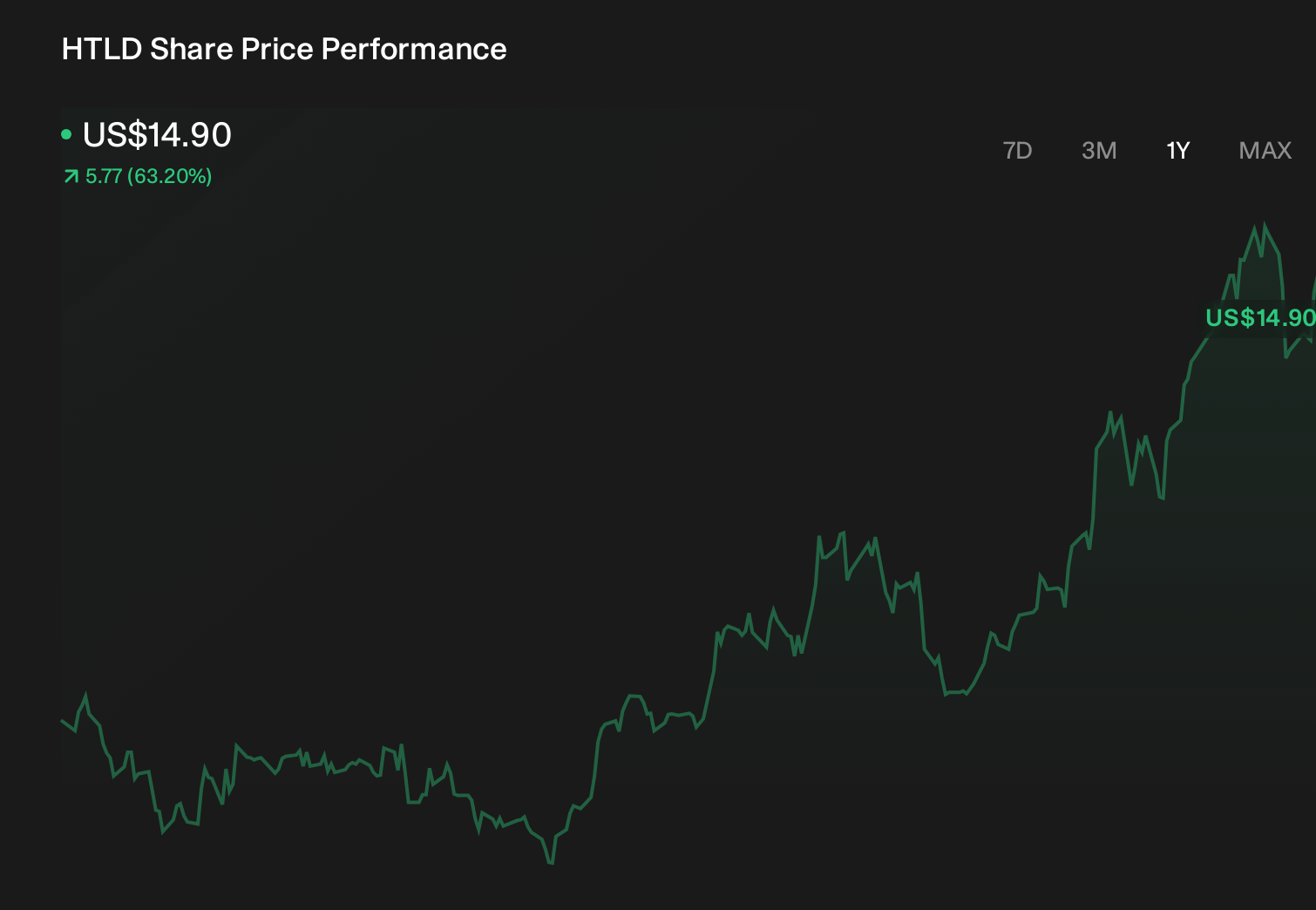
Two fair value views from the Simply Wall St Community span roughly US$12 to over US$57 per share, highlighting how differently investors are modelling Heartland’s path back to profit. Set that against the recent mix of lower sales, smaller losses and a pause in buybacks, and it becomes clear you are weighing both execution risk and the possibility that the market has already priced in a lot of improvement. Opinions vary widely, so it pays to compare several of these perspectives before reaching your own conclusion.
Explore 2 other fair value estimates on Heartland Express - why the stock might be worth 5% less than the current price!
Form Your Own Verdict
Don't just follow the ticker - dig into the data and build a conviction that's truly your own.
- A great starting point for your Heartland Express research is our analysis highlighting 2 key rewards that could impact your investment decision.
- Our free Heartland Express research report provides a comprehensive fundamental analysis summarized in a single visual - the Snowflake - making it easy to evaluate Heartland Express' overall financial health at a glance.
Ready For A Different Approach?
Right now could be the best entry point. These picks are fresh from our daily scans. Don't delay:
- Invest in the nuclear renaissance through our list of 91 elite nuclear energy infrastructure plays powering the global AI revolution.
- AI is about to change healthcare. These 35 stocks are working on everything from early diagnostics to drug discovery. The best part - they are all under $10b in market cap - there's still time to get in early.
- This technology could replace computers: discover 26 stocks that are working to make quantum computing a reality.
This article by Simply Wall St is general in nature. We provide commentary based on historical data and analyst forecasts only using an unbiased methodology and our articles are not intended to be financial advice. It does not constitute a recommendation to buy or sell any stock, and does not take account of your objectives, or your financial situation. We aim to bring you long-term focused analysis driven by fundamental data. Note that our analysis may not factor in the latest price-sensitive company announcements or qualitative material. Simply Wall St has no position in any stocks mentioned.