

Does Spotify’s New Ad Tools And Ticketing Tie-Up Subtly Reshape Its Platform Strategy For SPOT?
Spotify SPOT | 0.00 |
- Recently, Spotify and AI firm Barometer partnered to offer episode-level brand suitability tools for programmatic podcast ads, while Spotify also introduced its Reserved ticketing feature for eligible U.S. Premium subscribers in collaboration with Live Nation and Ticketmaster.
- Together, these moves highlight Spotify's push to deepen advertiser transparency and fan engagement by tying podcast ad targeting and live event access more closely to its platform data.
- We’ll now examine how this enhanced podcast ad targeting capability could influence Spotify’s existing investment narrative and future business trajectory.
Explore 31 top quantum computing companies leading the revolution in next-gen technology and shaping the future with breakthroughs in quantum algorithms, superconducting qubits, and cutting-edge research.
Spotify Technology Investment Narrative Recap
To own Spotify, you generally need to believe that its scale, data, and product innovation can translate into durable profits despite high content costs and heavy competition. The Barometer partnership and Reserved ticketing feature both tie deeper into Spotify’s data and engagement strengths, but they do not materially change the near term focus on improving ad monetization and managing label royalties, which remain the key catalyst and biggest risk, respectively.
Of the recent updates, the Barometer partnership looks most relevant here because it directly targets one of Spotify’s core swing factors: advertising performance. By offering episode-level brand suitability and independent verification for programmatic podcast ads, Spotify could strengthen buyer confidence in its podcast inventory, which sits at the heart of its push to turn podcasts from a cost center into a more meaningful, diversified revenue stream over time.
Yet against this potential upside, investors should still keep an eye on how much power major labels retain over Spotify’s cost base and...
Spotify Technology's narrative projects €25.6 billion revenue and €4.1 billion earnings by 2029. This requires 13.4% yearly revenue growth and about a €1.4 billion earnings increase from €2.7 billion today.
Uncover how Spotify Technology's forecasts yield a $592.47 fair value, a 27% upside to its current price.
Exploring Other Perspectives
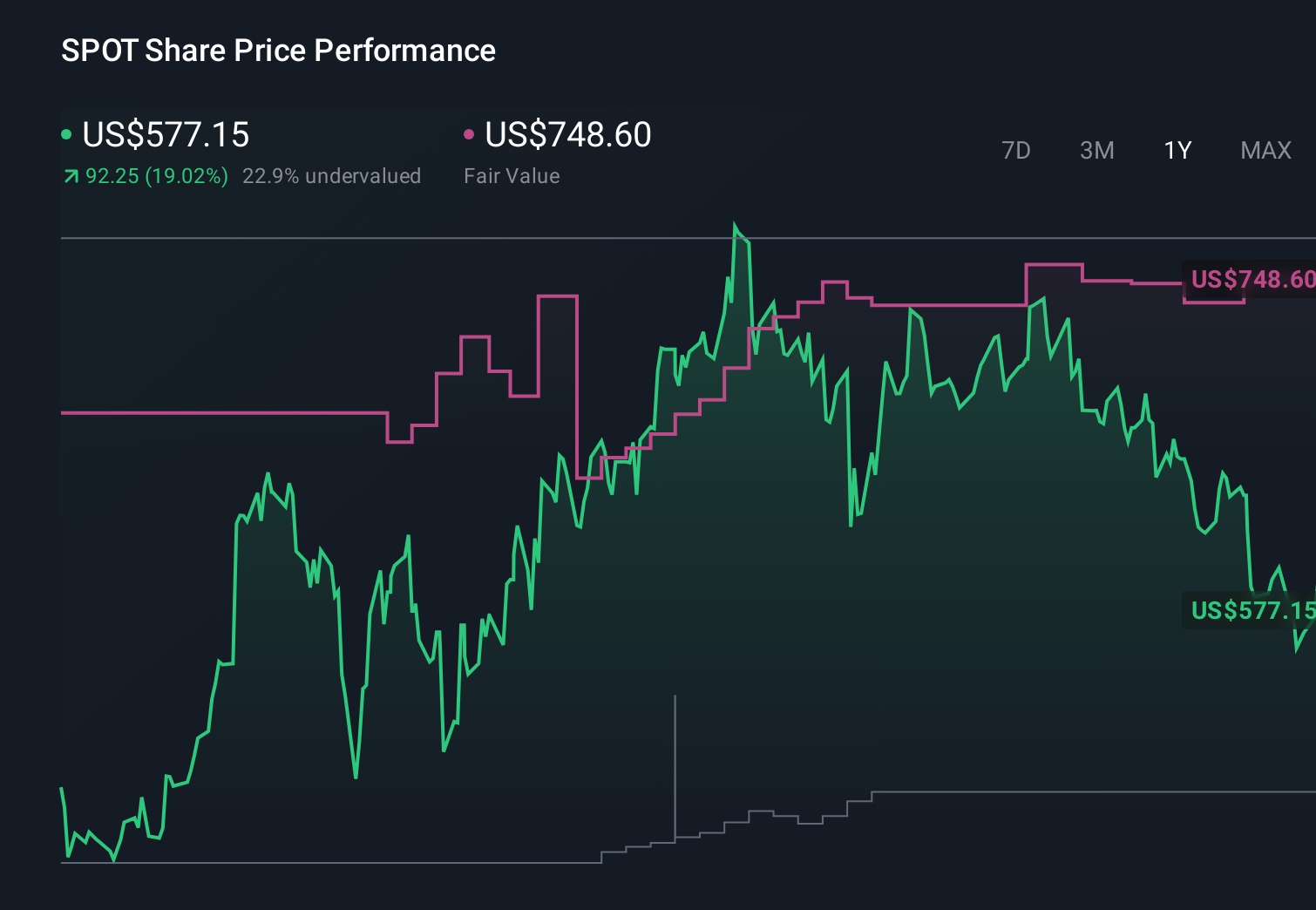
Some of the most optimistic analysts already expected Spotify to reach about €27.6 billion in revenue and €4.7 billion in earnings by 2029, but if podcast ad tools and premium add ons scale faster than they projected, that bullish case could look conservative, while others worry that rising royalty pressure or artists bypassing the platform could still limit how much of that upside you actually see.
Explore 16 other fair value estimates on Spotify Technology - why the stock might be worth as much as 57% more than the current price!
Decide For Yourself
Don't just follow the ticker - dig into the data and build a conviction that's truly your own.
- A great starting point for your Spotify Technology research is our analysis highlighting 4 key rewards that could impact your investment decision.
- Our free Spotify Technology research report provides a comprehensive fundamental analysis summarized in a single visual - the Snowflake - making it easy to evaluate Spotify Technology's overall financial health at a glance.
Ready To Venture Into Other Investment Styles?
Every day counts. These free picks are already gaining attention. See them before the crowd does:
- Invest in the nuclear renaissance through our list of 89 elite nuclear energy infrastructure plays powering the global AI revolution.
- Capitalize on the AI infrastructure supercycle with our selection of the 49 best 'picks and shovels' of the AI gold rush converting record-breaking demand into massive cash flow.
- The future of work is here. Discover the 31 top robotics and automation stocks leading the charge in AI-driven automation and industrial transformation.
This article by Simply Wall St is general in nature. We provide commentary based on historical data and analyst forecasts only using an unbiased methodology and our articles are not intended to be financial advice. It does not constitute a recommendation to buy or sell any stock, and does not take account of your objectives, or your financial situation. We aim to bring you long-term focused analysis driven by fundamental data. Note that our analysis may not factor in the latest price-sensitive company announcements or qualitative material. Simply Wall St has no position in any stocks mentioned.