

لا يزال سهم شركة Energy Transfer (ET) يبدو منخفضًا مقارنةً بقيمة أرباحه.
Energy Transfer LP ET | 0.00 |
حققت شركة Energy Transfer عائدًا قويًا للغاية بلغ 166.2% خلال السنوات الخمس الماضية، ومع ذلك، لا يزال سعر السهم يبدو منخفضًا في معظم عمليات التقييم الأساسية. وهذا يثير تساؤلًا واضحًا حول مدى انعكاس هذا التقدم الأخير على سعر السهم.
- تشير مكاسب بنسبة 166.2% على مدى خمس سنوات إلى أن شركة "إنرجي ترانسفير" قد حققت بالفعل عوائد مجزية للمستثمرين على المدى الطويل. ولذلك، فإن أي مركز استثماري جديد أو زيادة في حجم الاستثمار يعتمد على ما إذا كان هذا الزخم مبرراً بالتدفقات النقدية الحالية والمستقبلية.
- يمكن لمشاريع النمو المرتبطة بالغاز الطبيعي والبنية التحتية لسوائل الغاز الطبيعي أن تدعم التوقعات بتوليد نقدي ثابت، في حين أن برنامج رأس المال الضخم المطلوب لبناء وتوسيع تلك الأصول قد يؤثر على كيفية تسعير المستثمرين للوحدات.
- في عمليات التحقق الأوسع التي أجرتها Simply Wall St، تبدو شركة Energy Transfer رخيصة في معظم المجالات، حيث تشير درجة القيمة البالغة 5 من 6 إلى أن التقييم يميل إلى كونه مقومًا بأقل من قيمته الحقيقية بدلاً من أن يكون مسعرًا بالكامل.
بالنسبة للمستثمرين، يدور النقاش حول ما إذا كان العائد القوي لشركة Energy Transfer على مدى سنوات عديدة ومشاريع النمو النشطة لا تزال تترك مجالاً كافياً للارتفاع في التقييم الحالي للتعويض عن مخاطر الاستثمار والتنفيذ المستمرة.
هل تُعتبر شركة "إنرجي ترانسفير" صفقة رابحة من حيث الأرباح؟
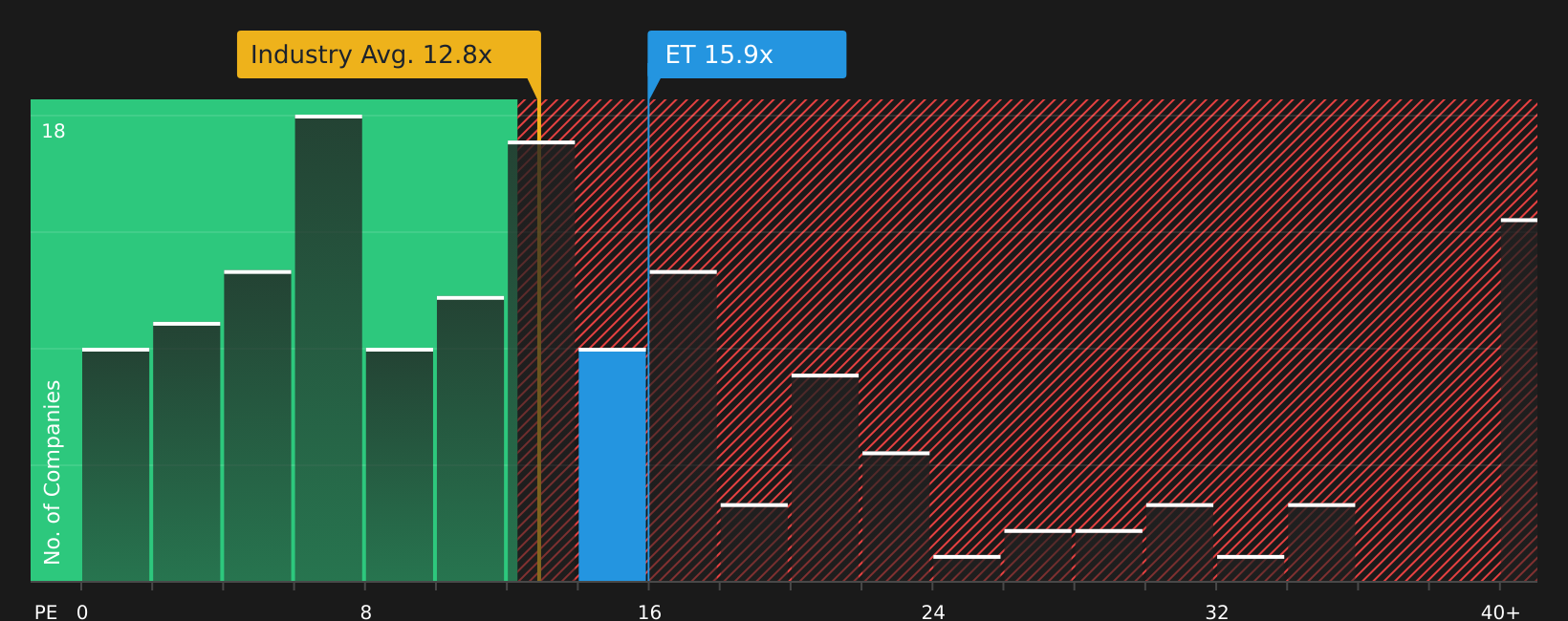
يُناسب مُضاعف الربحية شركة إنرجي ترانسفير لأن الأرباح لا تزال معيارًا أساسيًا لأعمال النقل والتخزين في قطاع النفط والغاز الناضجة والتي تعتمد على الرسوم. يتم تداول أسهم إنرجي ترانسفير حاليًا بمُضاعف ربحية يبلغ حوالي 16.0 ضعفًا، وهو أقل من متوسط قطاع النفط والغاز البالغ 12.7 ضعفًا، وأقل أيضًا من متوسط الشركات المنافسة الأوسع نطاقًا البالغ 18.6 ضعفًا، لذا لا يُقيّم السوق السهم بعلاوة واضحة أو بخصم كبير مقارنةً بأي من نقطتي المقارنة.
بحسب نموذج Simply Wall St لما قد يدفعه المستثمرون عادةً مقابل أسهم شركة Energy Transfer بناءً على خصائصها، فإن نسبة السعر إلى الأرباح العادلة تبلغ حوالي 26.2 ضعفًا، وهي أعلى بكثير من سعر تداول السهم الحالي. ورغم الإعلانات الأخيرة عن مشاريع ورفع التوقعات، لا يزال مضاعف الربحية الحالي أقل بكثير من تلك النسبة العادلة. يشير هذا إلى وجود فجوة بين سعر الأرباح الذي يقترحه النموذج وما يرغب السوق في دفعه حاليًا.
بالنظر إلى معيار نسبة السعر إلى الأرباح وحده، يبدو أن سهم شركة Energy Transfer مقوم بأقل من قيمته الحقيقية مقارنة بمضاعف الأرباح الذي يشير إليه نموذج النسبة العادلة.
سردية نقل الطاقة: ما الذي يبرر سعر اليوم؟
تُكمل تحليلات Simply Wall St Narratives ما بدأه تحليل تقييم شركة Energy Transfer، حيث تُفصّل مسارات النمو والهامش والأرباح التي يجب أن تتحقق لكي تكون قيمة السهم أعلى أو أقل بشكل ملحوظ من سعره الحالي، وتُعرض هذه التحليلات على صفحة مجتمع الشركة. وبدلاً من التركيز على مُضاعف أو نموذج واحد، يُوضح كل تحليل الافتراضات التي بُني عليها تقدير القيمة العادلة، مما يُتيح لك مُقارنة هذه التوقعات مع نتائج Energy Transfer المُعلنة على مر الزمن.
كن من أوائل الأصوات في مجتمع Simply Wall St التي تقدم حجة مدعومة بالأرقام حول شركة Energy Transfer، بما في ذلك رأي حول ما إذا كانت مشاريع التوسع والتوقعات الأعلى تبرر حقًا سعر تداول السهم اليوم.
قم بعرض روايتك الآن وانظر كيف تصمد أطروحتك مع الإبلاغ عن أحجام شركة نقل الطاقة وعقودها وتدفقاتها النقدية بمرور الوقت.
هل تعتقد أن هناك جوانب أخرى لقصة نقل الطاقة؟ تفضل بزيارة مجتمعنا للاطلاع على آراء الآخرين!
الخلاصة
تُشير مضاعفات الأرباح إلى أن أسهم شركة "إنرجي ترانسفير" مُقوّمة بأقل من قيمتها الحقيقية، مما يعني أن سعر الوحدة الحالي لا يعكس بشكل كامل ما تُحققه الشركة من عوائد فعلية. ويُعزز التقييم الإجمالي المرتفع للقيمة هذا الاستنتاج، ولكنه لا يُلغي التساؤلات المُثارة حول تنفيذ مشاريع النمو وكثافة رأس المال المُستثمر فيها. بالنسبة لك كمستثمر، تكمن المسألة الأساسية في قدرة هذه المشاريع على ضمان تدفقات نقدية قوية دون الحاجة إلى إعادة استثمار مبالغ طائلة تُؤدي إلى كبح السوق لمضاعف السعر إلى الأرباح. هذا التناقض بين القيمة الظاهرة ومتطلبات رأس المال المُستمرة هو ما سيُحدد على الأرجح ما إذا كانت "إنرجي ترانسفير" ستظل فرصة استثمارية مُغرية أم ستُصبح فخًا استثماريًا.
هذا المقال من Simply Wall St ذو طبيعة عامة. نقدم تعليقاتنا بناءً على البيانات التاريخية وتوقعات المحللين فقط، باستخدام منهجية محايدة، ولا يُقصد بمقالاتنا أن تكون نصائح مالية. لا يُشكل هذا المقال توصيةً بشراء أو بيع أي سهم، ولا يأخذ في الاعتبار أهدافك أو وضعك المالي. نهدف إلى تزويدك بتحليلات طويلة الأجل مدفوعة بالبيانات الأساسية. يُرجى ملاحظة أن تحليلنا قد لا يأخذ في الاعتبار آخر إعلانات الشركات الحساسة للسعر أو المعلومات النوعية. لا تمتلك Simply Wall St أي أسهم في أي من الشركات المذكورة.