

FedEx’s Massive Debt Rework and New Shelf Could Be A Game Changer For FedEx (FDX)
FedEx Corporation FDX | 0.00 |
- Earlier this month, FedEx Corporation filed an omnibus shelf registration for common stock and debt securities and completed cash tender offers to purchase about US$4.86 billion of long-dated notes, using a waterfall acceptance methodology capped by an overall offer limit.
- Together, the large-scale refinancing via tender offers and the fresh shelf registration broaden FedEx’s flexibility to reshape its capital structure, potentially affecting interest costs, leverage, and how it funds ongoing network transformation initiatives.
- We’ll now examine how FedEx’s large debt tender and new universal shelf registration might influence the company’s existing investment narrative.
Outshine the giants: these 16 early-stage AI stocks could fund your retirement.
FedEx Investment Narrative Recap
To own FedEx, you need to believe its large-scale network transformation and cost programs like DRIVE and Network 2.0 can steadily lift margins despite uneven industrial demand, postal contract uncertainty, and international pricing pressures. The recent US$4.86 billion debt tender and new shelf registration mainly affect how FedEx finances those efforts rather than the operational execution itself, so the near term catalyst and key risk still sit in how smoothly the network overhaul and Freight separation progress.
The universal shelf registration filed in July is most relevant here because it gives FedEx more optionality in how it funds ongoing projects such as Network 2.0 and Tricolor, alongside the recent debt tenders. That extra flexibility could be important as the company works through Freight spin-off effects, restructurings, and potential weather and postal headwinds that might otherwise constrain cash available for its efficiency agenda.
But against this, investors should be aware that execution risk around Network 2.0 and the Freight separation could still...
FedEx's narrative projects $97.6 billion revenue and $5.5 billion earnings by 2029. This requires 1.0% yearly revenue growth and about a $1.1 billion earnings increase from $4.4 billion today.
Uncover how FedEx's forecasts yield a $351.49 fair value, a 11% upside to its current price.
Exploring Other Perspectives
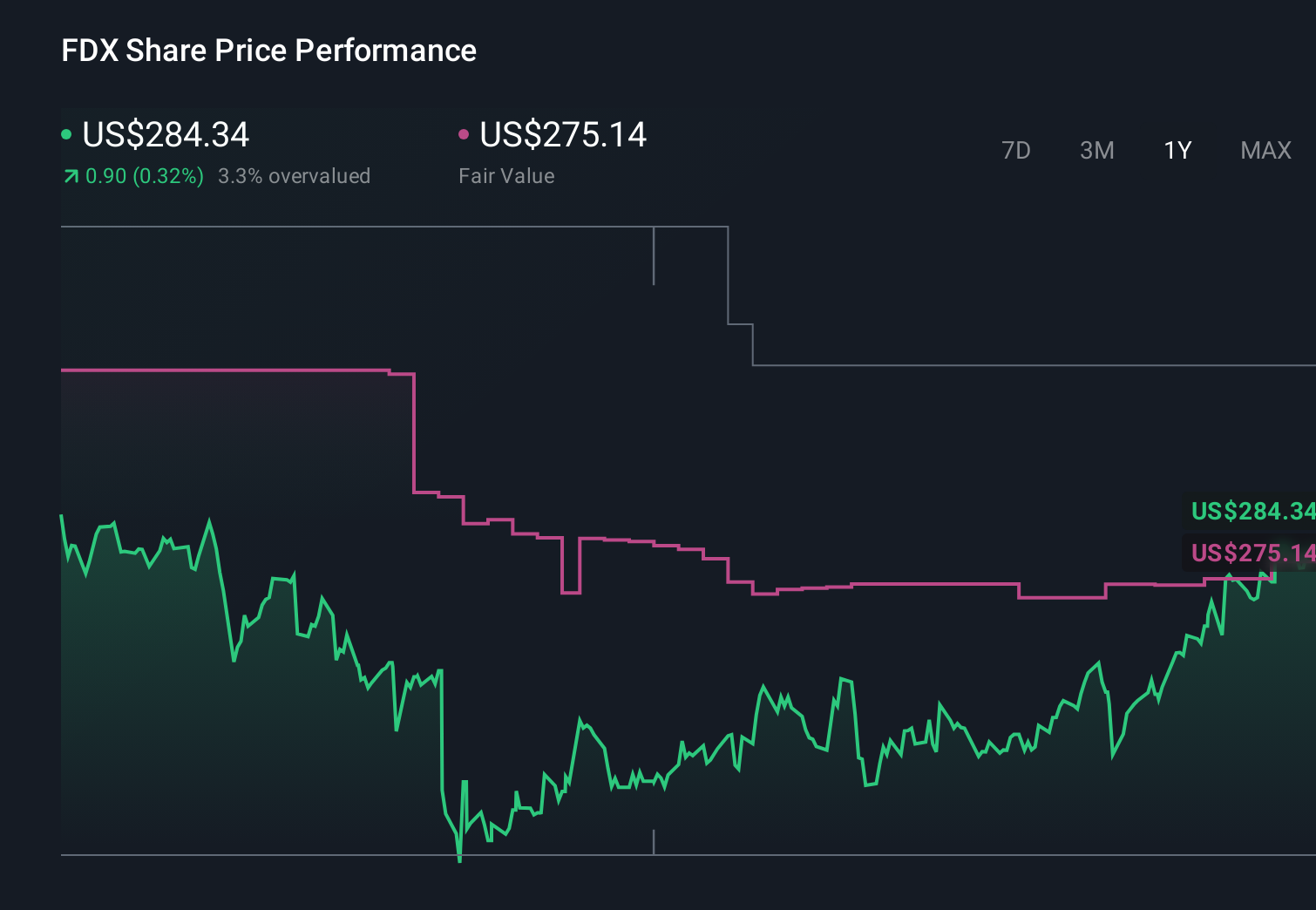
Before this refinancing, the most pessimistic analysts were assuming roughly flat revenue near US$95.5 billion and only modest margin improvement by 2029, painting a sharper long term risk picture than the consensus. These low end views may look very different once the impact of FedEx’s new funding flexibility and balance sheet moves on cost savings, capital needs, and long term earnings power is clearer.
Explore 4 other fair value estimates on FedEx - why the stock might be worth as much as 52% more than the current price!
The Verdict Is Yours
Disagree with existing narratives? Extraordinary investment returns rarely come from following the herd, so go with your instincts.
- A great starting point for your FedEx research is our analysis highlighting 4 key rewards that could impact your investment decision.
- Our free FedEx research report provides a comprehensive fundamental analysis summarized in a single visual - the Snowflake - making it easy to evaluate FedEx's overall financial health at a glance.
Want Some Alternatives?
Early movers are already taking notice. See the stocks they're targeting before they've flown the coop:
- AI is about to change healthcare. These 39 stocks are working on everything from early diagnostics to drug discovery. The best part - they are all under $10b in market cap - there's still time to get in early.
- The future of work is here. Discover the 33 top robotics and automation stocks leading the charge in AI-driven automation and industrial transformation.
- Capitalize on the AI infrastructure supercycle with our selection of the 54 best 'picks and shovels' of the AI gold rush converting record-breaking demand into massive cash flow.
This article by Simply Wall St is general in nature. We provide commentary based on historical data and analyst forecasts only using an unbiased methodology and our articles are not intended to be financial advice. It does not constitute a recommendation to buy or sell any stock, and does not take account of your objectives, or your financial situation. We aim to bring you long-term focused analysis driven by fundamental data. Note that our analysis may not factor in the latest price-sensitive company announcements or qualitative material. Simply Wall St has no position in any stocks mentioned.