

First Busey (BUSE) Stock Looks Undervalued On Fair Value But Fair On Earnings
First Busey Corporation BUSE | 0.00 |
First Busey stock has delivered a 70.8% gain over the past three years, yet the current checks show a mixed valuation picture. The intrinsic value estimate from the Excess Returns model points to upside, while traditional earnings multiples look roughly in line with the market.
- A 70.8% return over three years highlights how strongly First Busey shareholders have been rewarded, which makes today’s entry price more important for new investors.
- Expectations around First Busey’s ability to keep generating attractive returns on equity can support the intrinsic value estimate. Any pressure on profitability or credit quality may challenge that view.
- The broader checks are mixed rather than one sided, with First Busey screening attractively on only 3 of 6 valuation metrics according to this score.
The issue now is whether the current share price already reflects First Busey’s intrinsic value, or if there is still a meaningful margin between market price and the Excess Returns estimate.
Does First Busey Look Undervalued on Excess Returns?
The Excess Returns model evaluates how efficiently First Busey turns shareholder equity into profits above its estimated cost of equity. It focuses on earnings power rather than detailed cash flow forecasts.
For First Busey, the inputs indicate a solid spread between profitability and required return. Book Value is $28.65 per share and Stable EPS is $2.81 per share, based on weighted future Return on Equity estimates from 6 analysts. Against a Cost of Equity of $2.00 per share, that implies an Excess Return of $0.80 per share, supported by an Average Return on Equity of 10.13%. The model also uses a Stable Book Value of $27.69 per share, sourced from 7 analysts.
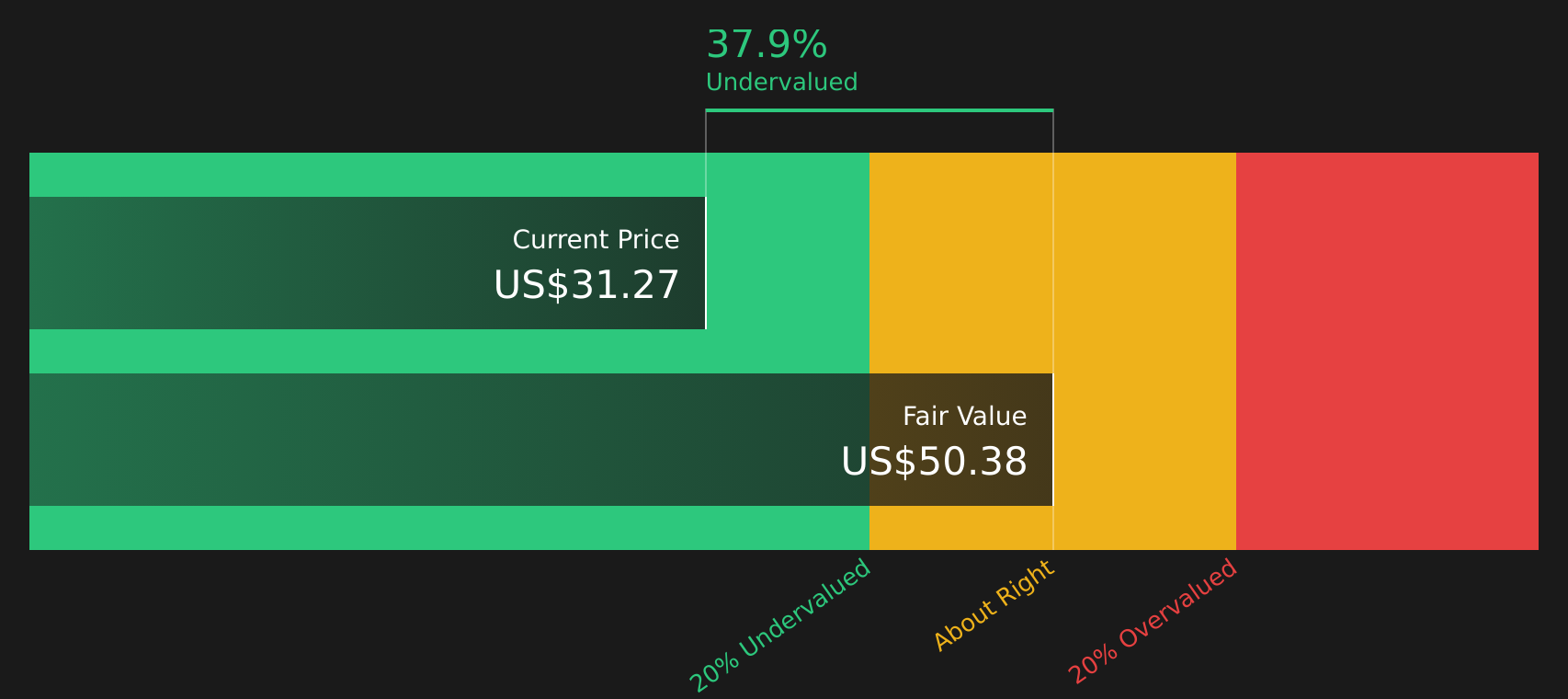
Combining these inputs, the Excess Returns model arrives at an intrinsic value of $50.38 per share. Compared with the current share price, this suggests that First Busey screens as about 38.3% undervalued.
On this Excess Returns view, First Busey stock currently appears undervalued relative to its estimated earnings power.
Our Excess Returns analysis suggests First Busey is undervalued by 38.3%. Track this in your watchlist or portfolio, or discover 49 more high quality undervalued stocks.
Does First Busey Look Fairly Valued on Earnings?
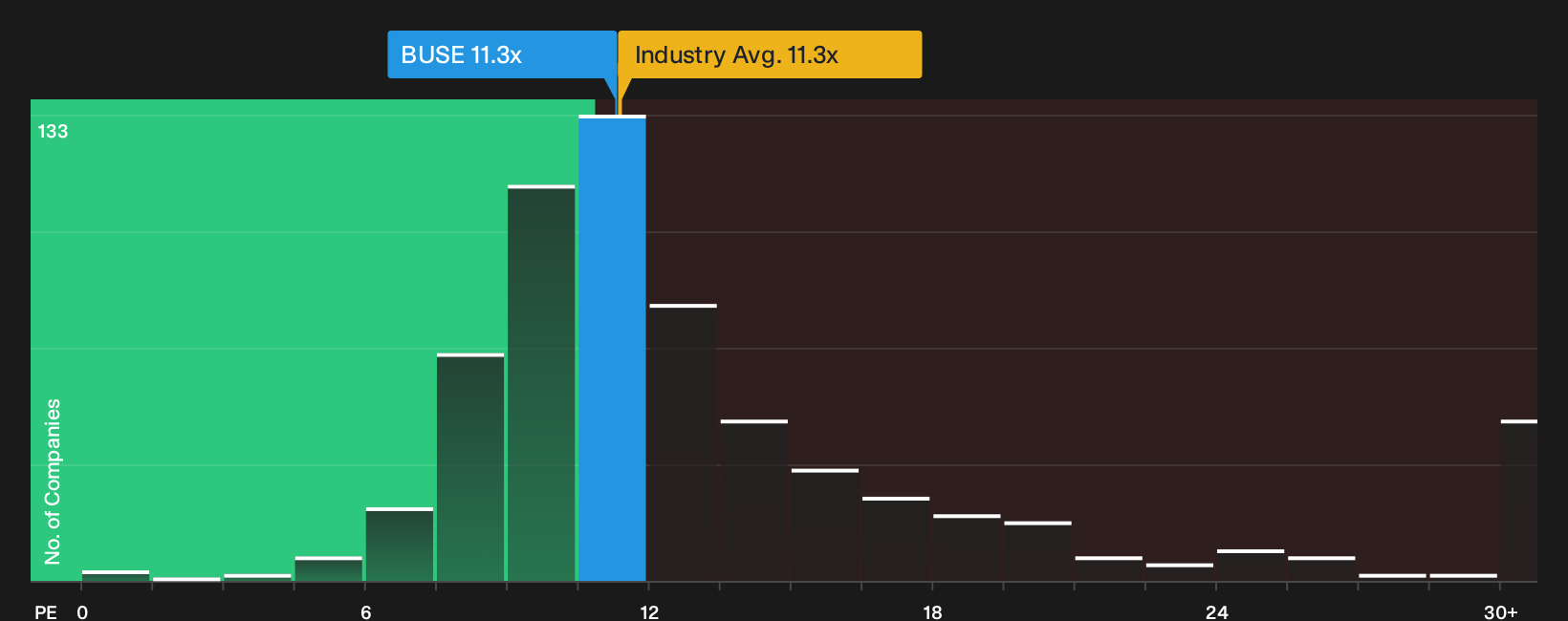
P/E is a useful yardstick for a bank like First Busey because earnings are a central driver of long term shareholder returns. On this measure, First Busey currently trades on a P/E of 12.1x.
That sits very close to the broader Banks sector average of 12.0x and is also below the peer average of 14.3x. The tailored fair P/E ratio for First Busey, which reflects factors such as its profitability profile, size and risk, is 11.2x. The gap between the current 12.1x and this fair level is small, so the stock does not screen as especially cheap or expensive using this approach.
On the P/E multiple, First Busey stock appears to be trading at roughly fair value compared with both its sector and its modelled fair ratio.
The First Busey Narrative: What Would Justify Today's Price?
Simply Wall St Narratives for First Busey pick up where the valuation puzzle leaves off and set out the specific paths that would make First Busey’s stock worth materially more or less than today’s price. Each one ties its number to a clear view on how growth, margins and risks might evolve, so you can revisit those assumptions as new information on the company arrives.
Share a narrative on First Busey that sets out your number-driven view on its growth, margins and execution from here, and be one of the first voices in the Simply Wall St community to track how that thesis holds up as new results arrive.
Do you think there's more to the story for First Busey? Head over to our Community to see what others are saying!
The Bottom Line
The Excess Returns intrinsic value estimate points to First Busey trading at a clear discount, while the P/E view suggests the stock is priced close to peers and a tailored fair ratio. That split reflects different lenses, with the intrinsic view driven by earnings power on existing equity and the multiple view shaped by how the market rates its prospects relative to other banks. With broader checks only mixed, the key question is whether First Busey can sustain the profitability and credit quality implied by the intrinsic value estimate, or whether the current sector-level multiple is a better guide.
This article by Simply Wall St is general in nature. We provide commentary based on historical data and analyst forecasts only using an unbiased methodology and our articles are not intended to be financial advice. It does not constitute a recommendation to buy or sell any stock, and does not take account of your objectives, or your financial situation. We aim to bring you long-term focused analysis driven by fundamental data. Note that our analysis may not factor in the latest price-sensitive company announcements or qualitative material. Simply Wall St has no position in any stocks mentioned.