
How New Inflation‑Linked Rate Hikes At Consolidated Edison (ED) Have Changed Its Investment Story
Consolidated Edison, Inc. ED | 115.43 | +1.33% |
- The New York State Public Service Commission has approved a multi‑year rate plan allowing Consolidated Edison to raise electric and gas delivery rates over the next three years, with increases framed around inflation, efficiency savings and investments in reliability and clean energy infrastructure.
- Beyond higher customer bills, the decision effectively resets Con Edison’s regulated revenue framework, balancing allowed returns with mandated cost controls and expanded affordability programs for vulnerable households.
- We’ll now examine how this approved, inflation‑linked rate hike program shapes Consolidated Edison’s investment narrative, particularly around regulated earnings visibility.
The best AI stocks today may lie beyond giants like Nvidia and Microsoft. Find the next big opportunity with these 23 smaller AI-focused companies with strong growth potential through early-stage innovation in machine learning, automation, and data intelligence that could fund your retirement.
What Is Consolidated Edison's Investment Narrative?
To own Consolidated Edison, you need to be comfortable with a slow‑growing, highly regulated utility where the investment case leans on earnings stability, an established dividend and relatively defensive characteristics rather than rapid expansion. The newly approved, inflation‑linked, three‑year rate plan fits neatly into that story by reinforcing earnings visibility and codifying a 9.4% allowed return on equity, even if the final settlement came in below the company’s initial proposal and triggered a modest share pullback. In the near term, the main catalysts now revolve around how efficiently management executes the mandated cost savings and capital program, and whether regulators keep political pressure in check as customer bills rise. At the same time, the decision highlights ongoing risks around regulatory pushback, affordability concerns and interest coverage.
However, there is a regulatory affordability risk here that investors should not overlook. Consolidated Edison's shares are on the way up, but could they be overextended? Uncover how much higher they are than fair value.Exploring Other Perspectives
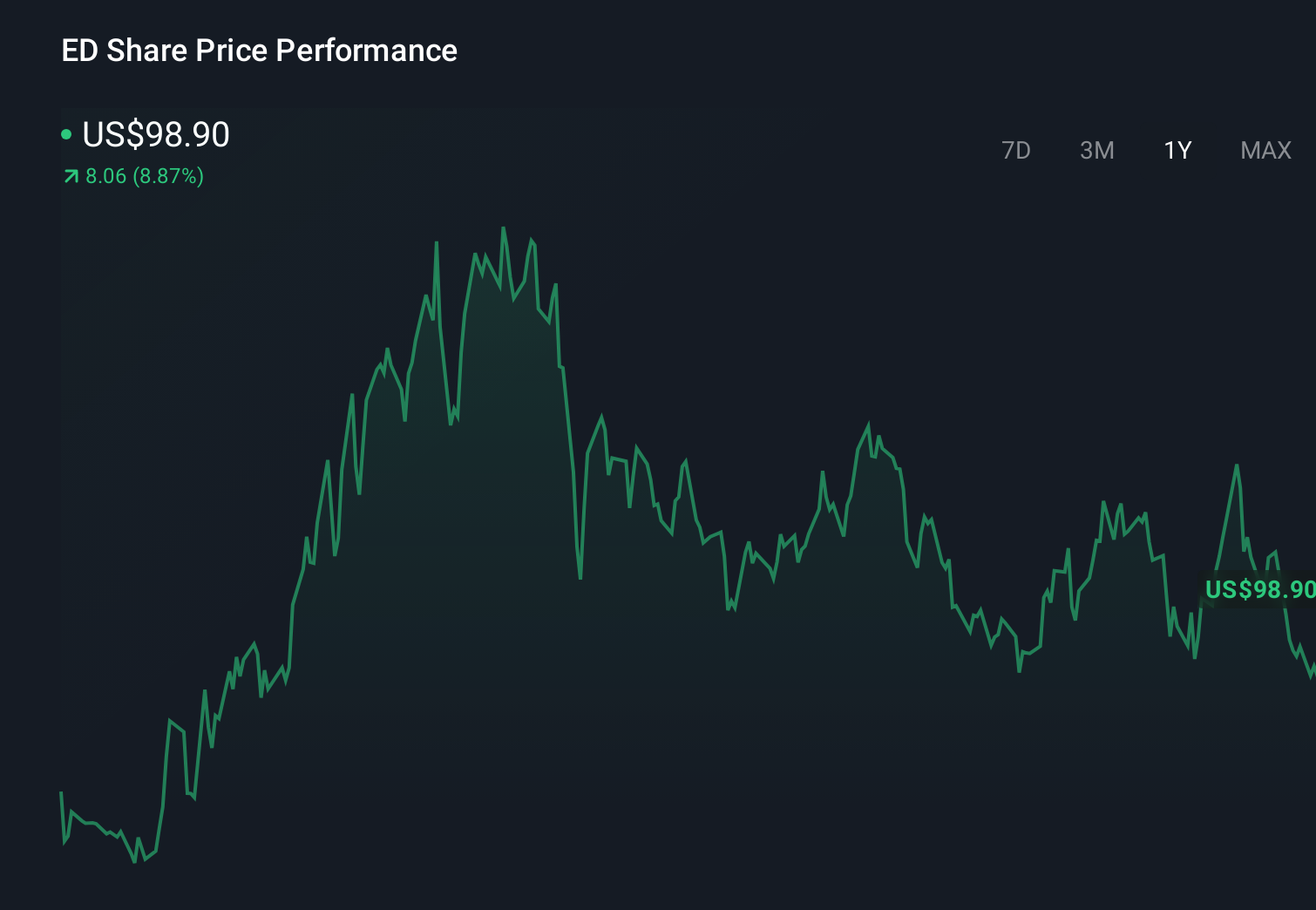
Simply Wall St Community members see fair value between US$100.03 and US$104.94 across 2 views, underscoring how opinions differ even before factoring in the new rate plan’s regulatory and affordability risks.
Explore 2 other fair value estimates on Consolidated Edison - why the stock might be worth just $100.03!
Build Your Own Consolidated Edison Narrative
Disagree with this assessment? Create your own narrative in under 3 minutes - extraordinary investment returns rarely come from following the herd.
- A great starting point for your Consolidated Edison research is our analysis highlighting 4 key rewards and 2 important warning signs that could impact your investment decision.
- Our free Consolidated Edison research report provides a comprehensive fundamental analysis summarized in a single visual - the Snowflake - making it easy to evaluate Consolidated Edison's overall financial health at a glance.
Ready For A Different Approach?
Markets shift fast. These stocks won't stay hidden for long. Get the list while it matters:
- Trump's oil boom is here - pipelines are primed to profit. Discover the 22 US stocks riding the wave.
- Explore 23 top quantum computing companies leading the revolution in next-gen technology and shaping the future with breakthroughs in quantum algorithms, superconducting qubits, and cutting-edge research.
- The end of cancer? These 29 emerging AI stocks are developing tech that will allow early identification of life changing diseases like cancer and Alzheimer's.
This article by Simply Wall St is general in nature. We provide commentary based on historical data and analyst forecasts only using an unbiased methodology and our articles are not intended to be financial advice. It does not constitute a recommendation to buy or sell any stock, and does not take account of your objectives, or your financial situation. We aim to bring you long-term focused analysis driven by fundamental data. Note that our analysis may not factor in the latest price-sensitive company announcements or qualitative material. Simply Wall St has no position in any stocks mentioned.