

If Inflation And US$90 Oil Hold, These Three Stocks Matter
Exxon Mobil Corporation XOM | 0.00 |
Inflation at 4.2%, oil at US$90 a barrel, and producer costs jumping are not just headlines; they are pressure points that can help or hurt specific stocks in very different ways. Some companies gain pricing power or enjoy stronger revenue when energy and rates move, while others see margins squeezed and demand tested. This article highlights three stocks exposed to this mix of higher inflation, rising oil prices, and potential rate hikes, with one that could be helped and two that may be facing tougher conditions. The goal is to help you think clearly about where to lean in and where to be cautious.
Wall Street's queuing for one rocket. While SpaceX counts down to its IPO, other companies tied to the new space race are already in orbit. → 20 Compelling Space Companies watchlist · Global Space Race Investing Ideas screener · Scan the sector by valuation on Rocket Lab's valuation page.
United Airlines Holdings (UAL)
Overview: United Airlines Holdings is a global airline group that flies passengers and cargo across the United States, Canada, the Atlantic, the Pacific, and Latin America, and also earns revenue from loyalty programs, ground handling, training, and maintenance services provided to other companies.
Operations: United generates about US$60.5b in revenue primarily from its airline transportation business, with roughly US$35.8b from the United States and Canada and the rest across the Atlantic, Pacific, and Latin America routes.
Market Cap: US$36.5b
United sits at the center of rising inflation and US$90 oil, with jet fuel and interest costs pulling in the wrong direction just as the stock screens as more expensive than its own modeled cash flows and the wider airline sector. Management has discussed passing higher fuel costs through to fares and targeting double digit pretax margins. However, this depends on travelers accepting higher prices at a time when inflation and rate hikes can pressure discretionary travel budgets. Heavy reliance on debt, no customer deposits, and recent insider selling all leave less room for error if demand softens or fuel spikes again. For investors, the key issue is whether the premium product focus and fleet upgrades can offset these headwinds before sentiment turns.
United’s premium story, heavy debt and reliance on travelers absorbing higher fares could be masking key pressure points in the numbers. The 3 key rewards and 2 important warning signs might show why this setup can quickly flip.

Delta Air Lines (DAL)
Overview: Delta Air Lines is a global carrier that flies passengers and cargo across the United States and key international hubs, while also earning revenue from its refinery, aircraft maintenance services, and vacation packages.
Operations: Delta generates about US$65.2b in revenue, with roughly US$59.5b from its Airline segment and US$7.3b from its Refinery activities, partly offset by US$1.6b of intersegment items.
Market Cap: US$53.5b
Delta may appeal to investors who focus on quality earnings and high returns on equity. However, the picture is less comfortable when you consider US$90 oil, high debt, and only modest expected earnings growth. Management is trying to protect margins by keeping capacity flat and emphasizing premium cabins, loyalty, and international flying. At the same time, jet fuel and producer costs are rising sharply, and the Federal Reserve is expected to lift rates, which can increase both financing costs and pressure on price sensitive travelers. Recent analyst enthusiasm and a DCF value above the current share price contrast with significant insider selling and heavy reliance on external borrowing. This leaves less room for error if fuel recapture or demand do not develop as planned.
Delta’s premium margins, refinery exposure, and rising fuel and financing costs could be pulling in opposite directions. The real tension only shows up once you see the full 3 key rewards and 2 important warning signs
Exxon Mobil (XOM)
Overview: Exxon Mobil is a global energy company that explores for and produces crude oil and natural gas, refines them into fuels, and manufactures chemicals and specialty products that are sold worldwide under the Exxon, Esso, and Mobil brands.
Operations: Exxon Mobil generates most of its revenue from Energy Products in the United States and other international markets, with about US$295.8b from Energy Products, US$32.6b from Chemical Products, and US$20.4b from Specialty Products, partly offset by US$124.7b of intersegment eliminations.
Market Cap: US$607.6b
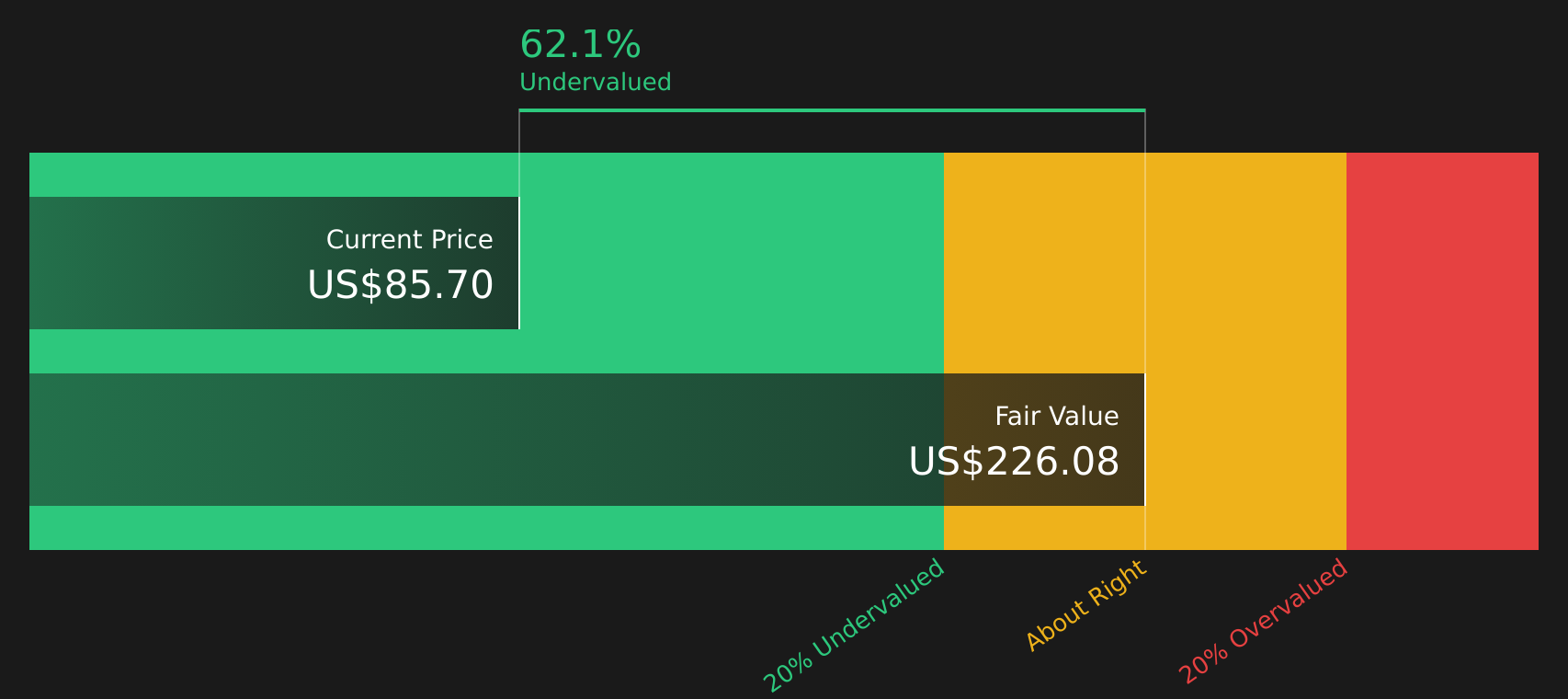
With inflation at 4.2%, oil at US$90 and markets braced for at least one more Fed rate hike, Exxon Mobil sits in a position where higher energy prices can support the business while many other sectors may face rising cost pressures. The company combines a low-cost supply portfolio and large projects in Guyana and LNG with a record of removing billions of structural costs. This can be relevant when PPI energy costs are up 36.6%. At the same time, modest earnings growth, pressure on margins, a dividend not fully covered by free cash flow, and reliance on external funding require investors to look beyond the headline oil narrative. The key consideration is whether the current valuation, cash flows and oil exposure adequately reflect those trade-offs.
Exxon Mobil’s oil exposure and cost cuts may be only half the story. Valuation and balance sheet trade offs may still be hiding in plain sight. Get the full picture in the analysis report for Exxon Mobil

Take Control of Your Investment Journey
If Exxon Mobil or any of these companies have caught your attention, register for FREE with Simply Wall St and add your companies to a Watchlist to monitor the share price against the fair value and track any new developments as they happen. Once you've made your move, manage your holdings with our Portfolio Command Center that filters out the noise to deliver only the most critical, actionable updates. Throughout your journey, our Community allows you to filter the best ideas from thousands of investor perspectives. By uncovering hidden catalysts and risks early, you'll accelerate your decision-making and stay one step ahead of the market.
Seeking Fresh Alternatives Beyond These Stocks?
Some stocks are already building breakout momentum, while others are dropping off radars. Before the crowd catches on and pricing shifts, use these fresh lists and consider acting early.
- Spot potential turnarounds early by scanning a curated pool of resilient companies using the 70 resilient stocks with low risk scores, which focuses on capital preservation while the crowd chases headlines.
- Explore income-oriented ideas by reviewing a hand picked pool of high yield opportunities through the 8 dividend fortresses before yields change or sentiment shifts away from cash returns.
- Review companies in the 33 robotics and automation stocks that are involved in the hardware and software behind factories, logistics and everyday tools to stay informed on developments in automation.
This article by Simply Wall St is general in nature. We provide commentary based on historical data and analyst forecasts only using an unbiased methodology and our articles are not intended to be financial advice. It does not constitute a recommendation to buy or sell any stock, and does not take account of your objectives, or your financial situation. We aim to bring you long-term focused analysis driven by fundamental data. Note that our analysis may not factor in the latest price-sensitive company announcements or qualitative material. Simply Wall St has no position in any stocks mentioned.