

Is FIS’s AI and Cloud Push Reshaping Its Core Infrastructure Strategy or Just Incremental Modernization?
Fidelity National Information Services, Inc. FIS | 0.00 |
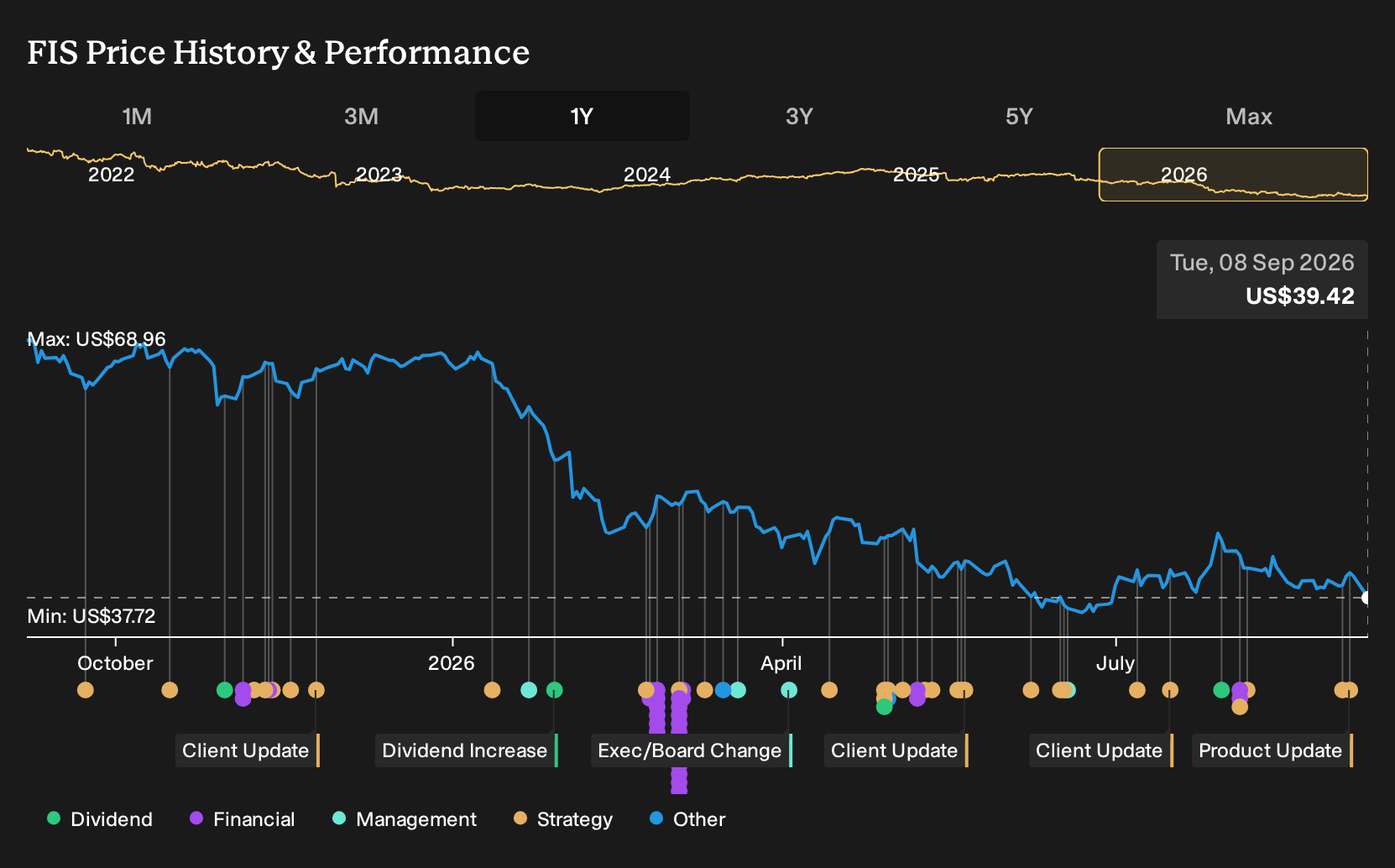
- In recent weeks, FIS has announced new partnerships and product launches, including a long-term InvestCloud wealth management collaboration, BankSouth’s core banking migration, an AWS-based Enterprise Risk Suite, and Glencore’s use of its Supply Chain Finance Platform for a multi-bank US$2.55 billion trade receivables securitization facility.
- Together, these moves highlight FIS’s push to embed cloud, AI and modern integration capabilities across wealth, banking, risk and supply chain finance, while keeping clients on existing core infrastructure.
- We’ll now examine how this push into AI-enabled, cloud-based platforms across wealth and banking could influence FIS’s existing investment narrative.
The future of work is here. Discover the 34 top robotics and automation stocks leading the charge in AI-driven automation and industrial transformation.
Fidelity National Information Services Investment Narrative Recap
To own FIS, you need to believe its core banking, payments, and wealth platforms can keep winning large clients while it shifts more of its stack to cloud and AI. The recent InvestCloud, BankSouth, AWS risk suite, and Glencore deals broadly support that story, but they do not remove the near term risks around competition from fintechs and the execution burden of modernizing such a large installed base.
The InvestCloud partnership looks especially relevant here, because it leans directly into FIS’s AI and cloud catalyst by layering modern advisor and client tools on top of existing core wealth systems. For investors focused on whether FIS can upsell higher value, “stickier” software without forcing disruptive core replacements, this announcement speaks directly to that thesis, even as questions around pricing power and long term margins remain.
Yet investors should also weigh how heavier AI and data spend could pressure margins if adoption disappoints...
Fidelity National Information Services' narrative projects $15.0 billion revenue and $2.4 billion earnings by 2029. This requires 12.1% yearly revenue growth and a $2.0 billion earnings increase from $382.0 million today.
Uncover how Fidelity National Information Services' forecasts yield a $65.29 fair value, a 50% upside to its current price.
Exploring Other Perspectives
Some analysts were far more cautious, assuming revenue of about US$14.7 billion and earnings of roughly US$2.6 billion by 2029, and worry that big AI and cloud investments might not earn their keep as quickly as hoped, so it is worth considering how this new wealth and risk news could shift that more pessimistic view.
Explore 2 other fair value estimates on Fidelity National Information Services - why the stock might be worth over 2x more than the current price!
Form Your Own Verdict
Don't just follow the ticker - dig into the data and build a conviction that's truly your own.
- A great starting point for your Fidelity National Information Services research is our analysis highlighting 3 key rewards and 4 important warning signs that could impact your investment decision.
- Our free Fidelity National Information Services research report provides a comprehensive fundamental analysis summarized in a single visual - the Snowflake - making it easy to evaluate Fidelity National Information Services' overall financial health at a glance.
Ready For A Different Approach?
These stocks are moving-our analysis flagged them today. Act fast before the price catches up:
- Rare earth metals are the new gold rush. Find out which 27 stocks are leading the charge.
- Invest in the nuclear renaissance through our list of 88 elite nuclear energy infrastructure plays powering the global AI revolution.
- Uncover the next big thing with 25 elite penny stocks that balance risk and reward.
This article by Simply Wall St is general in nature. We provide commentary based on historical data and analyst forecasts only using an unbiased methodology and our articles are not intended to be financial advice. It does not constitute a recommendation to buy or sell any stock, and does not take account of your objectives, or your financial situation. We aim to bring you long-term focused analysis driven by fundamental data. Note that our analysis may not factor in the latest price-sensitive company announcements or qualitative material. Simply Wall St has no position in any stocks mentioned.