

Is PPL’s (PPL) Approved Rate Hike Reshaping Its Regulated Infrastructure Investment Story?
PPL Corporation PPL | 0.00 |
- The Pennsylvania Public Utility Commission has approved PPL Electric Utilities’ settlement for a 3.23% distribution rate increase, effective July 1, supporting investments in grid reliability, resilience, and enhanced customer protections following broad stakeholder agreement.
- This outcome gives PPL greater regulatory clarity and a clearer path to fund its planned infrastructure upgrades while maintaining affordability programs for customers.
- Next, we’ll examine how this approved rate increase and settlement shape PPL’s existing investment narrative around regulated growth and infrastructure spending.
Rare earth metals are an input to most high-tech devices, military and defence systems and electric vehicles. The global race is on to secure supply of these critical minerals. Beat the pack to uncover the 27 best rare earth metal stocks of the very few that mine this essential strategic resource.
PPL Investment Narrative Recap
To own PPL, you need to be comfortable with a regulated utility that leans heavily on long term grid and generation investment, and on timely cost recovery through rate cases. The newly approved 3.23% distribution rate increase in Pennsylvania modestly reinforces the near term catalyst around funding that US$20 billion capital plan, while slightly easing the regulatory lag risk that has been hanging over the story.
Among recent updates, the Pennsylvania rate case settlement stands out because it directly connects to PPL’s growth narrative built on regulated infrastructure spending and rising demand from data centers and new economic development. By securing broad stakeholder support and regulatory clarity for new base distribution revenues, the decision helps align PPL’s planned grid upgrades with its capital spending roadmap and its stated goal of sustaining earnings and dividend growth through at least 2028.
Yet, despite this progress, investors should be aware that PPL still faces meaningful exposure if future rate cases or policy shifts in its key states were to...
PPL's narrative projects $11.0 billion revenue and $1.9 billion earnings by 2029. This requires 5.6% yearly revenue growth and about a $0.7 billion earnings increase from $1.2 billion today.
Uncover how PPL's forecasts yield a $41.53 fair value, a 16% upside to its current price.
Exploring Other Perspectives
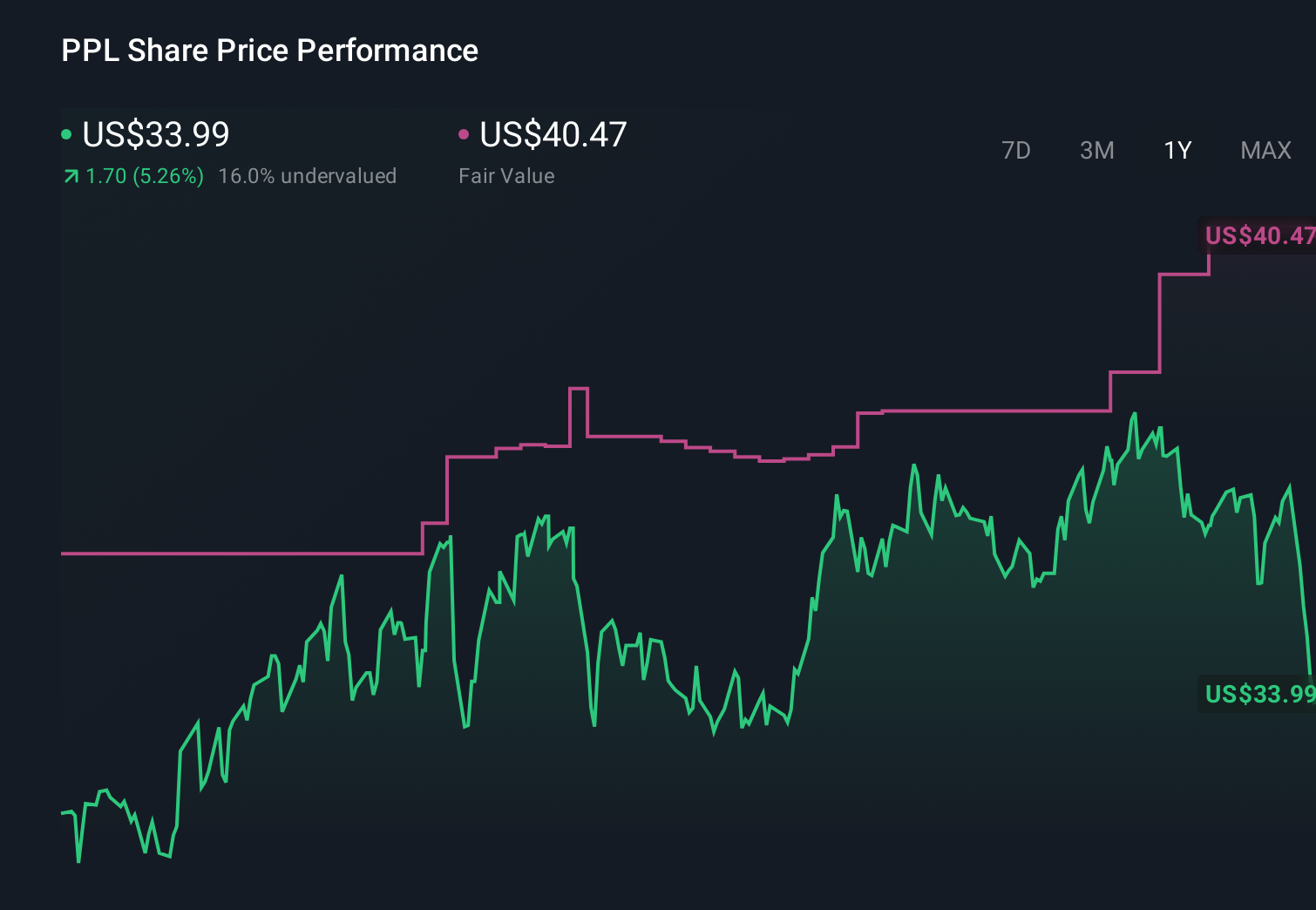
Simply Wall St Community members see PPL’s fair value anywhere between US$19.97 and US$41.53 across 2 views, underlining how far apart individual assumptions can be. When you set that against PPL’s dependence on large, multi year capital programs that must be recovered through future rate cases, it underlines why many investors look at several viewpoints before deciding how resilient this earnings path might really be.
Explore 2 other fair value estimates on PPL - why the stock might be worth as much as 16% more than the current price!
Form Your Own Verdict
Don't just follow the ticker - dig into the data and build a conviction that's truly your own.
- A great starting point for your PPL research is our analysis highlighting 2 key rewards and 2 important warning signs that could impact your investment decision.
- Our free PPL research report provides a comprehensive fundamental analysis summarized in a single visual - the Snowflake - making it easy to evaluate PPL's overall financial health at a glance.
Searching For A Fresh Perspective?
Our daily scans reveal stocks with breakout potential. Don't miss this chance:
- The future of work is here. Discover the 33 top robotics and automation stocks leading the charge in AI-driven automation and industrial transformation.
- We've uncovered the 9 dividend fortresses yielding 5%+ that don't just survive market storms, but thrive in them.
- AI is about to change healthcare. These 39 stocks are working on everything from early diagnostics to drug discovery. The best part - they are all under $10b in market cap - there's still time to get in early.
This article by Simply Wall St is general in nature. We provide commentary based on historical data and analyst forecasts only using an unbiased methodology and our articles are not intended to be financial advice. It does not constitute a recommendation to buy or sell any stock, and does not take account of your objectives, or your financial situation. We aim to bring you long-term focused analysis driven by fundamental data. Note that our analysis may not factor in the latest price-sensitive company announcements or qualitative material. Simply Wall St has no position in any stocks mentioned.