

Should DoorDash’s Drone Launch and Buyback Shift How DASH Investors View Its Profit Strategy?
DoorDash DASH | 0.00 |
- In the second quarter of 2026, DoorDash reported higher sales of US$4,454 million but lower net income of US$200 million year over year, while also completing a US$1.05 billion buyback program that retired about 1.55% of its shares.
- The launch of DoorDash’s FAA-certified in-house drone delivery service, DoorDash Air, adds a new technology-driven fulfillment option that could meaningfully influence the company’s cost structure and operational mix over time.
- We’ll now explore how DoorDash Air’s FAA-certified rollout may reshape DoorDash’s investment narrative around technology, efficiency, and long-term profitability.
Rare earth metals are an input to most high-tech devices, military and defence systems and electric vehicles. The global race is on to secure supply of these critical minerals. Beat the pack to uncover the 28 best rare earth metal stocks of the very few that mine this essential strategic resource.
DoorDash Investment Narrative Recap
To own DoorDash today, you need to believe the company can convert its logistics, technology and multi-vertical footprint into durable, profitable growth, even as competition and regulation remain intense. The latest results show revenue rising but net income slipping, suggesting higher near term investment and cost pressure. DoorDash Air fits the core efficiency story, but the more immediate near term catalyst is whether the company can protect margins while funding these initiatives. The biggest risk remains rising fulfillment and labor costs.
The most relevant recent announcement here is DoorDash’s completion of its US$1.05 billion buyback, which retired about 1.55% of shares. With the stock already trading on a rich P/E multiple, this capital return sits alongside technology bets like DoorDash Air as a test of management’s capital allocation discipline and confidence. How effectively these parallel decisions support earnings per share will matter for how investors judge the next leg of the story.
Yet behind DoorDash Air and the buyback, investors should also be aware of the growing risk that higher labor and fulfillment costs could…
DoorDash's narrative projects $26.2 billion revenue and $3.3 billion earnings by 2029. This requires 21.2% yearly revenue growth and about a $2.4 billion earnings increase from $926.0 million today.
Uncover how DoorDash's forecasts yield a $245.99 fair value, a 16% upside to its current price.
Exploring Other Perspectives
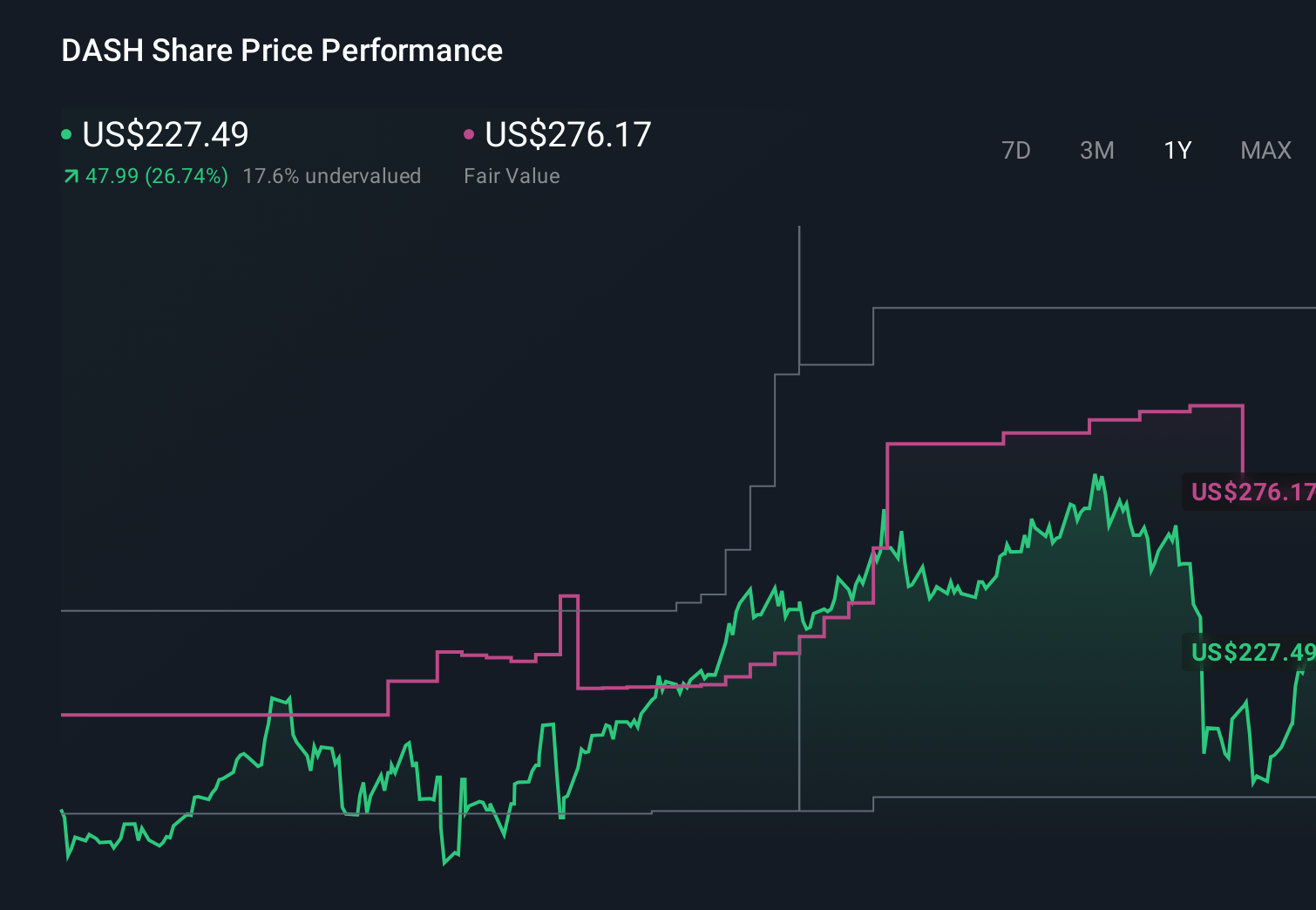
Some of the lowest ranked analysts were already assuming only about US$25 billion in 2029 revenue and US$2.5 billion in earnings, and they focus heavily on labor regulation and fee fatigue as long term margin risks. Their view is much more cautious than the consensus, and DoorDash Air plus the latest buyback could either soften or reinforce that pessimism depending on how the numbers evolve from here.
Explore 10 other fair value estimates on DoorDash - why the stock might be worth over 2x more than the current price!
Reach Your Own Conclusion
Don't just follow the ticker - dig into the data and build a conviction that's truly your own.
- A great starting point for your DoorDash research is our analysis highlighting 3 key rewards and 1 important warning sign that could impact your investment decision.
- Our free DoorDash research report provides a comprehensive fundamental analysis summarized in a single visual - the Snowflake - making it easy to evaluate DoorDash's overall financial health at a glance.
No Opportunity In DoorDash?
Don't miss your shot at the next 10-bagger. Our latest stock picks just dropped:
- Find 49 companies with promising cash flow potential yet trading below their fair value.
- This technology could replace computers: discover 25 stocks that are working to make quantum computing a reality.
- Uncover the next big thing with 19 elite penny stocks that balance risk and reward.
This article by Simply Wall St is general in nature. We provide commentary based on historical data and analyst forecasts only using an unbiased methodology and our articles are not intended to be financial advice. It does not constitute a recommendation to buy or sell any stock, and does not take account of your objectives, or your financial situation. We aim to bring you long-term focused analysis driven by fundamental data. Note that our analysis may not factor in the latest price-sensitive company announcements or qualitative material. Simply Wall St has no position in any stocks mentioned.