

Should Hamilton Insurance Group’s Diverging Russell Exit and Zacks Upgrade Require Action From HG Investors?
Hamilton Insurance Group, Ltd. Class B HG | 0.00 |
- Hamilton Insurance Group, Ltd. was recently dropped from the Russell 2000 Dynamic Index but, on July 7, 2026, was added to the Zacks Rank #1 (Strong Buy) List following an 18.5% upward revision in current‑year earnings estimates over the past 60 days.
- This combination of index exclusion and a Zacks upgrade highlights how differing frameworks can simultaneously reduce passive index exposure while signaling increased analyst confidence in the company’s earnings outlook.
- Next, we’ll examine how Hamilton’s Zacks Rank upgrade and higher earnings estimates might influence its existing investment narrative and risk profile.
The best AI stocks today may lie beyond giants like Nvidia and Microsoft. Find the next big opportunity with these 15 smaller AI-focused companies with strong growth potential through early-stage innovation in machine learning, automation, and data intelligence that could fund your retirement.
Hamilton Insurance Group Investment Narrative Recap
To own Hamilton Insurance Group, you need to believe in its ability to underwrite complex specialty and reinsurance risks while managing earnings volatility from large loss events. The Russell 2000 Dynamic Index removal may trim some passive flows, but the Zacks Rank upgrade and higher earnings estimates appear more relevant near term, reinforcing the existing earnings catalyst rather than changing it. The biggest risk continues to be exposure to high‑severity catastrophe and casualty losses, which can strain reserves and compress margins.
Among recent developments, Hamilton’s April 2026 casualty reinsurance sidecar stands out alongside the Zacks upgrade. By adding multi‑year third party capital and fee income, the sidecar supports Hamilton’s effort to grow specialty reinsurance capacity while tempering balance sheet risk, which ties directly into the earnings narrative that Zacks highlighted. It also sits against the backdrop of Hamilton’s ongoing buybacks and capital returns, which could amplify the impact of any earnings shifts on per share results.
Yet investors should also be aware that, despite these positives, Hamilton’s concentration in high‑severity risks means that...
Hamilton Insurance Group's narrative projects $3.3 billion revenue and $509.9 million earnings by 2029.
Uncover how Hamilton Insurance Group's forecasts yield a $34.14 fair value, in line with its current price.
Exploring Other Perspectives
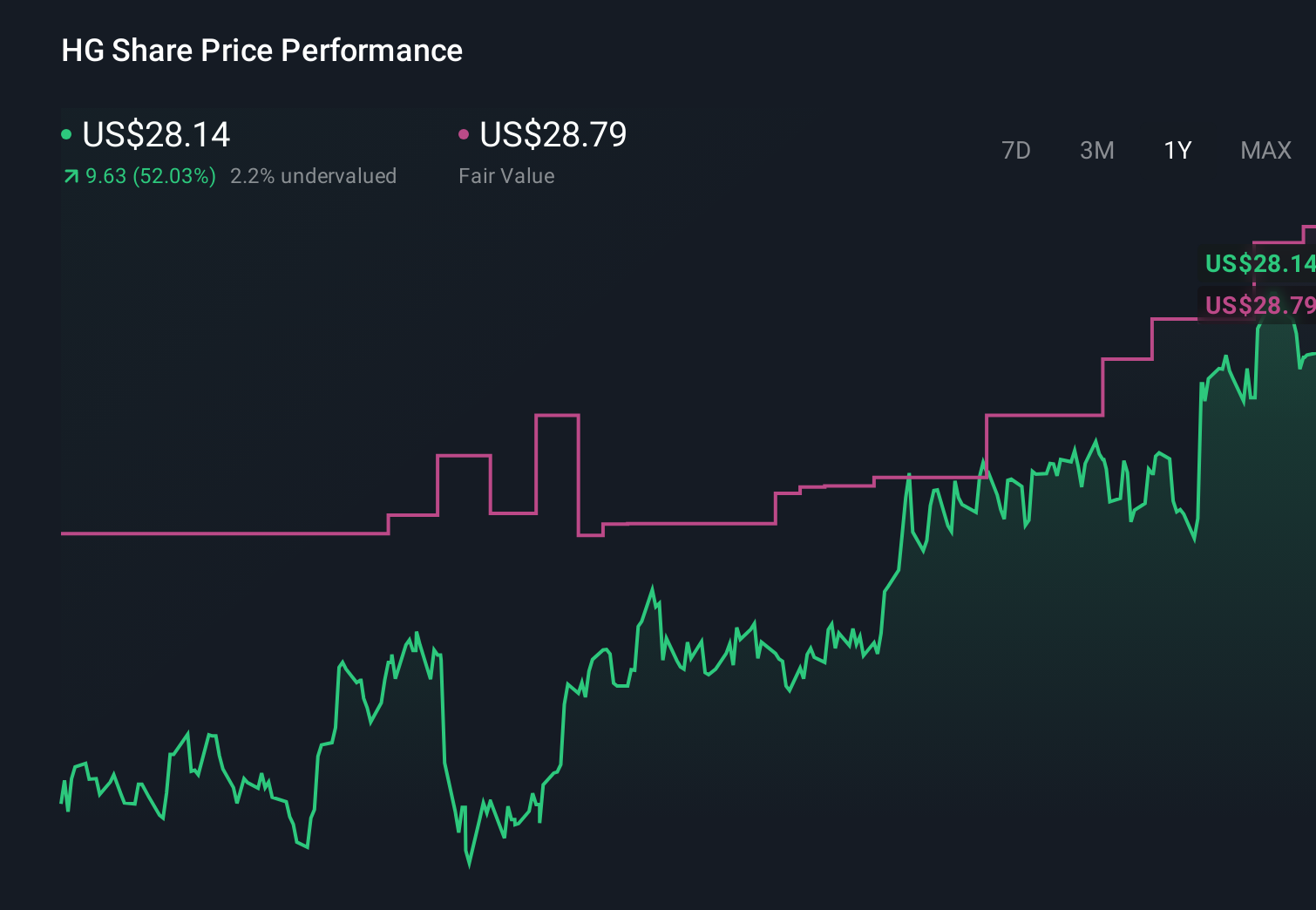
Four Simply Wall St Community fair value estimates for Hamilton span roughly US$34 to US$120 per share, showing how far apart individual views can be. You can weigh those against Hamilton’s continued exposure to large, infrequent catastrophe and casualty events, which may shape how you think about its future profitability and resilience.
Explore 4 other fair value estimates on Hamilton Insurance Group - why the stock might be worth just $34.14!
The Verdict Is Yours
Don't just follow the ticker - dig into the data and build a conviction that's truly your own.
- A great starting point for your Hamilton Insurance Group research is our analysis highlighting 3 key rewards and 2 important warning signs that could impact your investment decision.
- Our free Hamilton Insurance Group research report provides a comprehensive fundamental analysis summarized in a single visual - the Snowflake - making it easy to evaluate Hamilton Insurance Group's overall financial health at a glance.
Curious About Other Options?
Early movers are already taking notice. See the stocks they're targeting before they've flown the coop:
- This technology could replace computers: discover 26 stocks that are working to make quantum computing a reality.
- Find 45 companies with promising cash flow potential yet trading below their fair value.
- Rare earth metals are the new gold rush. Find out which 31 stocks are leading the charge.
This article by Simply Wall St is general in nature. We provide commentary based on historical data and analyst forecasts only using an unbiased methodology and our articles are not intended to be financial advice. It does not constitute a recommendation to buy or sell any stock, and does not take account of your objectives, or your financial situation. We aim to bring you long-term focused analysis driven by fundamental data. Note that our analysis may not factor in the latest price-sensitive company announcements or qualitative material. Simply Wall St has no position in any stocks mentioned.