

The Bull Case For Pitney Bowes (PBI) Could Change Following A Surge In Institutional Ownership
Pitney Bowes Inc. PBI | 0.00 |
- In recent days, Pitney Bowes reported a very large level of institutional shareholding in its stock, led by bigger positions from LSV Asset Management and Goldman Sachs, even as its latest quarter showed weaker revenue and a sharp drop in net profit.
- This combination of heavier institutional involvement and strong technical momentum, despite fragile financial health, highlights a sharp split between trading signals and underlying fundamentals.
- Next, we’ll examine how the surge in institutional ownership may influence Pitney Bowes’ existing investment narrative around logistics and digital growth.
Invest in the nuclear renaissance through our list of 89 elite nuclear energy infrastructure plays powering the global AI revolution.
Pitney Bowes Investment Narrative Recap
To own Pitney Bowes today, you generally need to believe its logistics, Presort, and digital mailing platforms can offset pressure on traditional mail, while high debt and execution risk stay manageable. The recent spike in institutional ownership and strong technical momentum may amplify the short term impact of any earnings surprises, but it does not materially change the central risk that weak quarters could quickly refocus attention on leverage and refinancing needs.
The recent expansion of Pitney Bowes’ revolving credit facility and term loan, extending maturities to 2031 and supporting refinancing of senior notes, is particularly relevant here. It sits alongside heavier institutional buying and buyback capacity, potentially strengthening the balance sheet story that underpins the current trading setup, but it also raises the stakes if future operating results do not support ongoing access to debt markets on similar terms.
Yet behind the strong recent share price, one of the key refinancing risks that investors should be aware of is whether...
Pitney Bowes' narrative projects $1.8 billion revenue and $239.7 million earnings by 2029.
Uncover how Pitney Bowes' forecasts yield a $15.05 fair value, a 14% downside to its current price.
Exploring Other Perspectives
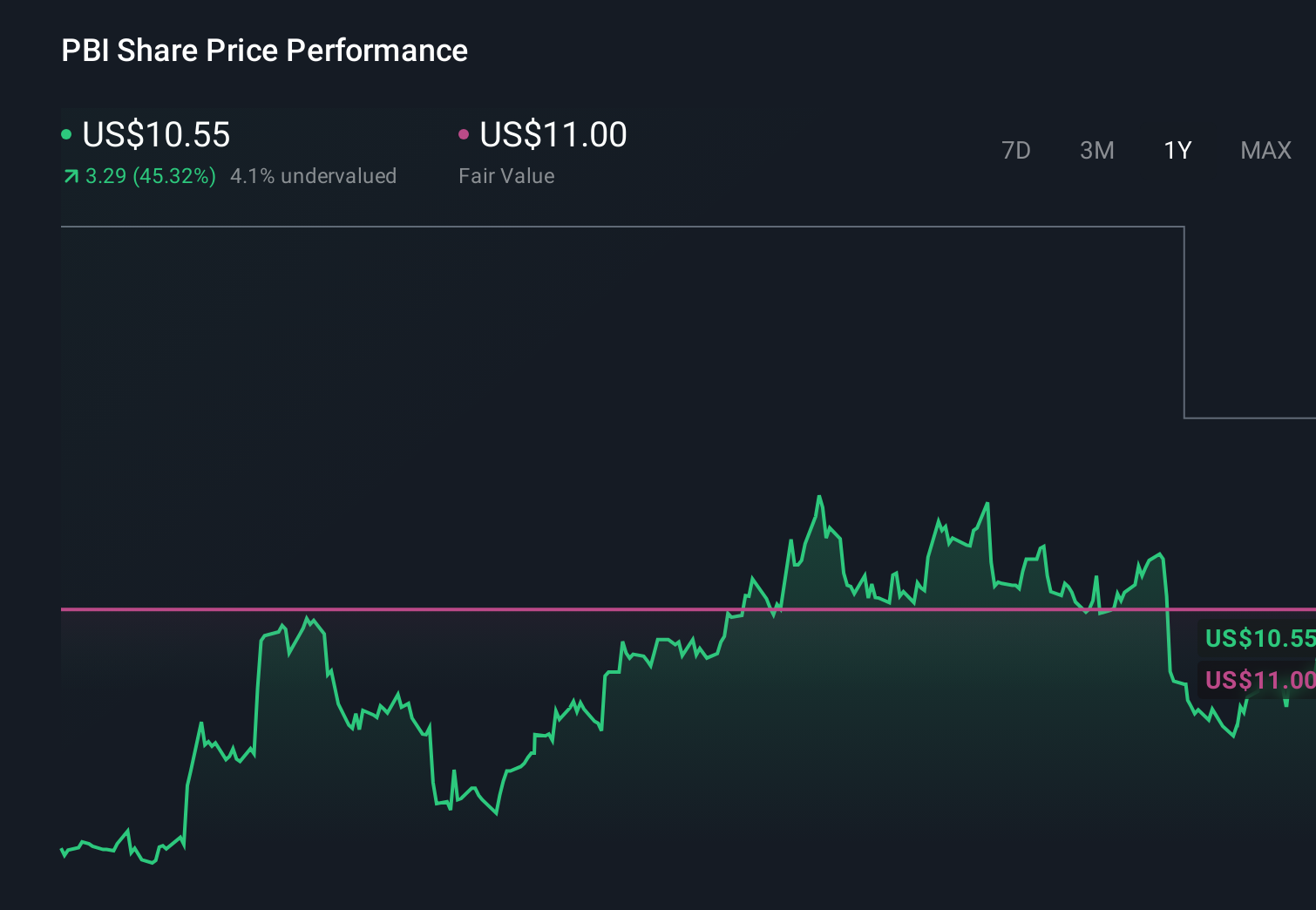
Some of the most optimistic analysts once expected earnings to reach about US$340 million by 2029, yet today’s institutional buying and balance sheet moves could ultimately test how realistic those forecasts and the reliance on Presort consolidation really are, so you should be aware that opinions on Pitney Bowes’ future can differ widely.
Explore 5 other fair value estimates on Pitney Bowes - why the stock might be worth over 2x more than the current price!
The Verdict Is Yours
Disagree with existing narratives? Extraordinary investment returns rarely come from following the herd, so go with your instincts.
- A great starting point for your Pitney Bowes research is our analysis highlighting 4 key rewards and 3 important warning signs that could impact your investment decision.
- Our free Pitney Bowes research report provides a comprehensive fundamental analysis summarized in a single visual - the Snowflake - making it easy to evaluate Pitney Bowes' overall financial health at a glance.
Interested In Other Possibilities?
Opportunities like this don't last. These are today's most promising picks. Check them out now:
- The future of work is here. Discover the 31 top robotics and automation stocks leading the charge in AI-driven automation and industrial transformation.
- Find 45 companies with promising cash flow potential yet trading below their fair value.
- We've uncovered the 8 dividend fortresses yielding 5%+ that don't just survive market storms, but thrive in them.
This article by Simply Wall St is general in nature. We provide commentary based on historical data and analyst forecasts only using an unbiased methodology and our articles are not intended to be financial advice. It does not constitute a recommendation to buy or sell any stock, and does not take account of your objectives, or your financial situation. We aim to bring you long-term focused analysis driven by fundamental data. Note that our analysis may not factor in the latest price-sensitive company announcements or qualitative material. Simply Wall St has no position in any stocks mentioned.