

Victoria's Secret (VSCO) Stock Looks Discounted Relative To Fair Value
Victoria's Secret & Company VSXY | 0.00 |
Victoria's Secret stock has delivered a very strong 400.3% return over the past three years, yet valuation checks point to an unusual setup where both the Discounted Cash Flow (DCF) intrinsic value estimate and the market multiples suggest the shares may still be undervalued. That combination, alongside such a sharp past return, raises the question of how much of the current DCF implied upside is already reflected in the price.
- Over the past three years, Victoria's Secret has returned 400.3%, which puts recent gains under the spotlight when assessing how much upside is left.
- The appointment of former Starbucks technology leader Gerri Martin-Flickinger to the Board can support the company’s plan to improve digital capabilities. However, any setback in executing that plan may weigh on future cash flow expectations that underpin the intrinsic value estimate.
- Across Simply Wall St’s broader checks, Victoria's Secret screens as undervalued in 3 of 6 areas. This mixed picture, rather than a clear bargain or clear overvaluation, is captured by its value score of 3 out of 6.
The issue now is whether Victoria's Secret’s current share price already captures most of the upside implied by the Discounted Cash Flow intrinsic value estimate or still leaves a meaningful margin.
Does Victoria's Secret Look Undervalued on Cash Flow?
The Discounted Cash Flow (DCF) method estimates what Victoria's Secret stock could be worth based on projected future cash that the business generates for shareholders.
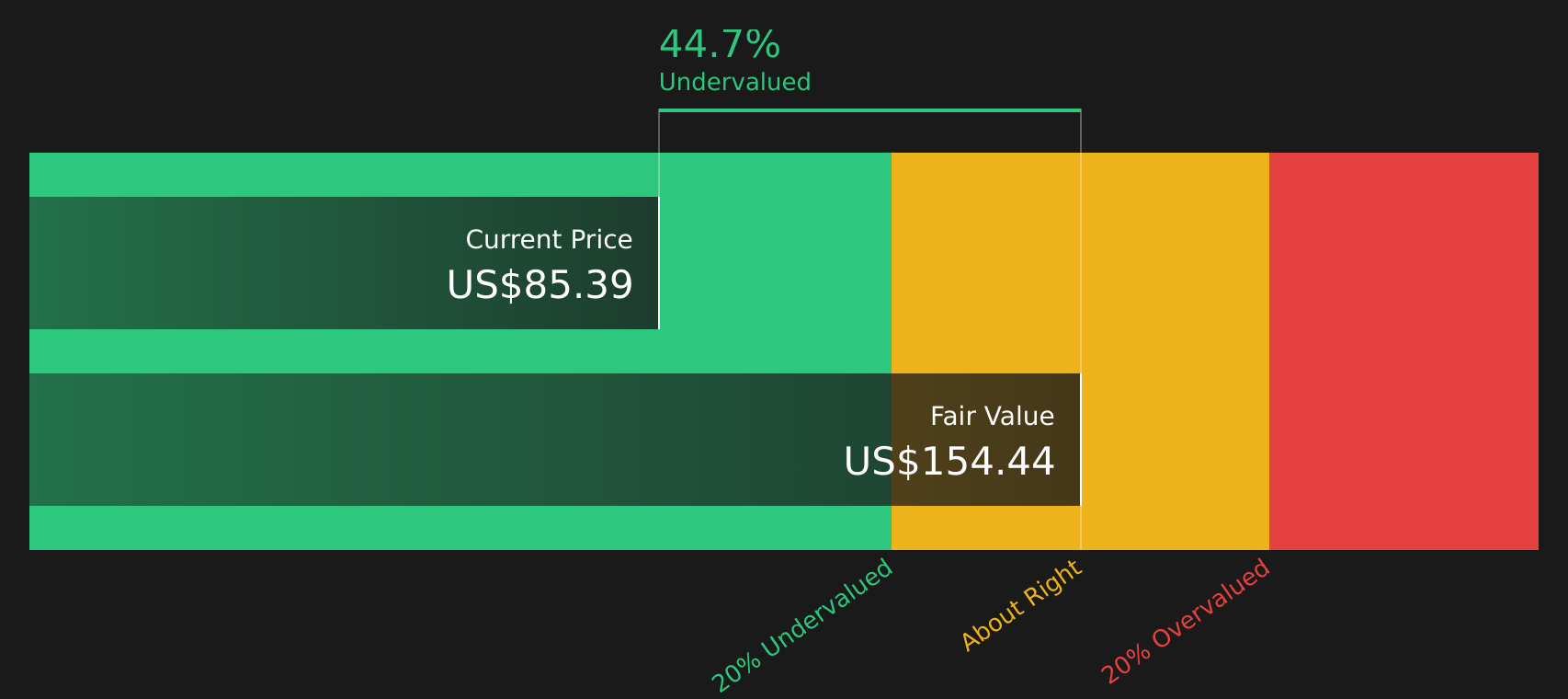
Victoria's Secret most recent twelve month free cash flow is about $293 million, with the 2 Stage Free Cash Flow to Equity model assuming that cash flows grow rather than contract over time. On these projections, the DCF model points to an estimated intrinsic value of about $155.63 per share in $ terms. Compared with the current share price, that implies the stock trades at roughly a 44.2% discount to this intrinsic value estimate.
The recent appointment of Gerri Martin-Flickinger to the Board is framed around strengthening digital capabilities, and this focus on technology helps explain why some investors may be comfortable with cash flow growth assumptions embedded in the DCF. On balance, the DCF workup indicates that, within the assumptions of this model, Victoria's Secret is currently priced below the value implied by its projected cash flows.
Our Discounted Cash Flow (DCF) analysis suggests Victoria's Secret is undervalued by 44.2%. Track this in your watchlist or portfolio, or discover 50 more high quality undervalued stocks.
Is Victoria's Secret a Bargain on Earnings?
The P/E ratio is a useful way to look at Victoria's Secret because earnings are a key focus for many retail investors comparing it with other Specialty Retail stocks.
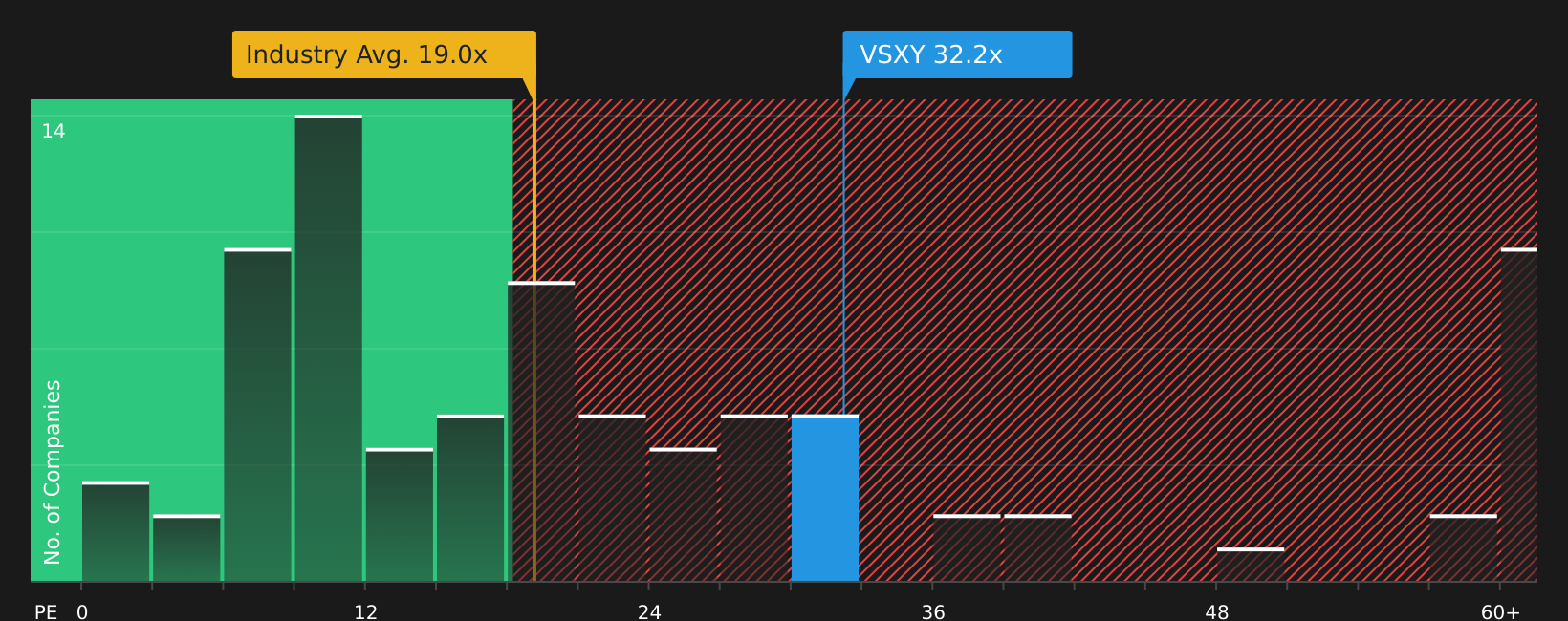
Victoria's Secret trades on a P/E of about 32.7x, which is higher than the Specialty Retail industry average of roughly 19.5x and above the peer group average of about 12.5x. On raw comparison the stock appears expensive relative to many peers. Simply Wall St's model, which blends factors such as the company's growth profile, profitability and risk, points to a fair P/E of about 44.8x for Victoria's Secret.
That fair multiple is above the current 32.7x, which indicates that, within this framework, the stock does not fully reflect the earnings profile implied by the model and screens as undervalued on earnings.
On the P/E yardstick, Victoria's Secret stock currently appears undervalued relative to the earnings multiple implied by its fundamentals.
The Victoria's Secret Narrative: What Would Justify Today's Price?
Simply Wall St Narratives pick up where the Victoria's Secret valuation puzzle leaves off by spelling out which paths for growth, margins and earnings would need to play out for the stock to be worth materially more or less than it trades for today on the market. Each narrative sets out a fair value view as a thesis about Victoria's Secret's business that you can track over time, and these sit on Simply Wall St's Community page.
Victoria's Secret inspires sharply different views in the community, with one camp focused on margin execution potential and another worried about brand and cost headwinds.
Bull case: 6% undervalued
"Continuous innovation through shorter product lead times, rapid product cycles, and more frequent fashion and cultural collaborations is enabling Victoria's Secret to better respond to consumer preferences and cultural trends, resulting in higher regular-priced sales and mitigating promotional markdowns supporting gross margin improvement…"
Bear case: 19% overvalued
"Heavy reliance on a physical store footprint especially in declining malls combined with incremental investments in store remodels and slow progress in digital transformation is likely to result in structurally higher SG&A and occupancy costs, limiting scalability, pressuring net margins, and making meaningful earnings expansion unlikely…"
Do you think there's more to the story for Victoria's Secret? Head over to our Community to see what others are saying!
The Bottom Line
Victoria's Secret screens as undervalued on both the Discounted Cash Flow (DCF) intrinsic value estimate and on its P/E based market multiple, even after a very strong three year run. The broader checks are mixed rather than emphatically supportive, so the apparent discount needs to be weighed against execution risk, especially around digital progress and margins. For many investors the key question is whether the margin and earnings path that underpins the intrinsic value case proves realistic. The crux of the bull versus bear debate is whether current cash flow and earnings expectations are too generous or still leave room for upside re rating.
This article by Simply Wall St is general in nature. We provide commentary based on historical data and analyst forecasts only using an unbiased methodology and our articles are not intended to be financial advice. It does not constitute a recommendation to buy or sell any stock, and does not take account of your objectives, or your financial situation. We aim to bring you long-term focused analysis driven by fundamental data. Note that our analysis may not factor in the latest price-sensitive company announcements or qualitative material. Simply Wall St has no position in any stocks mentioned.