

What Cabot (CBT)'s Post‑Earnings $350 Million Note Offering Means For Shareholders
Cabot Corporation CBT | 0.00 |
- In August 2026, Cabot Corporation completed a US$349.98 million fixed-income offering of 4.950% senior unsecured notes due August 15, 2029, shortly after reporting third-quarter results showing higher sales but sharply lower profitability year over year.
- The timing of this sizable debt raise, coming right after earnings and full-year earnings-per-share guidance of US$2.77, highlights Cabot’s current focus on balancing funding needs with capital structure management.
- Now we’ll examine how Cabot’s post-earnings debt issuance may influence its investment narrative around balance sheet strength and capital allocation.
AI is about to change healthcare. These 42 stocks are working on everything from early diagnostics to drug discovery. The best part - they are all under $10b in market cap - there's still time to get in early.
Cabot Investment Narrative Recap
To own Cabot today, you need to believe in its specialty materials footprint across batteries, tires and infrastructure, while accepting recent earnings volatility. The new US$349.98 million, 4.950% senior note issue after a quarter of sharply lower profitability puts the balance sheet and interest costs in sharper focus, but it does not appear to change the near term catalyst around execution in higher margin Battery Materials or the key risk of margin pressure in legacy businesses.
Among recent announcements, Cabot’s third quarter 2026 results are most relevant here. Sales grew to US$982 million, yet net income fell to US$6 million, with diluted EPS at US$0.12 versus US$1.86 a year earlier, and full year EPS guidance held at US$2.77. Against that backdrop, moving ahead with a sizeable bond offering places more attention on how effectively Cabot converts its specialty materials exposure into consistent earnings while managing a higher debt load.
Yet behind Cabot’s attractive battery and data center exposure, investors should be aware that margin pressure in Reinforcement Materials and higher leverage could...
Cabot's narrative projects $4.0 billion revenue and $479.7 million earnings by 2029. This requires 3.5% yearly revenue growth and a $198.7 million earnings increase from $281.0 million today.
Uncover how Cabot's forecasts yield a $88.50 fair value, in line with its current price.
Exploring Other Perspectives
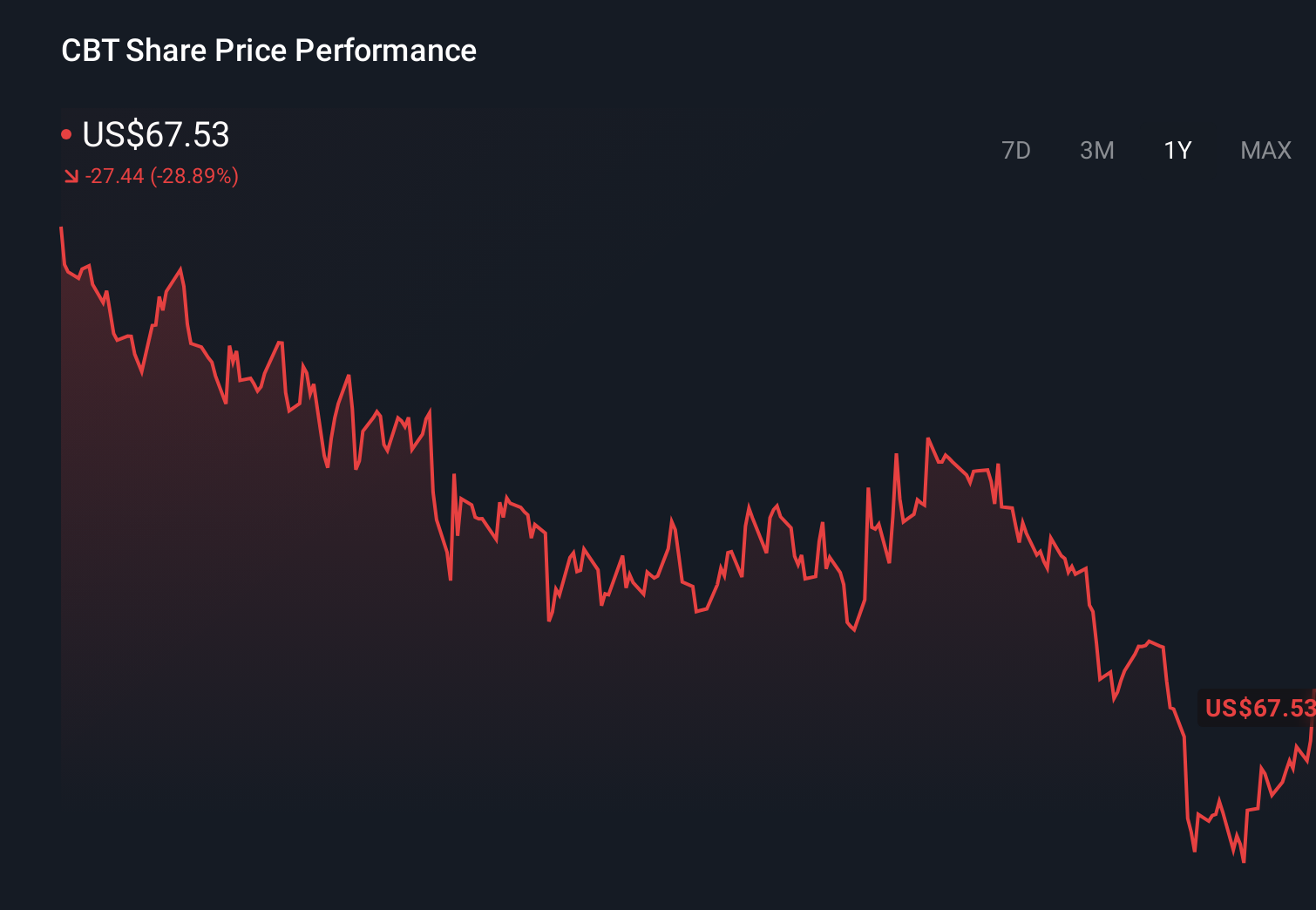
Before this bond deal and earnings miss, the most optimistic analysts were assuming Cabot could reach about US$4.0 billion of revenue and roughly US$499 million of earnings by 2029, which is far more upbeat than the more cautious view that focuses on pricing pressure in Reinforcement Materials and competition in Asia, so this latest funding move may well prompt you to revisit which version of the story you find more convincing.
Explore 4 other fair value estimates on Cabot - why the stock might be worth 11% less than the current price!
The Verdict Is Yours
Don't just follow the ticker - dig into the data and build a conviction that's truly your own.
- A great starting point for your Cabot research is our analysis highlighting 4 key rewards and 2 important warning signs that could impact your investment decision.
- Our free Cabot research report provides a comprehensive fundamental analysis summarized in a single visual - the Snowflake - making it easy to evaluate Cabot's overall financial health at a glance.
Ready To Venture Into Other Investment Styles?
Opportunities like this don't last. These are today's most promising picks. Check them out now:
- Find 52 companies with promising cash flow potential yet trading below their fair value.
- Capitalize on the AI infrastructure supercycle with our selection of the 55 best 'picks and shovels' of the AI gold rush converting record-breaking demand into massive cash flow.
- The future of work is here. Discover the 37 top robotics and automation stocks leading the charge in AI-driven automation and industrial transformation.
This article by Simply Wall St is general in nature. We provide commentary based on historical data and analyst forecasts only using an unbiased methodology and our articles are not intended to be financial advice. It does not constitute a recommendation to buy or sell any stock, and does not take account of your objectives, or your financial situation. We aim to bring you long-term focused analysis driven by fundamental data. Note that our analysis may not factor in the latest price-sensitive company announcements or qualitative material. Simply Wall St has no position in any stocks mentioned.