

Why Exxon Mobil (XOM) Is Down 6.0% After US‑Iran Peace Deal Sinks Oil Prices And What's Next
Exxon Mobil Corporation XOM | 0.00 |
- Earlier this week, a peace agreement between the US and Iran led to the phased reopening of the Strait of Hormuz, easing supply disruption fears and contributing to a sharp drop in crude oil prices that weighed on Exxon Mobil and the broader energy sector.
- At the same time, Exxon Mobil has been moving ahead with long-term growth initiatives, including large-scale offshore expansion plans in Guyana and preliminary LNG supply agreements for South Africa, which could reshape its production mix and geographic exposure over the coming decade.
- Next, we’ll examine how the oil price drop linked to the US‑Iran peace deal may alter Exxon Mobil’s existing investment narrative.
The future of work is here. Discover the 31 top robotics and automation stocks leading the charge in AI-driven automation and industrial transformation.
Exxon Mobil Investment Narrative Recap
To own Exxon Mobil today, you need to believe its scale, low cost assets and integrated model can still create value even when oil prices swing sharply. The US Iran peace deal and resulting crude pullback hit near term sentiment, but do not fundamentally change the main catalyst: execution in Guyana and the Permian. The biggest current risk remains that a faster shift away from hydrocarbons or tighter carbon rules could erode returns on those long lived projects.
Against that backdrop, Exxon Mobil’s push in Guyana looks especially relevant. The company has applied to drill up to 35 additional wells in the Stabroek block from 2028 to 2033, building on production that already exceeds 900,000 barrels per day. For investors, this program sits at the center of the growth story, but it also concentrates regulatory, geopolitical and environmental risk in one of Exxon’s most important regions.
Yet investors should be aware that if Guyana risks increase or decarbonization pressures build faster than expected, the current growth story could...
Exxon Mobil's narrative projects $369.2 billion revenue and $46.2 billion earnings by 2029. This implies 4.2% yearly revenue growth and an $20.9 billion earnings increase from $25.3 billion today.
Uncover how Exxon Mobil's forecasts yield a $169.91 fair value, a 23% upside to its current price.
Exploring Other Perspectives
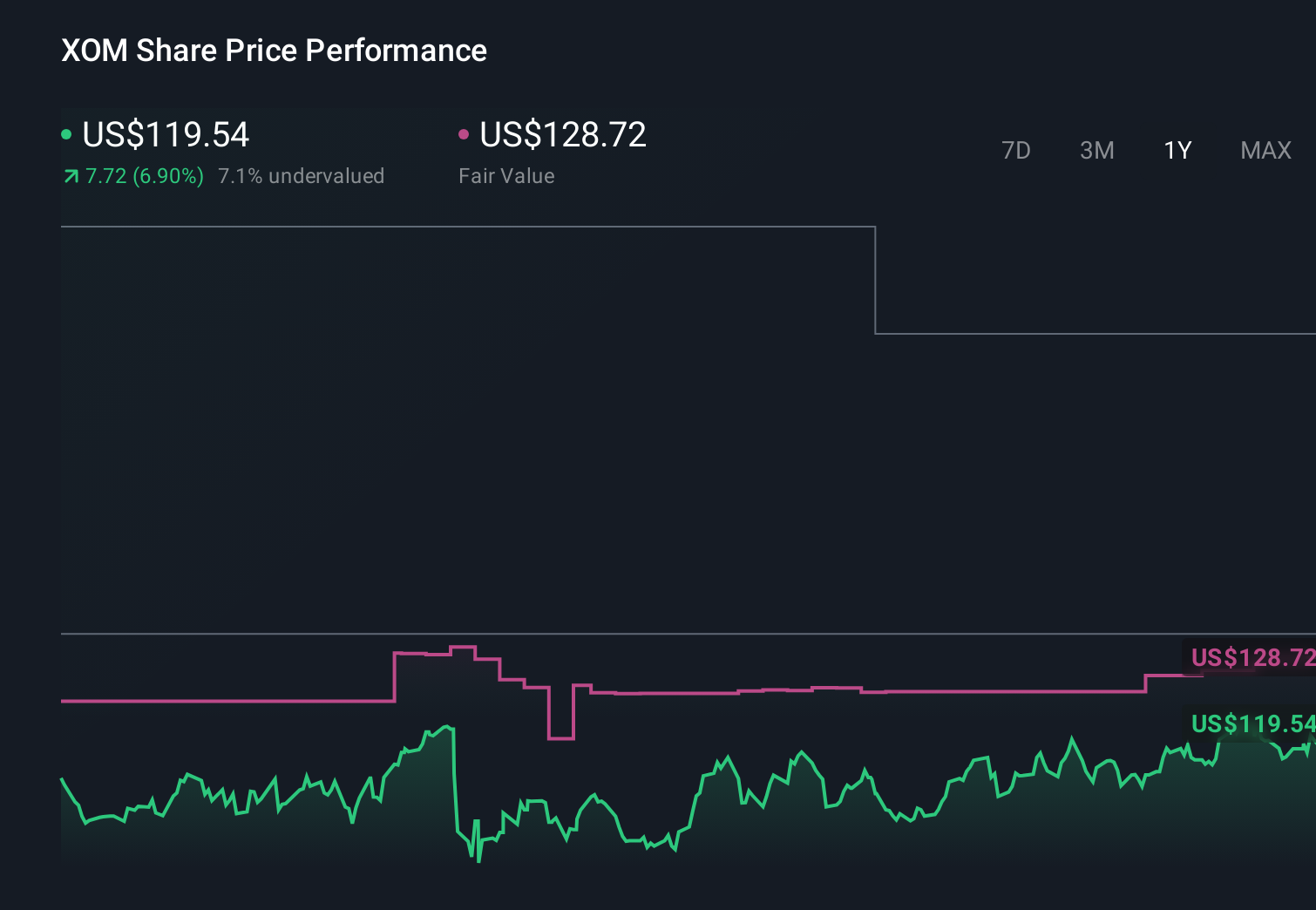
The most optimistic analysts were assuming revenue near US$400 billion and earnings around US$50 billion by 2029, which is a much rosier view than consensus and could look very different if geopolitical shifts and Guyana related risks play out in ways the market has not yet fully reassessed.
Explore 10 other fair value estimates on Exxon Mobil - why the stock might be worth just $132.00!
Form Your Own Verdict
Disagree with existing narratives? Extraordinary investment returns rarely come from following the herd, so go with your instincts.
- A great starting point for your Exxon Mobil research is our analysis highlighting 3 key rewards and 1 important warning sign that could impact your investment decision.
- Our free Exxon Mobil research report provides a comprehensive fundamental analysis summarized in a single visual - the Snowflake - making it easy to evaluate Exxon Mobil's overall financial health at a glance.
No Opportunity In Exxon Mobil?
Every day counts. These free picks are already gaining attention. See them before the crowd does:
- AI is about to change healthcare. These 41 stocks are working on everything from early diagnostics to drug discovery. The best part - they are all under $10b in market cap - there's still time to get in early.
- We've uncovered the 8 dividend fortresses yielding 5%+ that don't just survive market storms, but thrive in them.
- The latest GPUs need a type of rare earth metal called Terbium and there are only 30 companies in the world exploring or producing it. Find the list for free.
This article by Simply Wall St is general in nature. We provide commentary based on historical data and analyst forecasts only using an unbiased methodology and our articles are not intended to be financial advice. It does not constitute a recommendation to buy or sell any stock, and does not take account of your objectives, or your financial situation. We aim to bring you long-term focused analysis driven by fundamental data. Note that our analysis may not factor in the latest price-sensitive company announcements or qualitative material. Simply Wall St has no position in any stocks mentioned.