

Why Peabody Energy (BTU) Is Up 10.2% After Issuing New 2031 Convertible Notes And Retiring Debt
Peabody Energy BTU | 0.00 |
- Peabody Energy has completed a US$225,000,000 offering of 0.50% convertible senior unsecured notes due June 1, 2031, issued at par under Rule 144A to qualified institutional buyers.
- The company plans to use the proceeds for capped call transactions and to repurchase a portion of its existing 3.250% convertible notes due 2028, signaling an active reshaping of its capital structure.
- We’ll now examine how Peabody’s new 2031 convertible notes and debt repurchase plans could influence its previously outlined investment narrative.
Find 46 companies with promising cash flow potential yet trading below their fair value.
Peabody Energy Investment Narrative Recap
To own Peabody today, you need to believe coal cash flows can still matter even as decarbonization pressures build, and that recent U.S. policy support and volume guidance underpin a credible earnings recovery. The new US$225,000,000 0.50% 2031 convertible notes modestly tweak the near term story by addressing funding and liability management, but do not materially change the key short term catalyst of operational performance or the largest risk around long term coal demand and regulation.
The most relevant recent update here is Peabody’s Q1 2026 result, which showed a net loss of US$32.4m on US$973.3m of sales, underscoring how sensitive earnings remain to volumes, costs, and pricing. Against that backdrop, raising low coupon convertible debt to refinance 2028 notes looks primarily like a balance sheet exercise that sits alongside existing dividends and prior buybacks, rather than a shift in the core production and demand catalysts investors are watching.
But set against these capital moves, the longer term risk that coal’s addressable market could shrink faster than expected is something investors should be aware of...
Peabody Energy's narrative projects $4.8 billion revenue and $449.0 million earnings by 2029. This requires 7.9% yearly revenue growth and a $501.7 million earnings increase from -$52.7 million today.
Uncover how Peabody Energy's forecasts yield a $39.75 fair value, a 47% upside to its current price.
Exploring Other Perspectives
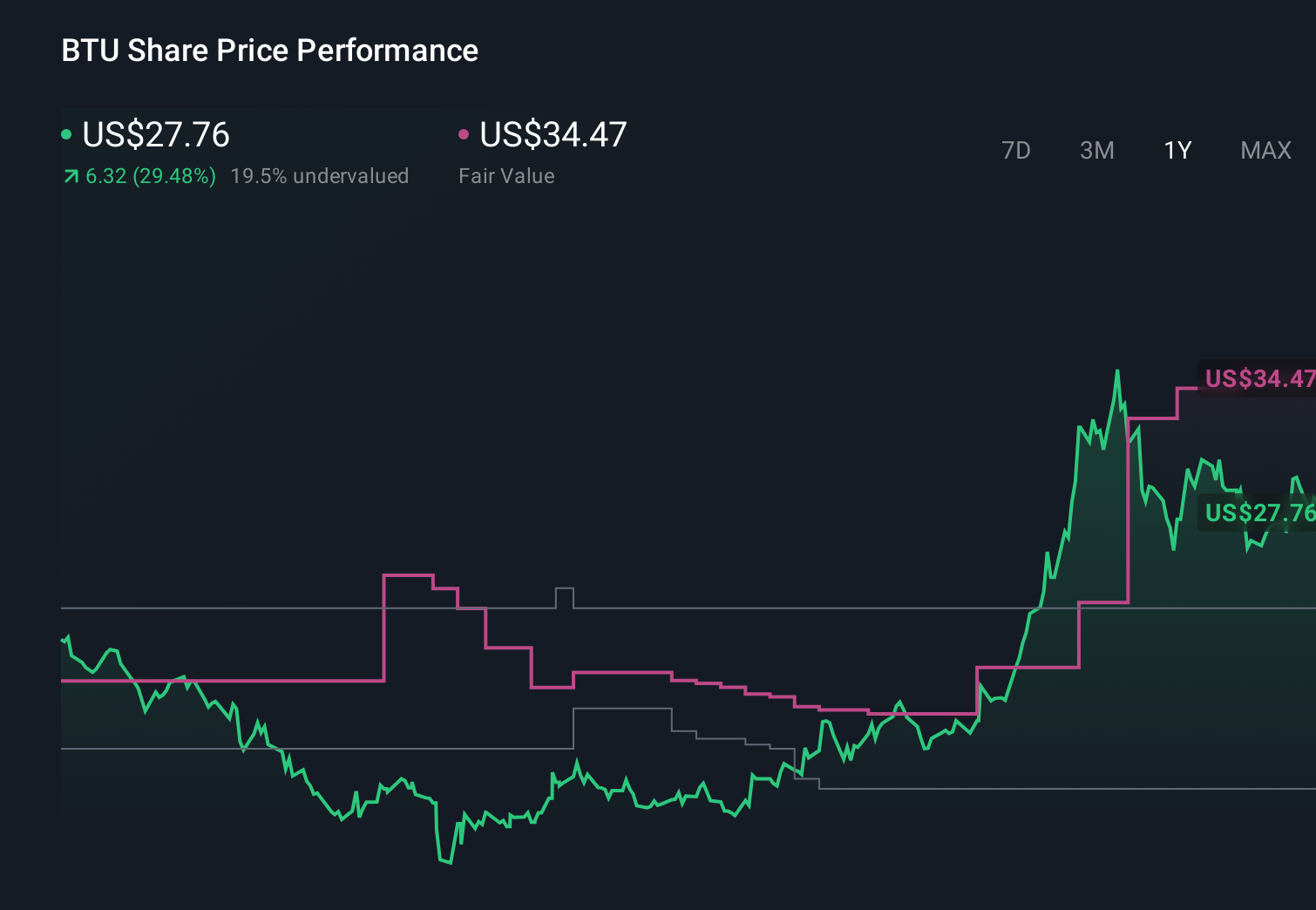
Some of the lowest analysts were already assuming only about 4.7% annual revenue growth and roughly US$463.9m of earnings by 2029, so if you are comparing those more pessimistic expectations with Peabody’s fresh 2031 convertible issue and balance sheet moves, it is worth recognizing how far views can differ and considering how this new deal might shift both the cautious and optimistic narratives from here.
Explore 6 other fair value estimates on Peabody Energy - why the stock might be worth over 3x more than the current price!
Decide For Yourself
Don't just follow the ticker - dig into the data and build a conviction that's truly your own.
- A great starting point for your Peabody Energy research is our analysis highlighting 3 key rewards and 1 important warning sign that could impact your investment decision.
- Our free Peabody Energy research report provides a comprehensive fundamental analysis summarized in a single visual - the Snowflake - making it easy to evaluate Peabody Energy's overall financial health at a glance.
Ready For A Different Approach?
Our top stock finds are flying under the radar-for now. Get in early:
- The future of work is here. Discover the 33 top robotics and automation stocks leading the charge in AI-driven automation and industrial transformation.
- Uncover the next big thing with 23 elite penny stocks that balance risk and reward.
- Invest in the nuclear renaissance through our list of 88 elite nuclear energy infrastructure plays powering the global AI revolution.
This article by Simply Wall St is general in nature. We provide commentary based on historical data and analyst forecasts only using an unbiased methodology and our articles are not intended to be financial advice. It does not constitute a recommendation to buy or sell any stock, and does not take account of your objectives, or your financial situation. We aim to bring you long-term focused analysis driven by fundamental data. Note that our analysis may not factor in the latest price-sensitive company announcements or qualitative material. Simply Wall St has no position in any stocks mentioned.