

Will Higher Revenue but Lower EPS in Q2 2026 Change Trinity Capital's (TRIN) Investment Narrative?
Trinity Capital, Inc. TRIN | 0.00 |
- Trinity Capital Inc. has released its second-quarter and six-month 2026 results, showing revenue of US$87.17 million and net income of US$44.41 million for the quarter, both higher than a year earlier, while basic and diluted earnings per share from continuing operations eased to US$0.49.
- Despite higher revenue and net income for both the quarter and half-year, Trinity’s earnings per share declined versus 2025, highlighting the impact of share issuance or other factors on per‑share profitability.
- We’ll now examine how this mix of higher revenue but lower earnings per share may reshape Trinity Capital’s previously outlined investment narrative.
The future of work is here. Discover the 36 top robotics and automation stocks leading the charge in AI-driven automation and industrial transformation.
Trinity Capital Investment Narrative Recap
To own Trinity Capital, you need to believe its specialty lending model and fee-based initiatives can keep supporting attractive earnings, even if per share figures fluctuate. The latest results show higher revenue and net income but weaker earnings per share, which points to dilution as a more immediate concern than any single operational catalyst or credit event. For now, the headline numbers do not materially change the near term focus on how efficiently growth translates into per share returns.
The most relevant recent announcement alongside these results is the continued payment of monthly cash dividends of US$0.17 per share. That commitment matters in the context of rising revenue but easing earnings per share, because it puts a spotlight on dividend coverage and balance sheet flexibility as Trinity pursues growth in assets under management and new lending partnerships.
Yet behind the higher revenue and steady dividends, investors should be aware that interest payments are not well covered and...
Trinity Capital's narrative projects $461.5 million revenue and $240.8 million earnings by 2029.
Uncover how Trinity Capital's forecasts yield a $17.92 fair value, in line with its current price.
Exploring Other Perspectives
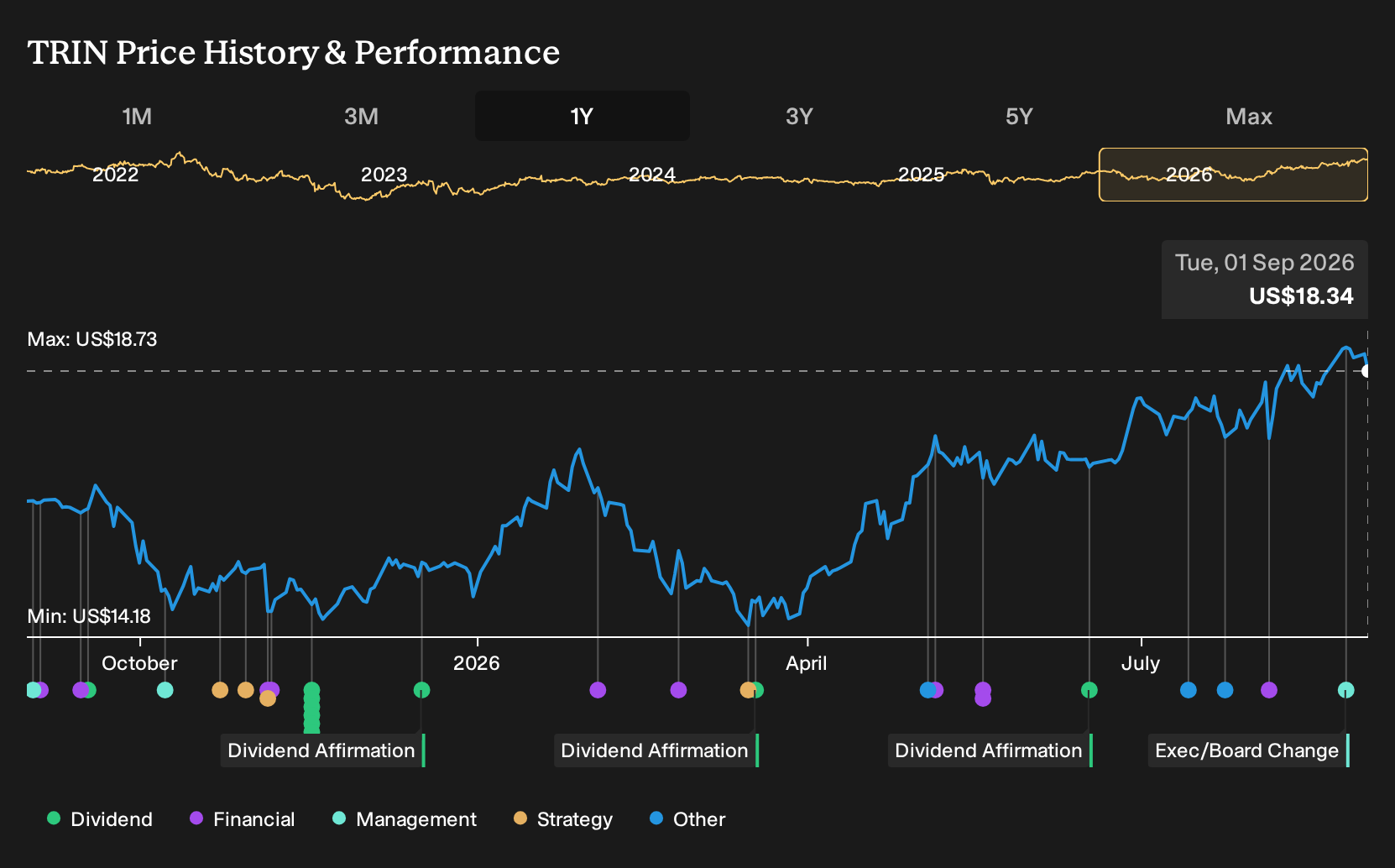
Three members of the Simply Wall St Community currently estimate Trinity’s fair value between US$16.36 and US$27.04, reflecting a wide spread of views. Set against this, the recent EPS pressure despite higher revenue raises pointed questions about how growth is shared among shareholders over time, so it can pay to compare several of these perspectives before deciding what the story means for you.
Explore 3 other fair value estimates on Trinity Capital - why the stock might be worth as much as 54% more than the current price!
Form Your Own Verdict
Don't just follow the ticker - dig into the data and build a conviction that's truly your own.
- A great starting point for your Trinity Capital research is our analysis highlighting 4 key rewards and 4 important warning signs that could impact your investment decision.
- Our free Trinity Capital research report provides a comprehensive fundamental analysis summarized in a single visual - the Snowflake - making it easy to evaluate Trinity Capital's overall financial health at a glance.
Looking For Alternative Opportunities?
Markets shift fast. These stocks won't stay hidden for long. Get the list while it matters:
- The best AI stocks today may lie beyond giants like Nvidia and Microsoft. Find the next big opportunity with these 16 smaller AI-focused companies with strong growth potential through early-stage innovation in machine learning, automation, and data intelligence that could fund your retirement.
- This technology could replace computers: discover 26 stocks that are working to make quantum computing a reality.
- Invest in the nuclear renaissance through our list of 89 elite nuclear energy infrastructure plays powering the global AI revolution.
This article by Simply Wall St is general in nature. We provide commentary based on historical data and analyst forecasts only using an unbiased methodology and our articles are not intended to be financial advice. It does not constitute a recommendation to buy or sell any stock, and does not take account of your objectives, or your financial situation. We aim to bring you long-term focused analysis driven by fundamental data. Note that our analysis may not factor in the latest price-sensitive company announcements or qualitative material. Simply Wall St has no position in any stocks mentioned.