

Will RPC (RES) Preserve Its Conservative Financial Playbook After CEO Ben Palmer Retires?
RPC, Inc. RES | 0.00 |
- In June 2026, RPC, Inc. announced that long-time leader Ben M. Palmer will retire as CEO, President, and Director by the earlier of a successor being named or December 31, 2026, then continue in an advisory role to support leadership transition.
- Palmer’s planned departure after three decades of emphasizing a low-leverage balance sheet, free cash flow, and capital returns raises questions about how closely his eventual successor will adhere to this financial and portfolio discipline.
- With long-serving CEO Ben Palmer planning to retire while remaining an advisor, we’ll examine how this leadership transition could influence RPC’s investment narrative.
The best AI stocks today may lie beyond giants like Nvidia and Microsoft. Find the next big opportunity with these 15 smaller AI-focused companies with strong growth potential through early-stage innovation in machine learning, automation, and data intelligence that could fund your retirement.
RPC Investment Narrative Recap
To own RPC today, you need to believe the company can manage intense pricing pressure in pressure pumping and wireline, while funding acquisitions and fleet upgrades without straining free cash flow. Ben Palmer’s planned retirement is a governance event, but with a long transition period and his advisory role, it does not appear to materially alter the near term catalysts or amplify the key operational and margin risks already in focus.
Among recent announcements, RPC’s February 2026 update that it is actively seeking acquisitions stands out. That push to invest in new service lines and technology sits directly against the backdrop of Palmer’s departure, because it could increase capital intensity at a time when margins have already compressed and one off items have weighed on earnings, sharpening the trade off between growth investments and preserving the low leverage, shareholder return focused discipline he is associated with.
Yet against this backdrop, investors should still be aware that...
RPC's narrative projects $1.9 billion revenue and $116.0 million earnings by 2029.
Uncover how RPC's forecasts yield a $6.54 fair value, a 11% upside to its current price.
Exploring Other Perspectives
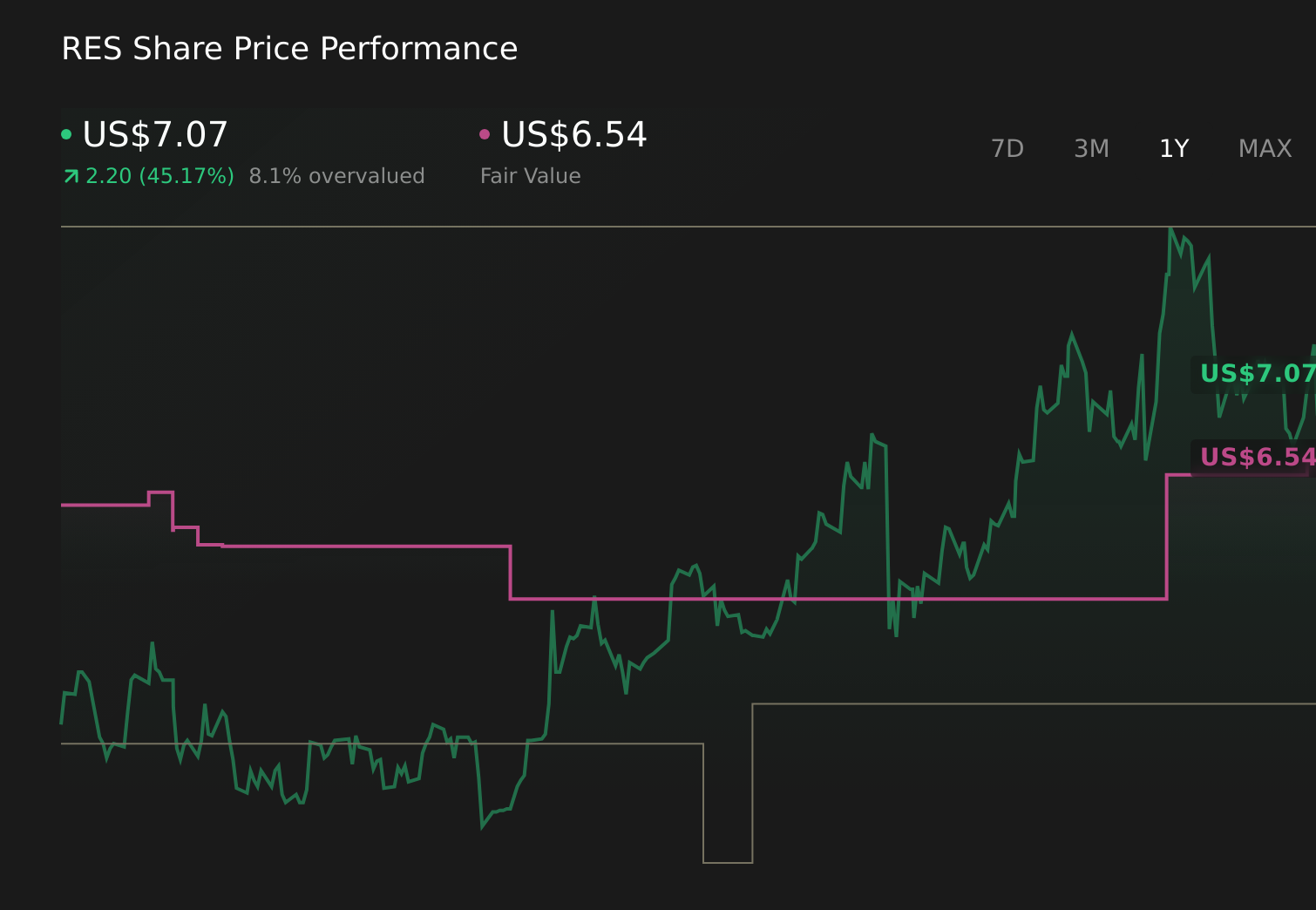
The most pessimistic analysts were already assuming only about 2 percent annual revenue growth and US$116.4 million of earnings by 2029, so Palmer’s exit could push those expectations even lower or reinforce concerns about RPC’s ability to compete at scale in the Permian Basin.
Explore 3 other fair value estimates on RPC - why the stock might be worth as much as 41% more than the current price!
Decide For Yourself
Don't just follow the ticker - dig into the data and build a conviction that's truly your own.
- A great starting point for your RPC research is our analysis highlighting 2 key rewards and 3 important warning signs that could impact your investment decision.
- Our free RPC research report provides a comprehensive fundamental analysis summarized in a single visual - the Snowflake - making it easy to evaluate RPC's overall financial health at a glance.
Seeking Other Investments?
Our top stock finds are flying under the radar-for now. Get in early:
- Uncover the next big thing with 21 elite penny stocks that balance risk and reward.
- Invest in the nuclear renaissance through our list of 89 elite nuclear energy infrastructure plays powering the global AI revolution.
- Capitalize on the AI infrastructure supercycle with our selection of the 51 best 'picks and shovels' of the AI gold rush converting record-breaking demand into massive cash flow.
This article by Simply Wall St is general in nature. We provide commentary based on historical data and analyst forecasts only using an unbiased methodology and our articles are not intended to be financial advice. It does not constitute a recommendation to buy or sell any stock, and does not take account of your objectives, or your financial situation. We aim to bring you long-term focused analysis driven by fundamental data. Note that our analysis may not factor in the latest price-sensitive company announcements or qualitative material. Simply Wall St has no position in any stocks mentioned.