

Will Twilio's (TWLO) New AI Conversation Suite Redefine Its Customer Engagement Infrastructure Narrative?
Twilio TWLO | 0.00 |
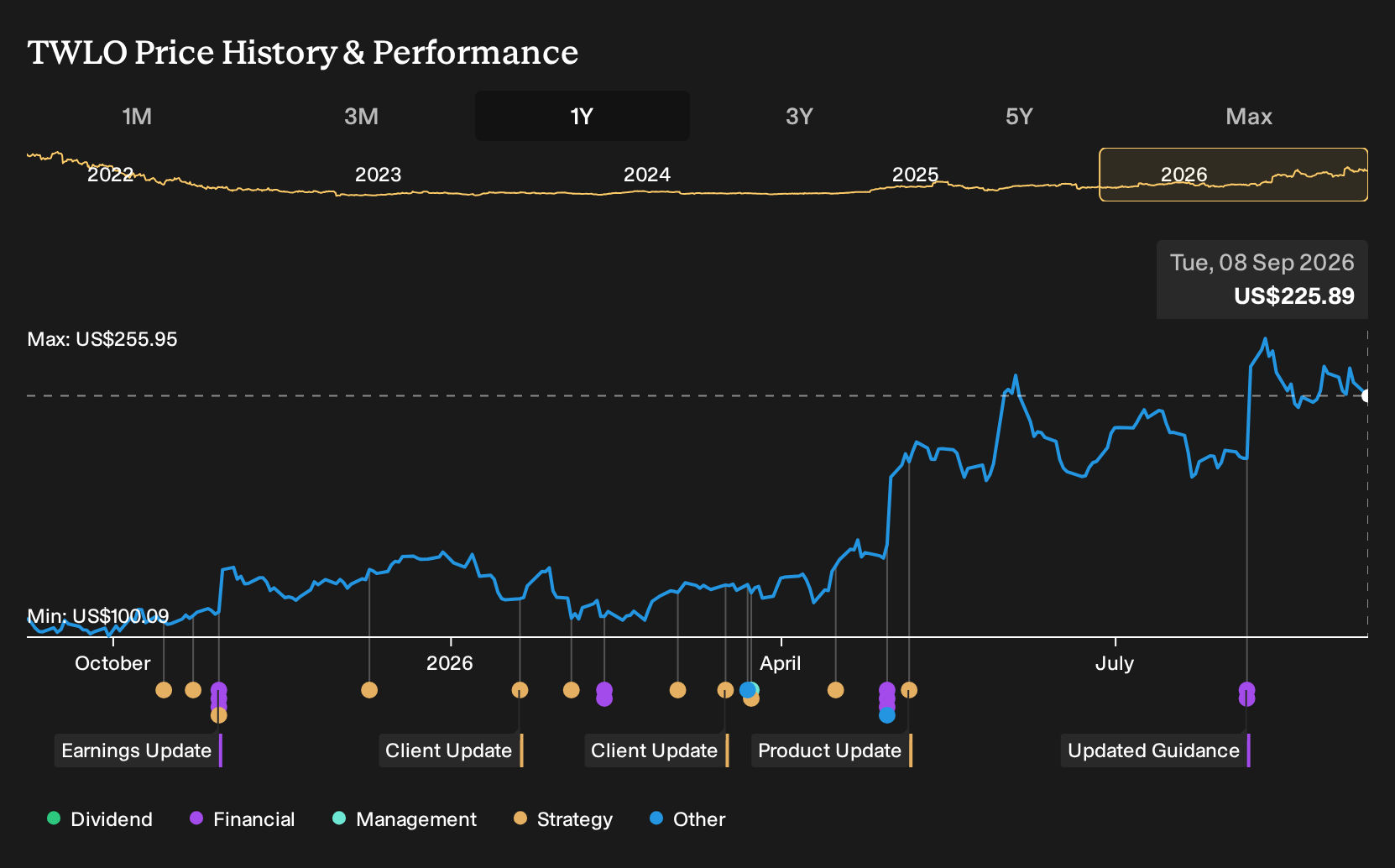
- Earlier this month, Twilio used its 2026 SIGNAL conference in San Francisco to launch a broad AI-focused upgrade, including Conversation Memory, Conversation Orchestrator, Conversation Intelligence, Agent Connect, a rebuilt console, Twilio Email, and enhanced Voice AI and data-residency features.
- This push to create continuous, context-rich conversations across channels highlights Twilio’s effort to move up the value chain from basic messaging toward more integrated, AI-enabled customer engagement infrastructure.
- Next, we’ll examine how Twilio’s new Conversation Memory capability might reshape its investment narrative around higher-margin, AI-driven engagement.
The latest GPUs need a type of rare earth metal called Terbium and there are only 30 companies in the world exploring or producing it. Find the list for free.
Twilio Investment Narrative Recap
To own Twilio, you need to believe its shift from low-margin messaging to higher-value, AI-centered customer engagement can offset competitive, regulatory, and margin pressures. The SIGNAL announcements strengthen the near-term catalyst around AI adoption and software mix, but do not remove the key risk that large customers could still build or buy alternative platforms, limiting Twilio’s pricing power and share of wallet.
Among the new launches, Conversation Memory is most relevant for Twilio’s catalyst around higher-margin, AI-enabled engagement. By turning fragmented touchpoints into a persistent, cross-channel profile, it supports the thesis that Twilio can deepen its role inside customer workflows and potentially increase usage per account, directly addressing concerns that revenue expansion within existing customers has been underwhelming.
Yet beneath the AI upgrade story, investors should be aware that rising compliance costs and heavier AI R&D spending could still weigh on...
Twilio's narrative projects $5.9 billion revenue and $449.9 million earnings by 2028. This requires 7.9% yearly revenue growth and about a $429.7 million earnings increase from $20.2 million today.
Uncover how Twilio's forecasts yield a $143.14 fair value, a 28% downside to its current price.
Exploring Other Perspectives
The most optimistic analysts already expected Twilio to reach about US$7.8 billion in revenue and US$914.9 million in earnings by 2029, yet SIGNAL’s AI push and expanded compliance demands could either support that upside or reinforce concerns about rising costs and enterprise churn, so you should recognise how widely opinions differ before deciding which narrative you find more convincing.
Explore 5 other fair value estimates on Twilio - why the stock might be worth as much as 26% more than the current price!
Reach Your Own Conclusion
Disagree with existing narratives? Extraordinary investment returns rarely come from following the herd, so go with your instincts.
- A great starting point for your Twilio research is our analysis highlighting 3 key rewards and 2 important warning signs that could impact your investment decision.
- Our free Twilio research report provides a comprehensive fundamental analysis summarized in a single visual - the Snowflake - making it easy to evaluate Twilio's overall financial health at a glance.
Interested In Other Possibilities?
Early movers are already taking notice. See the stocks they're targeting before they've flown the coop:
- Explore 26 top quantum computing companies leading the revolution in next-gen technology and shaping the future with breakthroughs in quantum algorithms, superconducting qubits, and cutting-edge research.
- Capitalize on the AI infrastructure supercycle with our selection of the 42 best 'picks and shovels' of the AI gold rush converting record-breaking demand into massive cash flow.
- Find 51 companies with promising cash flow potential yet trading below their fair value.
This article by Simply Wall St is general in nature. We provide commentary based on historical data and analyst forecasts only using an unbiased methodology and our articles are not intended to be financial advice. It does not constitute a recommendation to buy or sell any stock, and does not take account of your objectives, or your financial situation. We aim to bring you long-term focused analysis driven by fundamental data. Note that our analysis may not factor in the latest price-sensitive company announcements or qualitative material. Simply Wall St has no position in any stocks mentioned.