

Institutional investors in Intellicheck, Inc. (NASDAQ:IDN) lost 15% last week but have reaped the benefits of longer-term growth
Intellicheck Inc IDN | 0.00 |
Key Insights
- Given the large stake in the stock by institutions, Intellicheck's stock price might be vulnerable to their trading decisions
- The top 22 shareholders own 50% of the company
A look at the shareholders of Intellicheck, Inc. (NASDAQ:IDN) can tell us which group is most powerful. We can see that institutions own the lion's share in the company with 46% ownership. In other words, the group stands to gain the most (or lose the most) from their investment into the company.
Losing money on investments is something no shareholder enjoys, least of all institutional investors who saw their holdings value drop by 15% last week. However, the 89% one-year return to shareholders may have helped lessen their pain. But they would probably be wary of future losses.
Let's take a closer look to see what the different types of shareholders can tell us about Intellicheck.
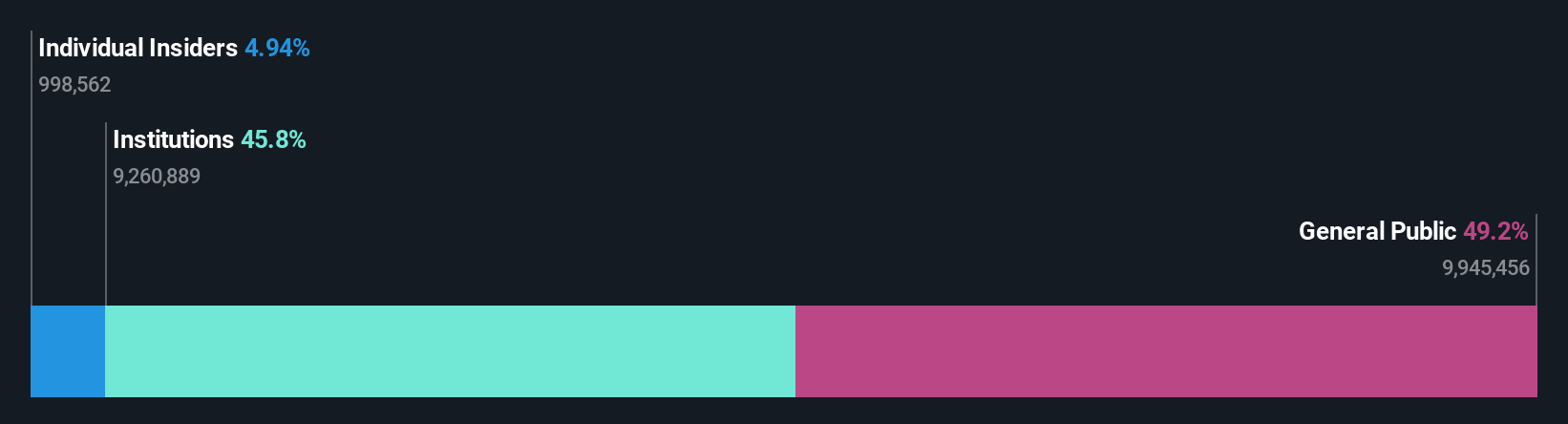
What Does The Institutional Ownership Tell Us About Intellicheck?
Institutions typically measure themselves against a benchmark when reporting to their own investors, so they often become more enthusiastic about a stock once it's included in a major index. We would expect most companies to have some institutions on the register, especially if they are growing.
We can see that Intellicheck does have institutional investors; and they hold a good portion of the company's stock. This suggests some credibility amongst professional investors. But we can't rely on that fact alone since institutions make bad investments sometimes, just like everyone does. It is not uncommon to see a big share price drop if two large institutional investors try to sell out of a stock at the same time. So it is worth checking the past earnings trajectory of Intellicheck, (below). Of course, keep in mind that there are other factors to consider, too.

It looks like hedge funds own 6.0% of Intellicheck shares. That's interesting, because hedge funds can be quite active and activist. Many look for medium term catalysts that will drive the share price higher. Bleichroeder LP is currently the company's largest shareholder with 10% of shares outstanding. For context, the second largest shareholder holds about 6.0% of the shares outstanding, followed by an ownership of 5.1% by the third-largest shareholder. In addition, we found that Bryan Lewis, the CEO has 2.1% of the shares allocated to their name.
Looking at the shareholder registry, we can see that 50% of the ownership is controlled by the top 22 shareholders, meaning that no single shareholder has a majority interest in the ownership.
While studying institutional ownership for a company can add value to your research, it is also a good practice to research analyst recommendations to get a deeper understand of a stock's expected performance. There are plenty of analysts covering the stock, so it might be worth seeing what they are forecasting, too.
Insider Ownership Of Intellicheck
While the precise definition of an insider can be subjective, almost everyone considers board members to be insiders. The company management answer to the board and the latter should represent the interests of shareholders. Notably, sometimes top-level managers are on the board themselves.
Insider ownership is positive when it signals leadership are thinking like the true owners of the company. However, high insider ownership can also give immense power to a small group within the company. This can be negative in some circumstances.
We can see that insiders own shares in Intellicheck, Inc.. In their own names, insiders own US$5.5m worth of stock in the US$112m company. It is good to see some investment by insiders, but we usually like to see higher insider holdings. It might be worth checking if those insiders have been buying.
General Public Ownership
The general public, who are usually individual investors, hold a 43% stake in Intellicheck. While this size of ownership may not be enough to sway a policy decision in their favour, they can still make a collective impact on company policies.
Next Steps:
I find it very interesting to look at who exactly owns a company. But to truly gain insight, we need to consider other information, too.
Ultimately the future is most important. You can access this free report on analyst forecasts for the company.
NB: Figures in this article are calculated using data from the last twelve months, which refer to the 12-month period ending on the last date of the month the financial statement is dated. This may not be consistent with full year annual report figures.
This article by Simply Wall St is general in nature. We provide commentary based on historical data and analyst forecasts only using an unbiased methodology and our articles are not intended to be financial advice. It does not constitute a recommendation to buy or sell any stock, and does not take account of your objectives, or your financial situation. We aim to bring you long-term focused analysis driven by fundamental data. Note that our analysis may not factor in the latest price-sensitive company announcements or qualitative material. Simply Wall St has no position in any stocks mentioned.