


Please use a PC Browser to access Register-Tadawul
Get It
Invitation Homes Faces New Federal Limits And Pivots To Build To Rent
Invitation Homes, Inc. INVH | 25.30 | -1.48% |
For investors watching NYSE:INVH, this is a material policy shock to a business that has been closely associated with large scale ownership of single family rentals. The shares most recently traded at $26.73, with returns of 3.8% over 5 years and a 10.8% decline over the past year, which shows how the market has been treating the stock ahead of this policy shift.
The pivot toward build to rent projects puts more focus on development, capital allocation, and execution risk instead of large scale purchases of existing homes. As the new federal rules settle in, investors may pay closer attention to how Invitation Homes sources growth, manages construction exposure, and positions itself against smaller landlords that are not subject to the same restrictions.
Stay updated on the most important news stories for Invitation Homes by adding it to your watchlist or portfolio. Alternatively, explore our Community to discover new perspectives on Invitation Homes.
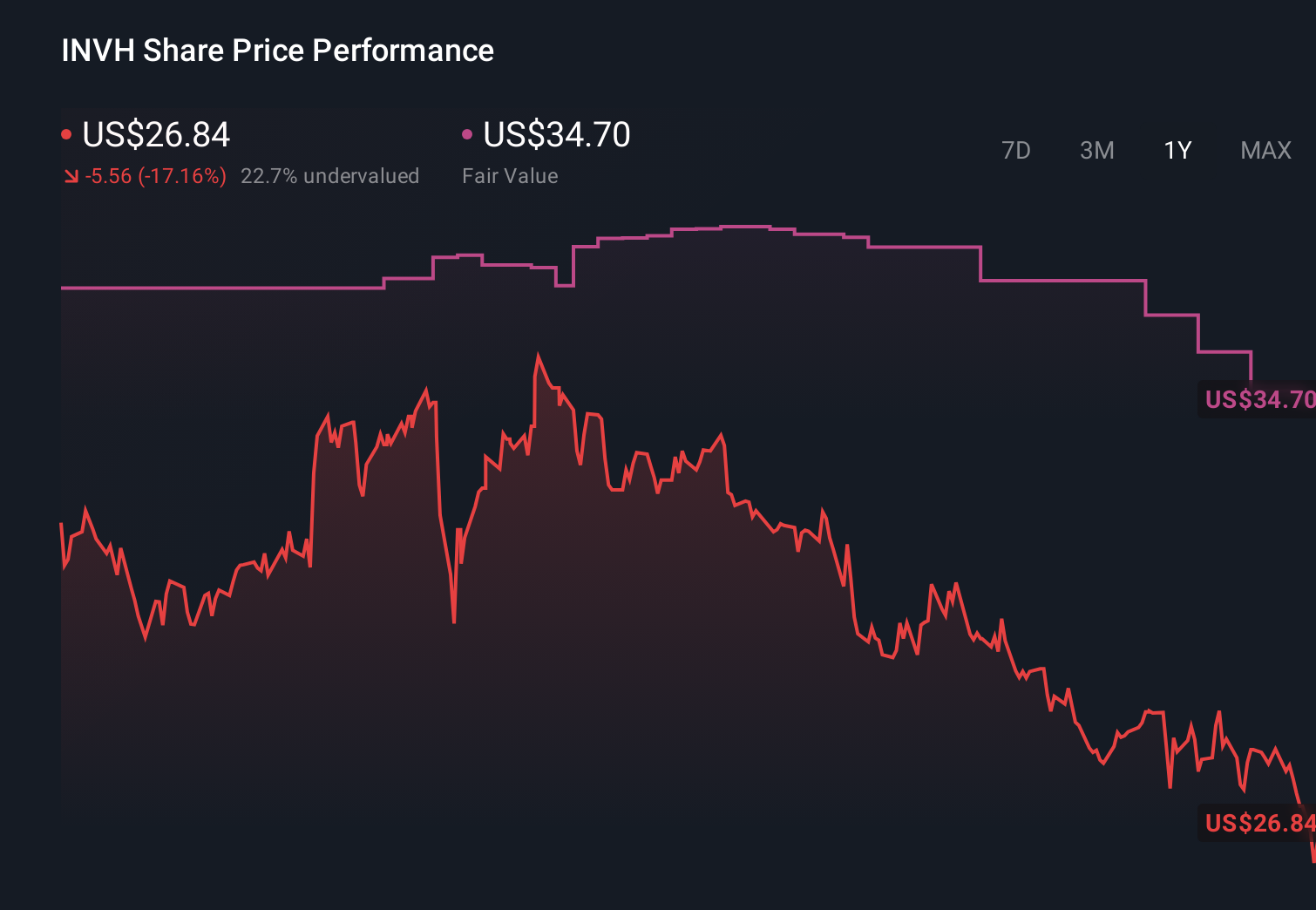
The executive order directly affects Invitation Homes' long-standing model of buying scattered existing homes. This could slow portfolio expansion through acquisitions and shift attention to build-to-rent projects where the company develops rental communities from the ground up. That change alters the mix of risks for investors, with more capital tied up in development pipelines, potential construction delays, and lease-up timing instead of relying primarily on transaction-driven growth.
The new rules fall squarely into the regulatory risk category that has already been highlighted in investor narratives for single-family rentals. At the same time, the company has been emphasizing partnerships with builders and purpose-built rental supply. This approach aligns with the policy preference for adding new housing stock rather than competing with households for existing homes, and it may help support its positioning relative to peers such as American Homes 4 Rent and Tricon Residential that are also active in single-family rentals.
From here, you may want to monitor how management updates its growth plans, capital spending, and communication around build-to-rent returns, as well as any signs of similar regulatory pressure on peers such as American Homes 4 Rent and Tricon Residential. For more context on how different investors are considering these shifts, you can review the community narratives for Invitation Homes through the company’s page on Simply Wall St.
This article by Simply Wall St is general in nature. We provide commentary based on historical data and analyst forecasts only using an unbiased methodology and our articles are not intended to be financial advice. It does not constitute a recommendation to buy or sell any stock, and does not take account of your objectives, or your financial situation. We aim to bring you long-term focused analysis driven by fundamental data. Note that our analysis may not factor in the latest price-sensitive company announcements or qualitative material. Simply Wall St has no position in any stocks mentioned.