


Please use a PC Browser to access Register-Tadawul
Get It
Shopify Buyback And AI Push Test Balance Between Growth And Margins
Shopify, Inc. Class A SHOP | 123.80 123.54 | +1.78% -0.21% Pre |
Shopify, trading at around $112.70, has seen mixed share performance recently, with a 7 day return of a 4.8% decline and a 30 day return of a 27.7% decline. Year to date, the stock is down 28.3%, while the 3 year return is 158.4%, showing that longer term holders have had a very different experience from recent buyers.
For investors tracking NasdaqGS:SHOP, the new $2b buyback and AI investments may become key reference points when assessing how the company balances capital returns with product development. As details around execution of the repurchase and merchant adoption of AI tools emerge over time, these developments could influence views on how Shopify is positioning its platform for the next phase of ecommerce.
Stay updated on the most important news stories for Shopify by adding it to your watchlist or portfolio. Alternatively, explore our Community to discover new perspectives on Shopify.
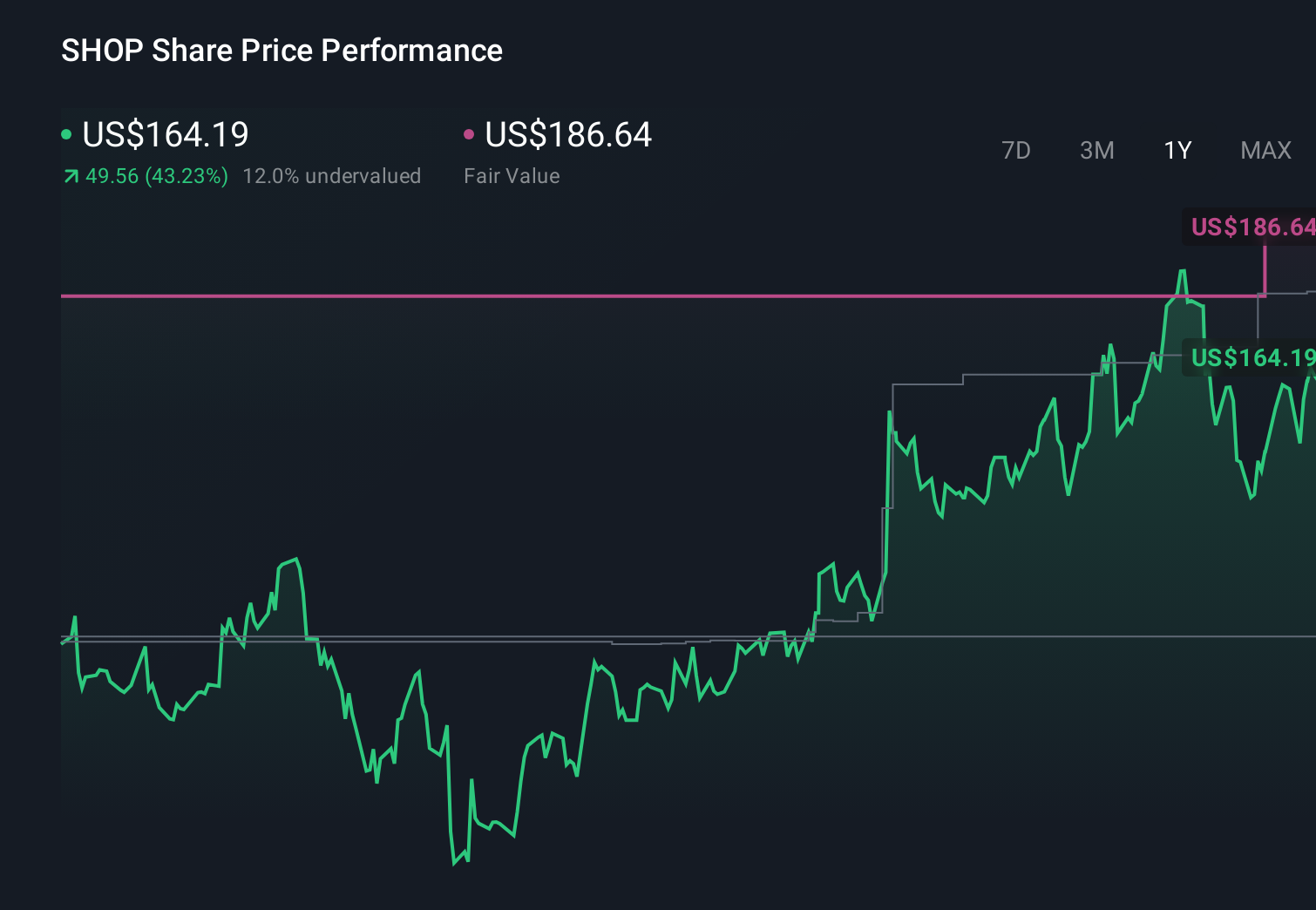
For existing shareholders, the new US$2b buyback and the heavier AI spend sit on opposite sides of the capital-allocation scale. On one hand, retiring up to 5% of Class A shares can support earnings per share over time and signals that management is comfortable using cash to return capital. On the other, Q4 2025 net income of US$743m, lower than the prior year’s US$1,293m, and guidance for slightly lower free cash flow margins in early 2026 show that AI-powered products such as Sidekick and the Universal Commerce Protocol are not free. The message is clear: Shopify is prioritizing revenue growth in the low-30s range and AI-heavy product development even if it means some near term margin pressure. Investor activity around the stock, including options positioning and mixed analyst target changes, suggests the market is still weighing how much value to assign to AI-driven commerce relative to shorter term profit softness and the stock’s recent share price pullback.
Knowing what a company is worth starts with understanding its story. Check out one of the top narratives in the Simply Wall St Community for Shopify to help decide what it's worth to you.
From here, it will be useful to watch how quickly merchants adopt Shopify’s AI-powered workflows and whether those tools translate into higher gross merchandise volume and subscription growth. Investors may also track how much of the US$2b buyback is actually executed and at what pace, along with any shifts in earnings guidance as AI spending runs through the income statement. Competitive responses from Amazon, PayPal and other ecommerce or payments providers could influence how much pricing power and share gains Shopify can sustain.
To ensure you're always in the loop on how the latest news impacts the investment narrative for Shopify, head to the community page for Shopify to never miss an update on the top community narratives.
This article by Simply Wall St is general in nature. We provide commentary based on historical data and analyst forecasts only using an unbiased methodology and our articles are not intended to be financial advice. It does not constitute a recommendation to buy or sell any stock, and does not take account of your objectives, or your financial situation. We aim to bring you long-term focused analysis driven by fundamental data. Note that our analysis may not factor in the latest price-sensitive company announcements or qualitative material. Simply Wall St has no position in any stocks mentioned.