


Please use a PC Browser to access Register-Tadawul
Get It
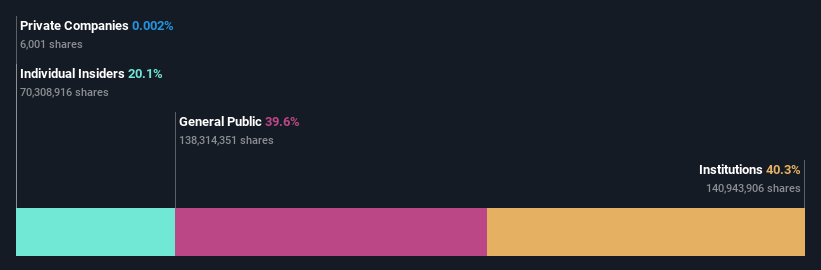
With 40% ownership of the shares, Baidu, Inc. (NASDAQ:BIDU) is heavily dominated by institutional owners
Baidu, Inc. Sponsored ADR Class A BIDU | 125.01 | -2.57% |
To get a sense of who is truly in control of Baidu, Inc. (NASDAQ:BIDU), it is important to understand the ownership structure of the business. And the group that holds the biggest piece of the pie are institutions with 40% ownership. In other words, the group stands to gain the most (or lose the most) from their investment into the company.
Because institutional owners have a huge pool of resources and liquidity, their investing decisions tend to carry a great deal of weight, especially with individual investors. Hence, having a considerable amount of institutional money invested in a company is often regarded as a desirable trait.
Let's delve deeper into each type of owner of Baidu, beginning with the chart below.
Check out our latest analysis for Baidu
Many institutions measure their performance against an index that approximates the local market. So they usually pay more attention to companies that are included in major indices.
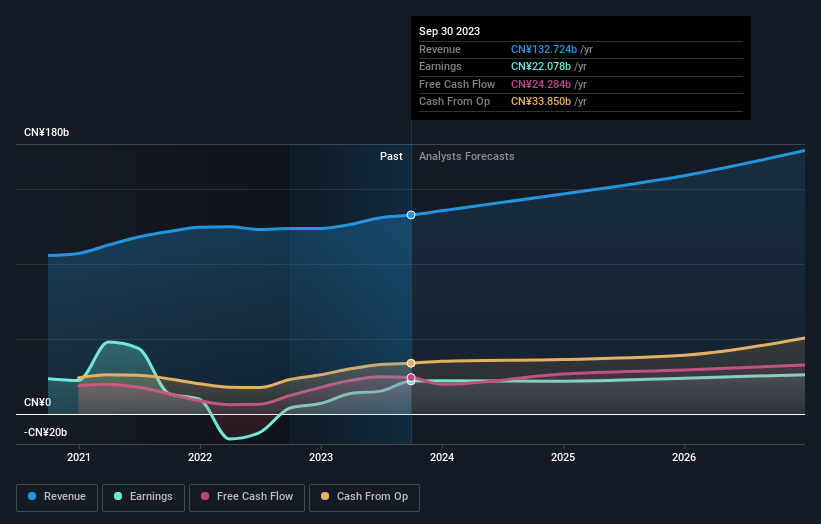
We can see that Baidu does have institutional investors; and they hold a good portion of the company's stock. This suggests some credibility amongst professional investors. But we can't rely on that fact alone since institutions make bad investments sometimes, just like everyone does. If multiple institutions change their view on a stock at the same time, you could see the share price drop fast. It's therefore worth looking at Baidu's earnings history below. Of course, the future is what really matters.
We note that hedge funds don't have a meaningful investment in Baidu. Looking at our data, we can see that the largest shareholder is the CEO Yanhong Li with 20% of shares outstanding. For context, the second largest shareholder holds about 3.4% of the shares outstanding, followed by an ownership of 3.2% by the third-largest shareholder.
On studying our ownership data, we found that 25 of the top shareholders collectively own less than 50% of the share register, implying that no single individual has a majority interest.
While studying institutional ownership for a company can add value to your research, it is also a good practice to research analyst recommendations to get a deeper understand of a stock's expected performance. Quite a few analysts cover the stock, so you could look into forecast growth quite easily.
The definition of an insider can differ slightly between different countries, but members of the board of directors always count. Management ultimately answers to the board. However, it is not uncommon for managers to be executive board members, especially if they are a founder or the CEO.
Insider ownership is positive when it signals leadership are thinking like the true owners of the company. However, high insider ownership can also give immense power to a small group within the company. This can be negative in some circumstances.
Our information suggests that insiders maintain a significant holding in Baidu, Inc.. Insiders own US$7.0b worth of shares in the US$35b company. That's quite meaningful. It is good to see this level of investment. You can check here to see if those insiders have been buying recently.
The general public, who are usually individual investors, hold a 40% stake in Baidu. While this group can't necessarily call the shots, it can certainly have a real influence on how the company is run.
I find it very interesting to look at who exactly owns a company. But to truly gain insight, we need to consider other information, too.
I like to dive deeper into how a company has performed in the past. You can access this interactive graph of past earnings, revenue and cash flow, for free.
Ultimately the future is most important. You can access this free report on analyst forecasts for the company.
NB: Figures in this article are calculated using data from the last twelve months, which refer to the 12-month period ending on the last date of the month the financial statement is dated. This may not be consistent with full year annual report figures.
This article by Simply Wall St is general in nature. We provide commentary based on historical data and analyst forecasts only using an unbiased methodology and our articles are not intended to be financial advice. It does not constitute a recommendation to buy or sell any stock, and does not take account of your objectives, or your financial situation. We aim to bring you long-term focused analysis driven by fundamental data. Note that our analysis may not factor in the latest price-sensitive company announcements or qualitative material. Simply Wall St has no position in any stocks mentioned.