


Please use a PC Browser to access Register-Tadawul
Get It
Sea-Land-Air Trifecta: Saudi Logistics and Transport Sector Set for Accelerated Development
Tadawul All Shares Index TASI.SA | 10414.06 | -0.37% |
FLYNAS 4264.SA | 71.60 | -0.97% |
① Saudi Arabia plans to double the contribution of the transport and logistics sector to GDP, expanding the railway network and air passenger capacity;
② Saudi Arabia has launched the construction of a logistics corridor at Jeddah Islamic Port to enhance port logistics efficiency;
③ Saudi Arabia has reduced customs clearance time by over 30% through a digital logistics platform.
Recently, at the Global Aviation and Maritime Transport Summit, Saudi Arabia's Minister of Transport and Logistics Services, Saleh Al-Jasser, stated that the Kingdom will continue to advance the development of the transport and logistics sector.
Saudi Arabia plans to double the contribution of the transport and logistics sector to GDP, expand the railway network by over 50%, and double airport passenger capacity. This aims to propel the Kingdom's transformation into a global logistics hub, building a people-centric, technology-reliant, and modern-policy-based integrated transport ecosystem.
Saudi Arabia is connecting its transport systems with digital infrastructure to enhance service efficiency and coverage, while advancing logistics zone development and multimodal transport integration.
Meanwhile, Al-Jasser stated that key to achieving the goals is establishing an integrated logistics zone at Jeddah Islamic Port. This zone directly connects the main seaport, customs warehouses, and air cargo facilities.
Recently, the Saudi Ports Authority (Mawani) announced it has commenced the construction of a $184 million logistics corridor, linking Jeddah Islamic Port with the Al-Khumrah Logistics Park south of Jeddah.
Al-Jasser stated at the project ceremony that this corridor will significantly boost trucking efficiency and increase Jeddah Islamic Port's handling capacity by 10%, consolidating Saudi Arabia's position as a global logistics hub connecting three continents.
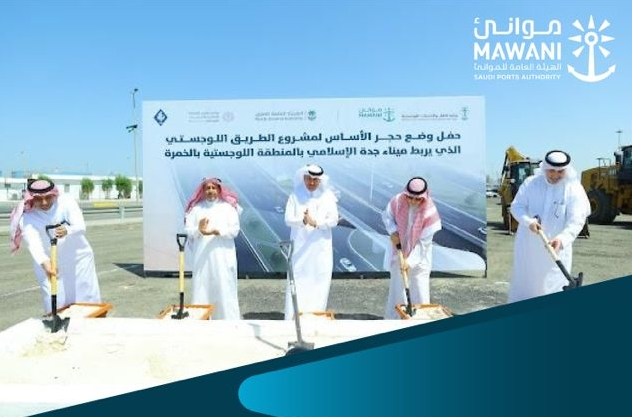
Image source: Mawani official website
Furthermore, the Asasat Saudi Railway localization plan was introduced at the conference, expected to bring $4 billion in investment opportunities by 2030.
Al-Jasser added that the current digital logistics platform connecting customs, ports, airlines, and freight forwarders has already reduced customs clearance time by over 30%, greatly facilitating the flow of goods within Saudi Arabia.
Currently, Saudi Arabia is committed to developing a centralized logistics model. Integrating infrastructure, policy, and technology will drive the development of the Kingdom's logistics sector and establish international partnerships.
In April this year, at the Riyadh Air operating license handover ceremony, Al-Jasser stated that the future aviation strategy will focus on developing two main carriers—Riyadh Air and Saudi Arabian Airlines (Saudia)—alongside other airlines like Flyadeal (specializing in pilgrim traffic) and Flynas(Flynas Co.(4264.SA) ) (low-cost carrier). It is expected that the number of destinations connected to Saudi airports will increase from 100 to 172.
In November 2024, Al-Jasser announced that Saudi Arabia will expand its railway network from 5,500 kilometers in 2024 to over 8,000 kilometers in the coming years.
Since the launch of the National Transport and Logistics Strategy (NTLS) in 2021, Saudi Arabia has invested over $53 billion. This strategy is a cornerstone for achieving Saudi Vision 2030.