


Please use a PC Browser to access Register-Tadawul
Get It
Traders Exit 'Trump Trade', but 'Harris Trade' Is Premature
Trump Media & Technology Group Corp. DJT | 10.65 | -2.38% |
Riot Platforms RIOT | 15.30 | -2.86% |
MARA Holdings MARA | 11.52 | -2.70% |
First Trust RBA American Ind AIRR | 100.59 | -2.59% |
Tema American Reshoring ETF RSHO | 44.93 | -2.59% |
The surge in support for Kamala Harris in U.S. election polls and the increasing likelihood of the Federal Reserve cutting interest rates soon have significantly impacted the so-called "Trump Trade." The U.S. Dollar Index has shown little movement since Biden exited the race. Traders initially bet on the dollar rising if Trump won, expecting it to benefit from safe-haven demand before the election and from trade tariffs afterward. However, this speculation was complicated when Trump referred to the highly valued dollar as a "huge burden" for U.S. businesses and chose Ohio Senator JD Vance, an opponent of a strong dollar, as his running mate.
A Bloomberg MLIV Pulse survey conducted from July 22 to 26 revealed that about two-thirds of respondents anticipated that Trump's second term would weaken the dollar's status as the world's reserve currency. Despite this, 26% still viewed the dollar as the best safe haven if Trump won. These mixed factors highlight the significance of the Federal Reserve's stance. Following Powell's confirmation of the central bank's shift towards easing, the Bloomberg Dollar Spot Index saw its worst day in two months on Wednesday.
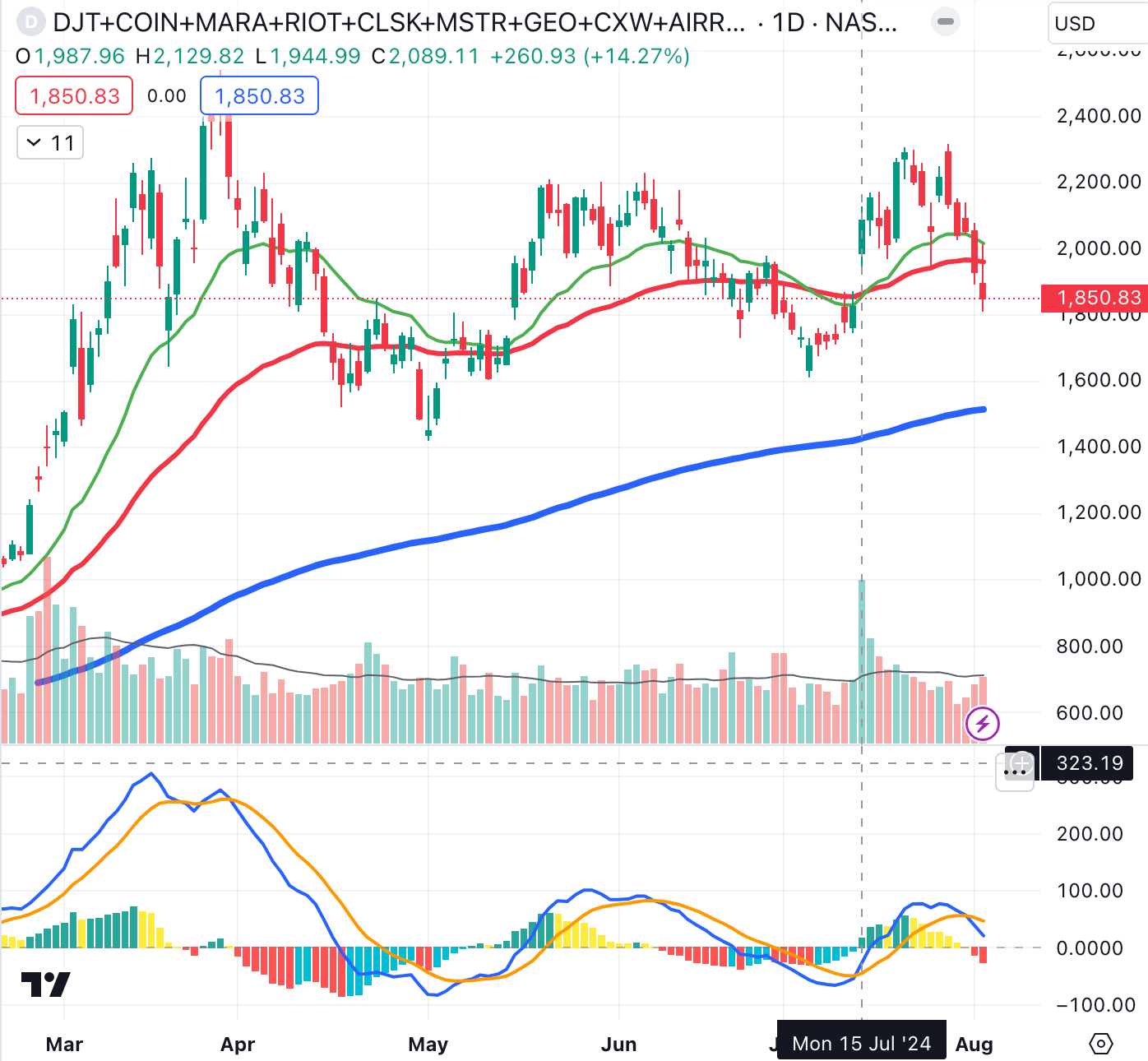
Steven Englander, head of global G-10 FX research at Standard Chartered Bank, indicated that "Dollar softness is the path of least resistance before the election results reduce the uncertainty associated with post-election trading." Stocks of prison operators GEO Group and CoreCivic, which stand to benefit from Trump's hardline immigration stance, have declined since Biden's exit. Conversely, gun manufacturers like Smith & Wesson Brands and Sturm Ruger & Co. have performed well.
Bank stocks, seen as potential beneficiaries of a Trump administration due to expected regulatory rollbacks, have maintained their July gains amid wider market rotations. Meanwhile, Trump Media & Technology Group, the parent company of Truth Social, has fallen more than 20% since July 21, experiencing volatility with election-related headlines.
Brian Lockhart, CEO of Peak Capital Management, noted, "What was initially seen as an easy win has become highly competitive, leading many to question if the 'Trump Trade' was a bit premature. I expect a lot of 'noise' in the market, meaning volatility levels could be higher until the election concludes."
Polls now show Harris and Trump with similar support in swing states, reminding the market of the risks associated with betting on political outcomes. Neeraj Seth, head of Asian Credit at BlackRock Inc., commented on Bloomberg TV that there has been some unwinding of the "Trump Trade" and anticipates back-and-forth market reactions until November 5.
Market reactions are not solely influenced by election prospects. Powell's recent acknowledgment that the central bank might cut rates in September has led investors to favor Treasuries and view the dollar with skepticism. This stance may irritate Trump, who told Bloomberg Businessweek that a rate cut weeks before the vote is something officials "know they shouldn't be doing."
Unlike the "Trump Trade," strategies related to a Harris victory have received less attention. Market analysts expect Harris to continue Biden's policy stance, focusing more on macroeconomic drivers. Homin Lee, senior macro strategist at Lombard Odier Singapore Ltd, expressed optimism for Asian equities if Harris wins, citing her less likely tendency to cause a massive inflation shock to the global economy. The core anti-inflation drivers in the U.S. are expected to be preserved under her leadership.
For abrdn Plc, the "Harris Trade" is yet to take shape due to the uncertain composition of the U.S. Congress. Sharma-Ong of abrdn Plc remarked that a blue wave in Congress would likely lead Democrats to reintroduce pandemic-era child tax credit policies and increase corporate taxes, which could negatively impact corporate profits, favoring stocks with strong profit margins.
While some market participants view it as premature to engage in the "Harris Trade," Hebe Chen, an analyst at Melbourne IG Markets, noted, "Her lead is not currently because of what she has done, but because of what she has not done or initiated, leaving room for optimism to grow." As the election approaches, the market remains poised for continued volatility and cautious optimism.