
Trading Wisdom | How to Invest $10,000 and Turn it into $10 Million?
S&P 500 index SPX | 6582.69 | +0.11% |
Dow Jones Industrial Average DJI | 46504.67 | -0.13% |
NASDAQ IXIC | 21879.18 | +0.18% |
This article explains Robert Kiyosaki's method of turning a small investment into an extraordinary return. Robert Kiyosaki is the main author of the "Rich Dad Poor Dad" series of books, an investor, entrepreneur, and educator.
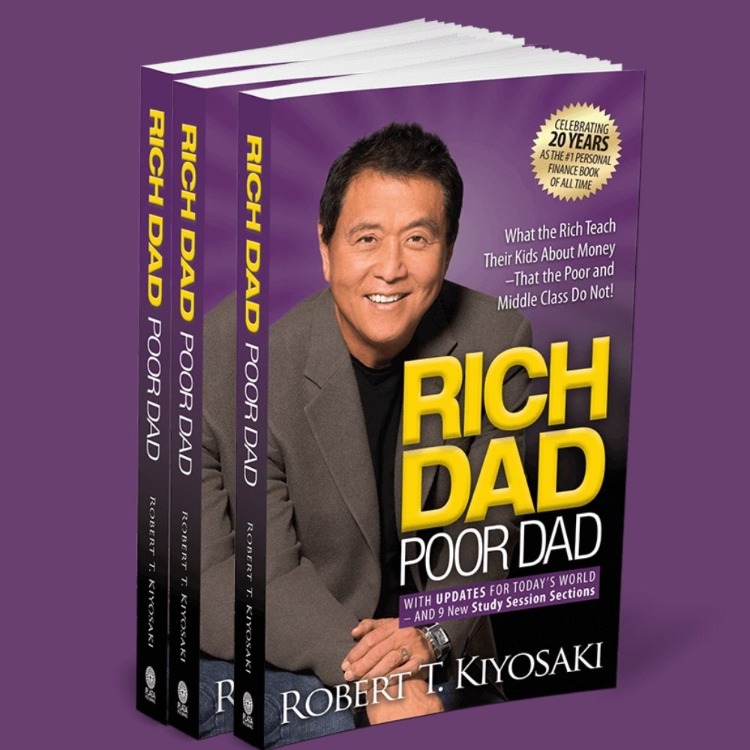
"I have $10,000. What Should I Invest in?"
I am often asked questions like, "I have $10,000. What should I invest in?" or "What type of investment do you recommend? How do I get started?"
I usually avoid answering these questions because the real answer is "It depends on you, and what I do is often different from what you should do."
Another reason I avoid answering these questions is that when I do explain what I've done and how I've achieved high returns with less money and less risk, people often react with statements like "You can't do that here," "I can't afford that," or "Isn't there an easier way?"
Why Do So Many People Lose Money?
In my opinion, one of the reasons why millions of people lose billions of dollars is that when they are looking for where to invest their money, many people are ready to provide them with answers, such as:
"Save your money."
"Do long-term and diversified investments."
"Cut up your credit cards and avoid debt."
This book is not written for those who want simple answers. If you prefer financial answers that are too simple for most people to accept, then this book is probably not for you.
My answer may be difficult for most people to accept or understand. This book is written for those who want to better control their money and want to earn more money with the money they have. If this interests you, then please continue reading.

The Worst Road to Wealth
Working individuals often invest their money in retirement plans, such as the 401(k) plan which includes a large number of mutual funds. These people spend their entire lives riding the "slow bus" of the 401(k) plan, even if its engine is worn out and cannot run fast, and it never climbs to the peak of investment returns. Its brakes are also unreliable and make people nervous when going downhill.
For ordinary investors, putting money into a retirement plan for long-term holding may be a good idea, but for me, it is a slow, risky, inefficient, and high-tax investment road.

Are There Better Investment Options?
Investable assets can be divided into four categories: businesses, real estate, paper assets, and commodities futures.
A simple investment is to put money into a Standard & Poor's 500 index fund.
For most mutual fund managers, the S&P 500 is the benchmark they need to beat. Unfortunately, almost no one can beat it.
People often ask, "Since few people can beat the S&P index, why do you need a fund manager? Why not invest in the S&P index yourself?"
And my response is, "I would ask the same question."
I would continue to say, "If you only invested 10,000 in real estate and borrowed 10,000 in real estate and borrowed 90,000 from the bank, making your asset-to-liability ratio as high as 90%, after 10 years, your 10,000 invested in the S&P 500 index fund would grow to about 18,000; your 10,000 invested in real estate, together with your bank loan, would grow to about 10,000 invested in real estate, together with your bank loan,wouldgrowtoabout158,000."
People cannot help but ask, "Then why aren't more people investing in real estate?"
My answer is, "Because if you want to invest in real estate, you must be a qualified investor. To be successful in real estate investment requires investors to have more financial skills. Real estate investment is a capital-intensive investment that requires more careful management. Buying paper assets like mutual funds is easier, less expensive, and requires less management. That's why many people invest in this type of asset."
The Most Powerful Asset
The Standard & Poor's 500 is an international market, while real estate is a local market.
What does this mean?
If you are a savvy real estate investor, you can often get higher returns on your investment in real estate.
The 10,000 you invested in the S&P 500 will only get you the same return as everyone else, but if you invest 10,000 in real estate, your return could be much higher than $158,000, or much lower than that.
If you are a poor real estate investor and asset manager, you may lose all of your $10,000 investment and even more; if you are not good at real estate acquisition and management, investing in the S&P 500 may be better for you.
Whether or not you succeed in real estate investment depends on you as an investor, while whether or not you succeed in the S&P 500 depends on the 500 index companies.
If someone asks, "Can you get more than 158,000 return on 158,000 return on a 10,000 investment?"
The answer is, "Yes, but investors often need to use the power of businesses to get such returns."
Of the four asset categories, businesses are the most powerful asset, but creating, nurturing, and managing them requires the strongest technical skills.
If someone is good at creating businesses and investing in real estate, it is possible for them to achieve excess returns.

How to Achieve Excess Returns?
One of the many secrets to success among all investors is investing in integration rather than diversification.
They don't invest all their capital in one asset, but integrate it into two to three asset categories, using financial leverage to accelerate their operation and always adjusting the cash flow between different assets.
For example, by integrating the power of businesses and paper assets, Bill Gates became the world's richest man. He realized the dreams of many entrepreneurs by establishing a company and taking it public through the stock market. In other words, he turned part of his business assets into paper, or what people commonly call "stocks."
If Bill Gates hadn't taken his company public, he would still be a rich man, but he might not have become the world's richest man at such a young age.
In short, it was the integration of these two asset categories that made him rich quickly, rather than receiving a salary like an employee of Microsoft and then spreading his income into mutual funds.
And by owning a business that invests in other businesses, the world's greatest investor Warren Buffett achieved high returns.
Big Company or Small Company?
This is not to say that your business has to be a big company or a real estate company. The core issue is that investors can invest in real estate even if they have a small company.
It's like having two professions, one for people and the other for money.
For example, my most well-known identity is as a writer, which can be said to be my profession, while my profession for making money is real estate.
To reiterate, the key is to integrate two to three asset categories, rather than diversifying in just one asset category.
Even if you are a small business owner, you can still take advantage of the same financial leverage as large companies. Just as large companies and the stock market made Bill Gates a billionaire, small companies, real estate, and paper assets can make you a multimillionaire within 10 years.
The question is, can you master the skills of investing in at least two asset categories?
If you can master them, financial magic will happen.