


Please use a PC Browser to access Register-Tadawul
Get It
Vertical Aerospace (NYSE:EVTL): Assessing Valuation as VX4 Prototype Achieves Milestone and Ex-EASA Chief Joins Board
Vertical Aerospace Ltd. Ordinary Shares EVTL | 5.69 | +1.79% |
If you have been watching Vertical Aerospace (NYSE:EVTL), this week’s string of breakthroughs likely has your attention. The company just completed Phase 3 of wingborne flight testing for its VX4 prototype, marking a pivotal step towards commercial electric aircraft certification. Add the appointment of Patrick Ky, the former EASA chief, to Vertical’s board, and suddenly the company’s regulatory pathway looks a lot more concrete, giving investors renewed reason to revisit their stance on the stock.
After a tough stretch, these accomplishments land at a critical moment. Over the past year, shares have fallen nearly 40% as markets reacted to execution challenges and ongoing cash burn. Momentum seemed to be fading just a month ago, but this week’s successful test flights and strategic hires have driven a sharp bounce. The stock is up 15% in the past week and over 4% in just a day, hinting at a shift in how investors are pricing the risks and possibilities ahead.
After a year in which Vertical Aerospace lost significant ground, is the market offering a genuine entry point, or are hopes for future scale and revenue already factored into the share price?
Vertical Aerospace trades at a negative price-to-book ratio of -2.2x. This figure is significantly below both its peer group and the broader Aerospace & Defense industry averages.
The price-to-book multiple compares a company’s market value to its net assets. This provides investors with a quick measure of whether a stock is trading above or below what its balance sheet is worth. In sectors like aerospace, where asset-heavy operations are common, this metric often highlights perceived value or financial strain.
A negative multiple, as seen in this case, indicates that Vertical Aerospace has negative equity. This factor overshadows any optimism about potential future profitability. The market appears to be deeply discounting the company’s prospects compared to its book value, which signals skepticism about near-term recovery or asset strength.
Result: Fair Value of $0 (OVERVALUED)
See our latest analysis for Vertical Aerospace.However, significant risks remain. These include ongoing negative net income and unproven revenue streams, either of which could quickly undercut recent optimism.
Find out about the key risks to this Vertical Aerospace narrative.Taking a step back from balance sheet ratios, our DCF model offers a different lens on Vertical Aerospace’s worth. This analysis suggests valuation concerns might persist; however, does it fully capture the uncertainty here?
Look into how the SWS DCF model arrives at its fair value.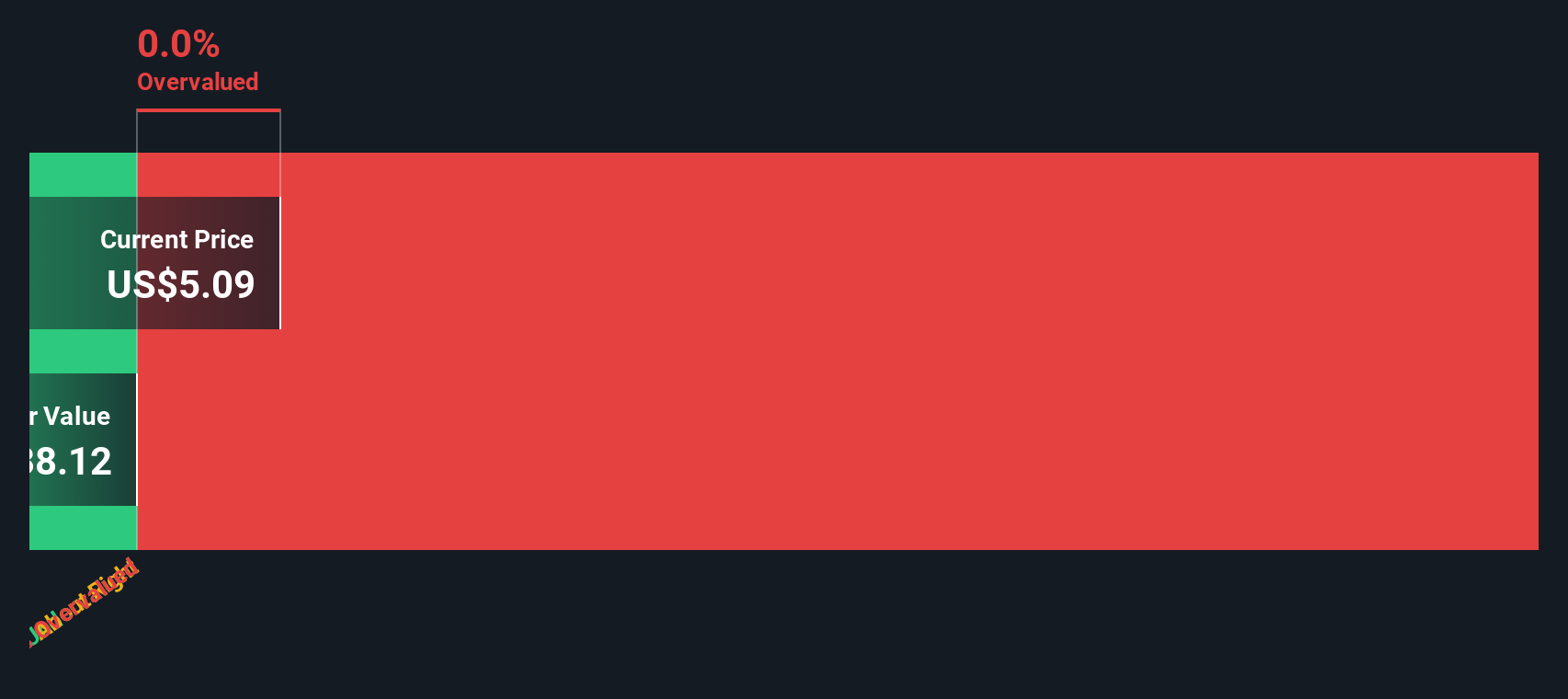
If you want to put this analysis to the test or take a different view, you can develop your own narrative based on the numbers in minutes. Do it your way.
A great starting point for your Vertical Aerospace research is our analysis highlighting 1 key reward and 5 important warning signs that could impact your investment decision.
Why limit yourself to one stock? Make your portfolio work harder by searching for standout investments other traders might overlook. Use these tailored screens to pinpoint potential winners before the crowd catches on:
This article by Simply Wall St is general in nature. We provide commentary based on historical data and analyst forecasts only using an unbiased methodology and our articles are not intended to be financial advice. It does not constitute a recommendation to buy or sell any stock, and does not take account of your objectives, or your financial situation. We aim to bring you long-term focused analysis driven by fundamental data. Note that our analysis may not factor in the latest price-sensitive company announcements or qualitative material. Simply Wall St has no position in any stocks mentioned.