

3 Penny Stocks With Strong Balance Sheets Retail Investors May Have Missed
TOYO Co., Ltd TOYO | 0.00 |
Central banks are still talking about possible rate increases to keep inflation in check, which keeps risk appetite uneven and stock selection more important. That backdrop can draw fresh attention to Financially Fit Penny Stocks. These are lower priced shares where balance sheet strength is front and center. This article walks through three screened stocks that combine penny stock pricing with a focus on financial health.
The three Financially Fit Penny Stocks in this article are a starting sample, while the full screen surfaced 308 more companies with similarly focused balance sheets and financial profiles that are not covered here. To go straight to the full list, use the Financially Fit Penny Stocks screener to identify, compare, and analyze the highest conviction ideas that fit your own risk tolerance.
TOYO (TOYO)
TOYO Co., Ltd. is a young solar manufacturer that operates across the full supply chain, with upstream wafer and silicon operations alongside midstream solar cell and downstream PV module production that directly tie it to the Financially Fit Penny Stocks solar theme. The company reports about US$549 million of revenue from Machinery & Industrial Equipment, reflecting its focus on producing and selling solar cells, modules and related products in Asia and the United States. TOYO is currently a small cap, with a market value of roughly US$199 million.
Investors looking at TOYO gain exposure to a penny stock that ships finished solar cells and PV modules into utility scale projects, while ramping capacity in Ethiopia and Houston and making use of U.S. policy support, including IRA incentives. At the same time, the company relies heavily on external borrowing, is working through trade reviews and CBP checks, and is still integrating a relatively new leadership team. That combination of growing U.S. revenue, higher recent margins and more professionalised finance leadership, set against policy risk and execution questions, is what makes TOYO a candidate for closer examination by investors focused on financially focused solar penny stocks.
TOYO’s push into U.S. solar projects with new capacity in Ethiopia and Houston could be masking a more complex funding story. Get the full picture in the 4 key rewards and 1 important major warning sign

Clover Health Investments (CLOV)
Clover Health Investments runs Medicare Advantage PPO and HMO plans for Medicare-eligible members in the United States, which is its main link to the Financially Fit Penny Stocks theme because premiums provide recurring, government-backed revenue. Almost all of its US$2.5b in revenue comes from the Insurance segment, supported by its Clover Assistant software that helps physicians manage chronic diseases rather than driving the bulk of sales. The company is currently valued at about US$2.2b, putting it in the smaller cap bracket many penny stock investors focus on.
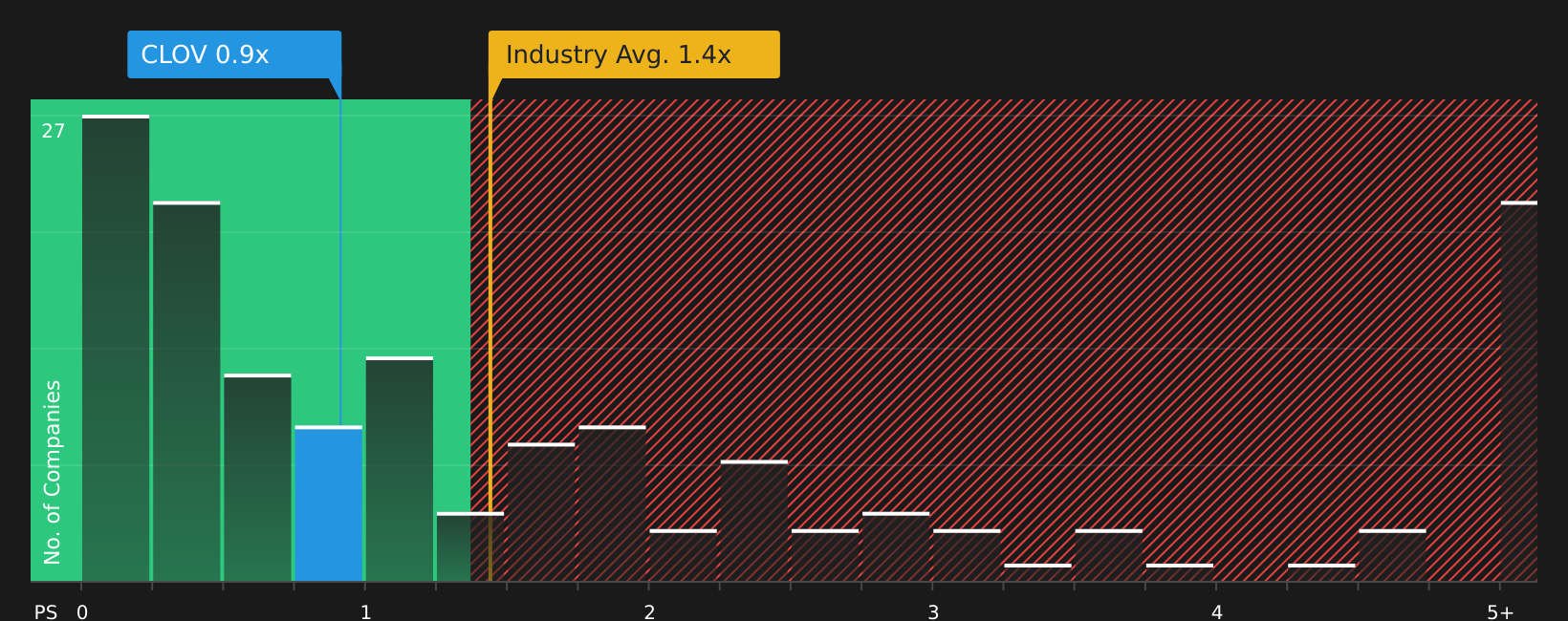
Investors watching Clover Health get a mix of steady Medicare Advantage premiums and a clinician software platform that management believes can support more efficient care and better unit economics. The attraction is the combination of a low share price and a P/S ratio below larger healthcare peers. The catch is that higher medical and pharmacy costs, regulatory uncertainty around Medicare reimbursement and recent insider selling all introduce real risk. For investors comfortable with a regulated healthcare stock that still has work to do on margins, the balance of potential reward and these open questions makes Clover Health an option for further research.
Clover Health Investments combines recurring Medicare revenue with a low share price that many investors may be treating as just another penny stock. See how the full story shifts in the analysis report for Clover Health Investments
Hyliion Holdings (HYLN)
Hyliion Holdings develops the KARNO Power Module, a fuel agnostic generator for stationary and mobile power that can run on conventional, waste and zero carbon fuels. This is the clearest link to the Financially Fit Penny Stocks theme of smaller companies tied to cleaner, distributed power. The business currently records about US$9 million of revenue from Auto Parts & Accessories, all from the United States, and has a market value of roughly US$579 million.
Hyliion is attracting attention because the KARNO platform sits at the intersection of cleaner, distributed power and growing demand for reliable on site electricity at data centers and defense sites. This is backed by a US$41.7 million U.S. Navy contract and rising 2026 revenue guidance. At the same time, the company is still loss making, leans on external borrowing and depends on successful commercialization of a single core technology, which raises real execution and funding risk. For investors willing to consider a higher risk penny stock tied directly to alternative power, the mix of government backed projects and fuel flexible technology leaves more to dig into on Hyliion’s balance between opportunity and caution.
Hyliion’s fuel flexible KARNO story is easy to gloss over as just another higher risk penny stock, yet the real trade off only becomes clear when you see the 1 key reward and 2 important warning signs

Seeking Fresh Alternatives Before Others Do
Some stocks stay under the radar for now, then momentum builds and prices start flying. Screen fresh ideas before the crowd, while it matters, and get in early.
- Spot income opportunities that aim for durability and consistency, then use the 11 dividend fortresses to see which high yield stocks still look financially resilient before yields start dropping.
- Track where real AI profitability could be emerging and use the 74 profitable AI stocks that aren't just burning cash to zero in on stocks with cash generation, not just story driven excitement.
- Position ahead of potential demand shifts in critical metals by scanning the 9 top copper producer stocks for producers with scale and balance sheets that can support longer investment horizons.
This article by Simply Wall St is general in nature. We provide commentary based on historical data and analyst forecasts only using an unbiased methodology and our articles are not intended to be financial advice. It does not constitute a recommendation to buy or sell any stock, and does not take account of your objectives, or your financial situation. We aim to bring you long-term focused analysis driven by fundamental data. Note that our analysis may not factor in the latest price-sensitive company announcements or qualitative material. Simply Wall St has no position in any stocks mentioned.