
98% Chance Fed Cuts Tomorrow - Is Gold Still a Buy? Plus 8 Other Rate-Cut Trades Worth Watching
ETF-S&P 500 SPY | 650.34 | +2.91% |
20+ Year Trsy Bond Ishares TLT | 86.69 | -0.10% |
SPDR Gold GLD | 430.29 | +3.79% |
NVIDIA Corporation NVDA | 174.40 | +5.59% |
Amazon.com, Inc. AMZN | 208.27 | +3.64% |
October 28 — As U.S. stocks hit new highs (ETF-S&P 500(SPY.US)), the Federal Reserve will announce its interest rate decision this Wednesday at 9:00 PM Riyadh time, with Fed Chair Powell holding a press conference at 9:30 PM.
Market data shows that benefiting from expectations of consecutive rate cuts, the long-duration Treasury ETF 20+ Year Trsy Bond Ishares(TLT.US), which is most sensitive to interest rates, has gained over 8% year-to-date, reaching its highest level since October of last year. The market is pricing in continued Fed rate cuts to support a persistently weakening job market.
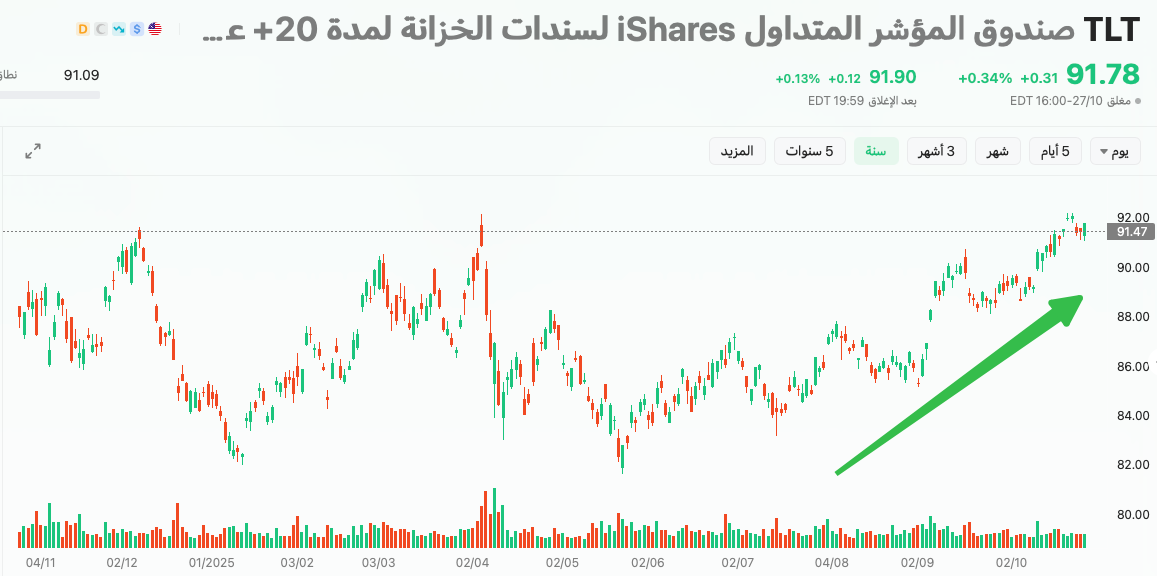
As a macro-heavy week approaches, Wall Street traders widely expect the Fed to cut rates by 25 basis points this week. How will this impact U.S. equity markets? Which rate-cut trades should investors focus on? This article breaks it all down.
25 Basis Point Cut is a Done Deal! "Dovish or Hawkish" Becomes Market Focus
1. Job Market Significantly Weakens!
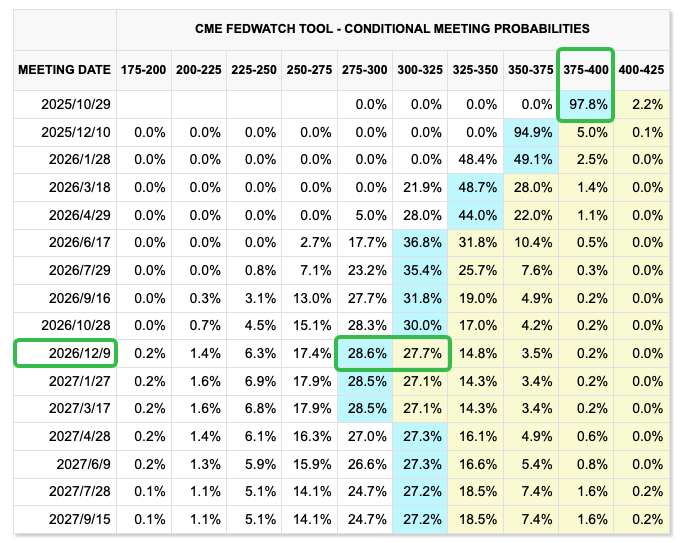
Let's start with the data: According to the CME FedWatch tool, traders currently assign a 97.8% probability to a 25 basis point rate cut this week, with only a 2.2% chance of no cut. Economists point out that the key premise for rate cuts is that the Fed believes the current 4%-4.25% benchmark rate is already elevated and is substantially dragging down the U.S. economy.
In fact, contrasting with the controlled inflation situation, the degree of weakness in the U.S. job market has far exceeded the Fed's expectations from earlier this year. Earlier this month, Fed Chair Powell stated that the labor market has "actually weakened substantially" and pointed out "considerable downside risks."
Meanwhile, a series of summer data revisions showed that private sector job growth has nearly stalled — in the three months through August, the economy added an average of only 29,000 net jobs per month, compared to an average of 209,000 in the final three months of last year.
2. "Dovish" Rate Cut Gains Upper Hand, Wall Street Bets on Rates Falling Below 3% Next Year
Beyond this week's rate decision itself, Fed Chair Powell's remarks this week may signal a readiness to announce an end to balance sheet reduction, potentially ending so-called quantitative tightening as soon as this month.
Wall Street is currently betting heavily on further Fed rate cuts in December and March next year. Citigroup believes that with a weakening labor market, the Fed will cut rates in December, January, and March. Pantheon predicts at least three rate cuts in March, June, and September next year.
Morgan Stanley expects five rate cuts, citing that slowing economic growth and cooling inflation will force the Fed to boost the economy. CME data shows futures traders assign a 28.5% probability to rates falling to the 2.75%-3.0% range by the end of 2026, with a 57% probability of 4-5 cumulative 25 basis point cuts from now through the end of next year.
A CITIC Securities research report states that the current environment of moderate U.S. inflation and weakening employment should reinforce expectations for continued Fed rate cuts. This week's Fed meeting tone will likely lean dovish, and they still expect the Fed to cut rates twice more this year by 25 basis points each.
3. What Do Fed Chair Candidates Think?
U.S. Treasury Secretary Bessent confirmed on Monday that a shortlist of five final candidates to replace Fed Chair Powell has been finalized, stating that Trump is expected to make a decision by year-end. The five candidates include: current Fed Governors Waller and Bowman, former Fed Governor Walsh, White House National Economic Council Director Hassett, and BlackRock executive Rieder.
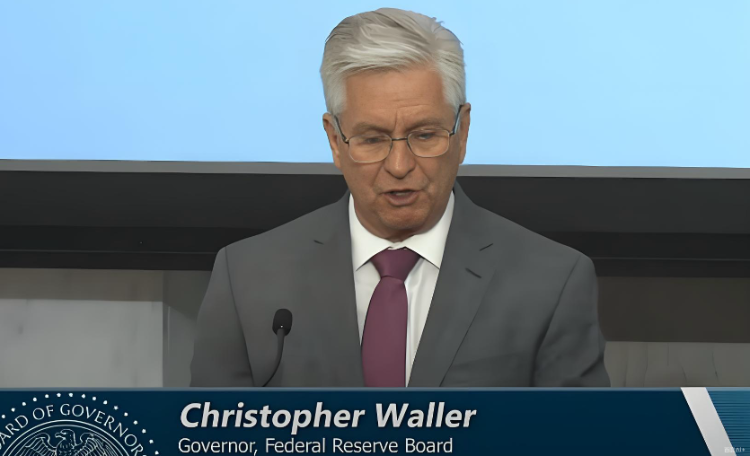
After this week's meeting, investors will closely monitor Fed Chair candidates' comments on the interest rate path, particularly the voting decisions of current Fed Governors Waller and Bowman. Notably, Waller is viewed within the Fed as one of the most influential dovish governors, and shifts in his stance can signal overall policy pivots.
Nine Rate-Cut Trades Worth Watching! Is Gold Still a Buy?
The Fed's October rate decision may significantly impact U.S. stock market volatility. Sahm Platform has systematically compiled nine rate-sensitive asset categories summarized by mainstream institutional analysts from CICC, JPMorgan, and others for investor reference:
Among the asset classes above, gold has been the most watched performer this year. Year-to-date, gold prices have surged 51%, driven by geopolitical uncertainty, rate cut expectations, and central bank buying. Gold touched a record high of $4,381 per ounce on October 20, but has since retreated10%.
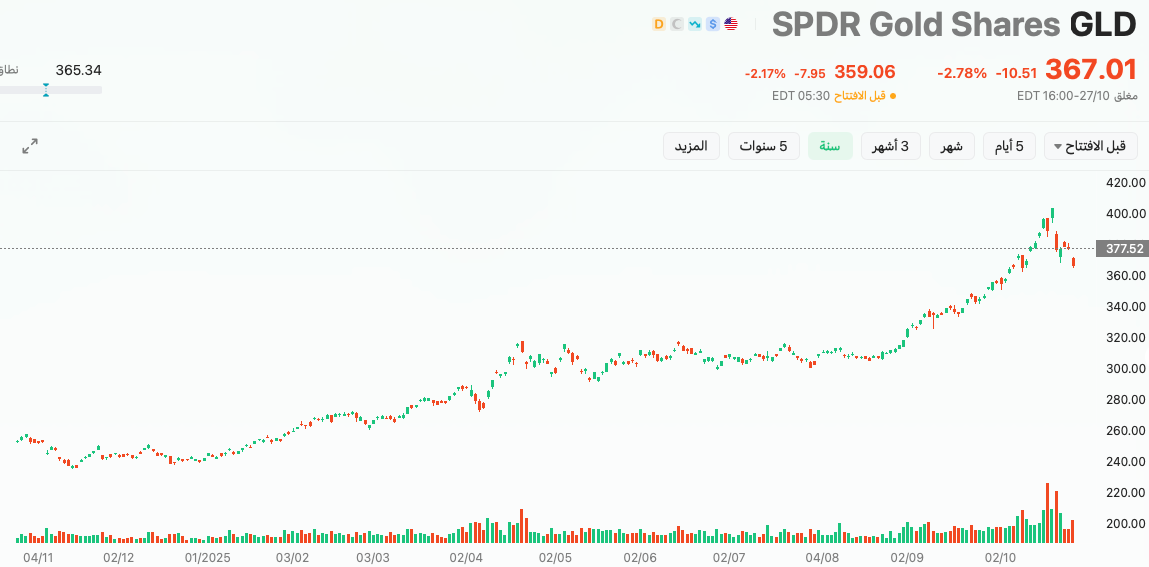
Spot gold extended its decline on Tuesday, breaking below $3,900 per ounce as easing trade tensions suppressed safe-haven demand. Citigroup downgraded its near-term gold forecast from $4,000 to $3,800 per ounce, citing progress in U.S. trade negotiations with multiple countries and declining market uncertainty.
Diverging Views on Gold's Outlook
Market opinions on gold's direction vary widely. Chris Weston of Pepperstone Group cautioned: "Determining the bottom remains challenging. Letting others take on the risk of bottom-fishing and waiting for tactical buying opportunities after pullbacks may be more prudent."
However, some institutions maintain bullish long-term forecasts. Goldman Sachs stated: "Pullbacks are healthy for gold. The Fed's rate cuts, economic uncertainty, and dollar weakness suggest prices will continue climbing through year-end and into 2026."
JPMorgan forecasts gold will reach $5,055 per ounce by Q4 2026, supported by continued central bank and investor demand of around 566 tons quarterly.
Citigroup noted that while near-term pressures exist, the medium- to long-term logic of holding gold as a hedge against geopolitical and economic risks remains strong.
The gold market currently sits at the intersection of multiple variables: trade developments, Fed decisions, and government shutdown impacts will jointly shape near-term price action.
Rate Decision Day Approaches! Key U.S. Stock Index ETFs to Watch:
| Index Name | Related ETF Name | Ticker | Leverage/Direction |
|---|---|---|---|
| S&P 500 | SPDR S&P 500 Index ETF | ETF-S&P 500(SPY.US) | 1x Long |
| S&P 500 ETF-Vanguard | Vanguard S&P 500 Etf(VOO.US) | 1x Long | |
| Nasdaq | Nasdaq 100 ETF-Invesco QQQ Trust | PowerShares QQQ Trust,Series 1(QQQ.US) | 1x Long |
| 3x Long Nasdaq ETF-ProShares | Ultrapro QQQ Proshares(TQQQ.US) | 3x Long | |
| 3x Short Nasdaq ETF-ProShares | Ultrapro Short QQQ Proshares(SQQQ.US) | 3x Short | |
| Dow Jones | SPDR Dow Jones Index ETF | ETF-Dow Jones Industrial Average(DIA.US) | 1x Long |
| ProShares 3x Short Dow 30 ETF | Ultrapro Short DOW 30 Proshares(SDOW.US) | 3x Short | |
| Volatility Index | Long VIX ETF | iPath Series B S&P 500 VIX Short-Term Futures ETN(VXX.US) | 1x Long |
| 1.5x Long VIX ETF | Proshares Trust Ii Ultra Vix Sht Trm Futr Etf 2017(Post Spt(UVXY.US) | 1.5x Long | |
| 0.5x Short VIX ETF | Proshares Trust Ii Short Vix Short-Term Futures ETF(SVXY.US) | 0.5x Short |
What do you think — will the Fed take a "dovish or hawkish" approach to rate cuts this week?
Which rate-cut assets will be more popular with investors?
We welcome your comments and discussion.