

A Look At Viasat (VSAT) Valuation After ViaSat‑3 F3 Constellation Completion
ViaSat, Inc. VSAT | 0.00 |
Viasat (VSAT) shares recently reacted to the successful launch and initial signal acquisition of the ViaSat 3 Flight 3 satellite, which completes the company’s next generation constellation serving the Asia Pacific region.
Against this backdrop, the recent ViaSat 3 F3 launch and new defense and airline connectivity wins come after a sharp run, with a 73.1% year to date share price return and very large 1 year total shareholder return.
If you are looking beyond Viasat’s story, this is a good moment to see what else is moving in high growth communications and AI infrastructure, starting with 37 AI infrastructure stocks.
With Viasat shares up 73.1% year to date and trading at a 17.4% discount to an intrinsic estimate but below the current analyst price target, is this still an overlooked opportunity, or is the market already pricing in future growth?
Most Popular Narrative: 27.3% Overvalued
The most followed narrative on Viasat pegs fair value at $51.14 using a 10.39% discount rate, compared with the last close of $65.12, and ties that gap to a demanding profitability path.
The focus on operational efficiency, portfolio review, and progressing integration with Inmarsat, in addition to CapEx peaking with the ViaSat-3 program, sets up Viasat for positive free cash flow inflection, deleveraging, and earnings improvement as major investment cycles wind down. Rising government and commercial interest in bridging the digital divide, especially in underserved and remote areas, provides a multi-year tailwind through subsidy programs and public/private contracts, supporting stable, recurring revenue streams and margin visibility.
Want to see what revenue trends, margin shifts and future earnings multiple this story leans on? The fair value call rests on a tight set of linked assumptions.
Result: Fair Value of $51.14 (OVERVALUED)
However, there is still the risk that heavy ViaSat 3 and Inmarsat spending, along with pressure from larger satellite rivals, could challenge the margin and cash flow profile.
Another View: Market Pricing Versus Fair Ratio
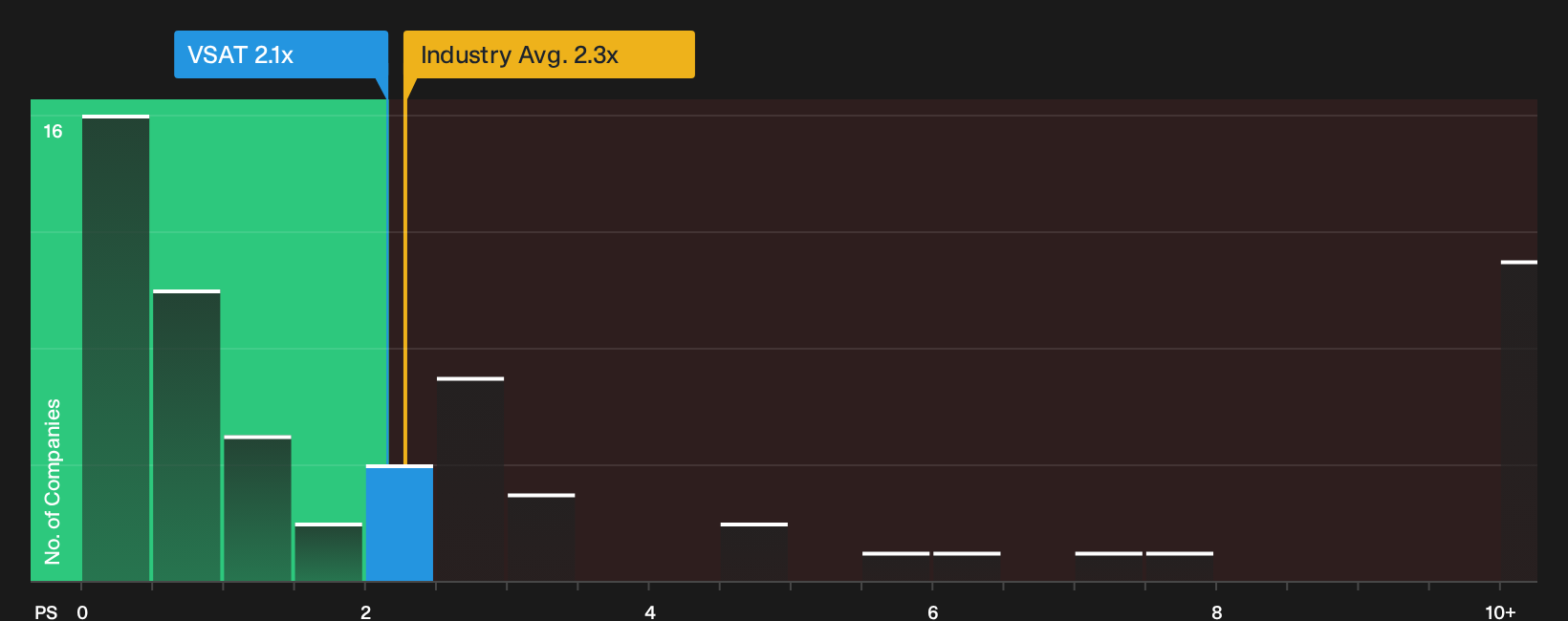
While the most followed narrative sees Viasat as 27.3% overvalued versus a $51.14 fair value, the current P/S ratio of 1.9x paints a different picture. It sits below the US Communications industry average of 2.6x, the peer average of 11.9x, and even a 2.5x fair ratio that the market could move toward over time.
This kind of gap can signal valuation risk if sentiment reverses, or potential upside if pricing drifts closer to that fair ratio. Which side of the trade do you think the market is leaning toward next?
Next Steps
With mixed signals on valuation and expectations, sentiment is clearly divided. Investors may wish to move quickly, review the underlying data, and weigh the 2 key rewards and 2 important warning signs.
Looking for more investment ideas?
If Viasat has your attention, do not stop here. Use this momentum to scan other opportunities that might fit your goals before the crowd catches on.
- Target potential mispricings by running through a focused list of 51 high quality undervalued stocks that combine quality with attractive pricing signals.
- Strengthen your income focus by checking companies in the 13 dividend fortresses that offer higher yields with supporting fundamentals.
- Protect your downside by scanning 67 resilient stocks with low risk scores that rank well on balance sheet strength and lower risk scores.
This article by Simply Wall St is general in nature. We provide commentary based on historical data and analyst forecasts only using an unbiased methodology and our articles are not intended to be financial advice. It does not constitute a recommendation to buy or sell any stock, and does not take account of your objectives, or your financial situation. We aim to bring you long-term focused analysis driven by fundamental data. Note that our analysis may not factor in the latest price-sensitive company announcements or qualitative material. Simply Wall St has no position in any stocks mentioned.