

Abbott Stock And Two Defensive Dividend Names For Uncertain Markets
UnitedHealth Group Incorporated UNH | 0.00 |
Sticky July PCE inflation and a divided Federal Reserve keep markets on edge, while softer retail sales hint that consumers may be slowing down. That mix can punish some stocks and reward others, especially companies with steadier cash flows and dividends. This article looks at three high quality dividend stocks that appear closely linked to these cross currents and explains how the latest data could shape their risk and reward profile for your portfolio.
The three dividend stocks below are just a sample of what fits this backdrop. The full screen highlights 25 more U.S. large caps in defensive sectors with equally compelling dividend and quality stories that are not covered here. If you want to go straight to the source and identify your own higher conviction ideas, analyze payout strength and stress test volatility, head into the High-Quality Dividend Stocks in Defensive Sectors screener.
Abbott Laboratories (ABT)
Overview: Abbott Laboratories is a global healthcare company that sells medical devices, diagnostic systems, branded generics and nutrition products that support everything from diabetes management to cardiovascular care and infant formula. Its diversified healthcare footprint and long dividend record fit the high quality, defensive income theme at the core of this screener.
Operations: Abbott generates most of its revenue from Medical Devices at about $22.5b, followed by Diagnostic Products at roughly $10.0b, Nutritional Products at about $8.3b, Established Pharmaceutical at around $5.8b and a small Other segment.
Market Cap: $200.9b
Investors looking for steadier dividend income in a choppy rate backdrop may find Abbott Laboratories worth a closer look. The company combines a long history of dividend payments with a broad healthcare portfolio, including high margin diabetes and diagnostic technologies like Libre Duo and Lingo that anchor its long term earnings story. Its size and diversification can help soften the blow from pockets of pressure such as margin compression, higher debt and pricing pressure in diagnostics and emerging markets. At the same time, fresh product approvals, partnerships with firms like Google Health and progress on litigation settlements suggest management is working to protect cash flow. The balance between income resilience and these live risk factors is where the real opportunity and homework sits.
Abbott’s combination of long-running dividends and newer products such as Libre Duo and Lingo could be masking a very different risk reward profile than many income investors assume. Review the 3 key rewards and 2 important warning signs

Elevance Health (ELV)
Overview: Elevance Health is a major U.S. health benefits company that provides medical, pharmacy and related services through brands like Anthem Blue Cross and Blue Shield, Wellpoint and Carelon. This fits the screener focus on large, dividend paying healthcare groups with recurring cash flows. It sells health plans across commercial, Medicare and Medicaid lines, layers on pharmacy benefit management, behavioral health and analytics services, and uses its Carelon platform to manage care, costs and data for members and employer and government clients.
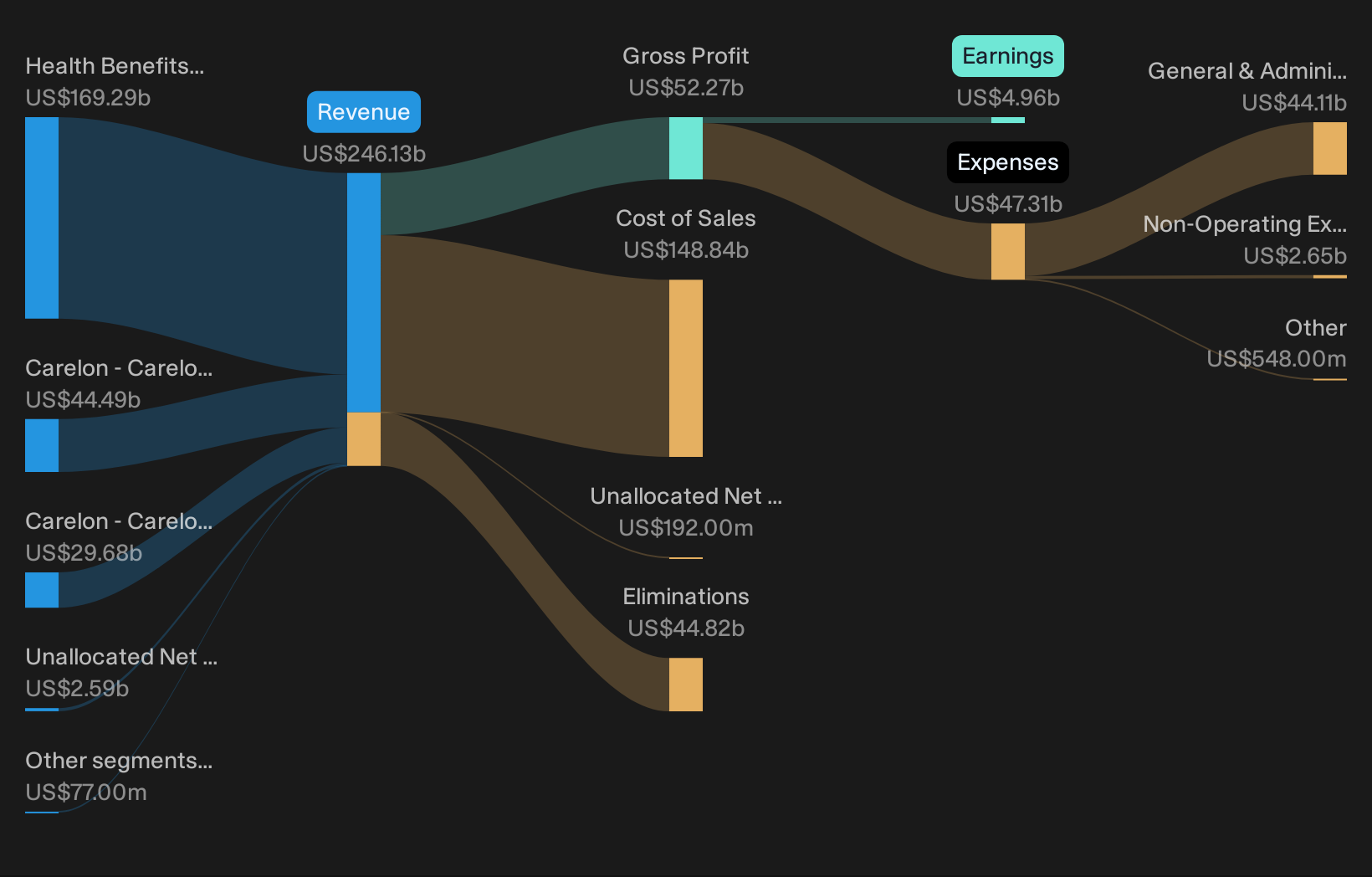
Operations: Elevance Health generates most of its revenue in the United States, with about $169.3b from Health Benefits, $44.5b from CarelonRx pharmacy services and $29.7b from Carelon Services, partly offset by eliminations and small corporate and investment line items.
Market Cap: $86.5b
Investors looking for dividend income that feels more predictable than consumer facing sectors may want Elevance Health on their radar. The company combines a recurring premium model and healthcare services through Carelon with a 1.71% dividend, AI driven cost control efforts in areas like cancer care and behavioral health, and a valuation that screens as attractive relative to some peers. At the same time, thin net margins around 2.5%, recent earnings pressure, reliance on external funding and ongoing Medicaid and ACA reimbursement risks mean the margin recovery story carries meaningful uncertainty. In an environment of sticky inflation and rate uncertainty, that mix of defensive cash flows and real policy and cost risks makes the next phase of Elevance’s narrative worth closer study.
Elevance Health’s recurring premiums and Carelon services may be masking a very different earnings path than markets assume. Test that view against the full analysis report for Elevance Health to see what the margin story might be missing.
UnitedHealth Group (UNH)
Overview: UnitedHealth Group is a global health care company built around two pillars, UnitedHealthcare insurance plans and the Optum services businesses, which together provide medical coverage, pharmacy benefits, data and software, and direct care to employers, governments and individuals. Its role as a large, diversified U.S. health insurer with a dividend history fits the High-Quality Dividend Stocks in Defensive Sectors theme, giving investors exposure to healthcare spending that often proves steadier than more cyclical sectors.
Operations: UnitedHealth Group generates most of its revenue from UnitedHealthcare at about US$346.5b, with additional contributions from Optum Rx at roughly US$155.2b, Optum Health at about US$100.0b and Optum Insight at around US$19.7b, partly offset by segment adjustments and corporate eliminations.
Market Cap: US$356.0b
UnitedHealth Group may be relevant to investors who want dividend income backed by a broad healthcare platform rather than a single product bet. The company combines a 2.31% dividend, large scale in Medicare and commercial insurance, and Optum data and pharmacy services, which analysts view as important levers for managing margins as AI and value based care programs are used to manage costs. At the same time, recent margin pressure, Medicare Advantage rate and acuity issues, and scrutiny of high cost drugs and state Medicaid rates show how quickly profitability can be squeezed. In a world of sticky inflation and rate uncertainty, that mix of resilient cash flows, valuation signals and policy and cost risks can make the next chapter of the UnitedHealth Group story a subject for closer study.
UnitedHealth Group’s scale in Medicare and Optum services could be masking where margins and dividends really meet. Walk through the full full narrative for UnitedHealth Group to see the pressure point that may matter most next.

Seeking Alternatives Before The Crowd Moves
Fresh ideas can move first when breakout momentum is still building and prices have not been fully caught by the crowd. Scan these under the radar sets now and consider them before they attract wider attention.
- Track where early money is quietly building positions by reviewing the 20 high quality undiscovered gems that pair solid fundamentals with stories most investors have not fully priced in yet.
- Spot potential compounding engines before momentum headlines hit by scanning the 75 resilient stocks with low risk scores that combine resilient financial profiles with calmer risk scores while it still matters.
- Focus on major infrastructure shifts instead of watching from the sidelines by reviewing the 38 power grid technology and infrastructure stocks that could benefit if grid spending continues to rise.
This article by Simply Wall St is general in nature. We provide commentary based on historical data and analyst forecasts only using an unbiased methodology and our articles are not intended to be financial advice. It does not constitute a recommendation to buy or sell any stock, and does not take account of your objectives, or your financial situation. We aim to bring you long-term focused analysis driven by fundamental data. Note that our analysis may not factor in the latest price-sensitive company announcements or qualitative material. Simply Wall St has no position in any stocks mentioned.