

After the recent decline, Dogness (International) Corporation (NASDAQ:DOGZ) CEO Silong Chen's holdings have lost 76% of their value
Dogness (International) Corporation DOGZ | 0.00 |
Key Insights
- Significant insider control over Dogness (International) implies vested interests in company growth
- The largest shareholder of the company is Silong Chen with a 64% stake
- Ownership research, combined with past performance data can help provide a good understanding of opportunities in a stock
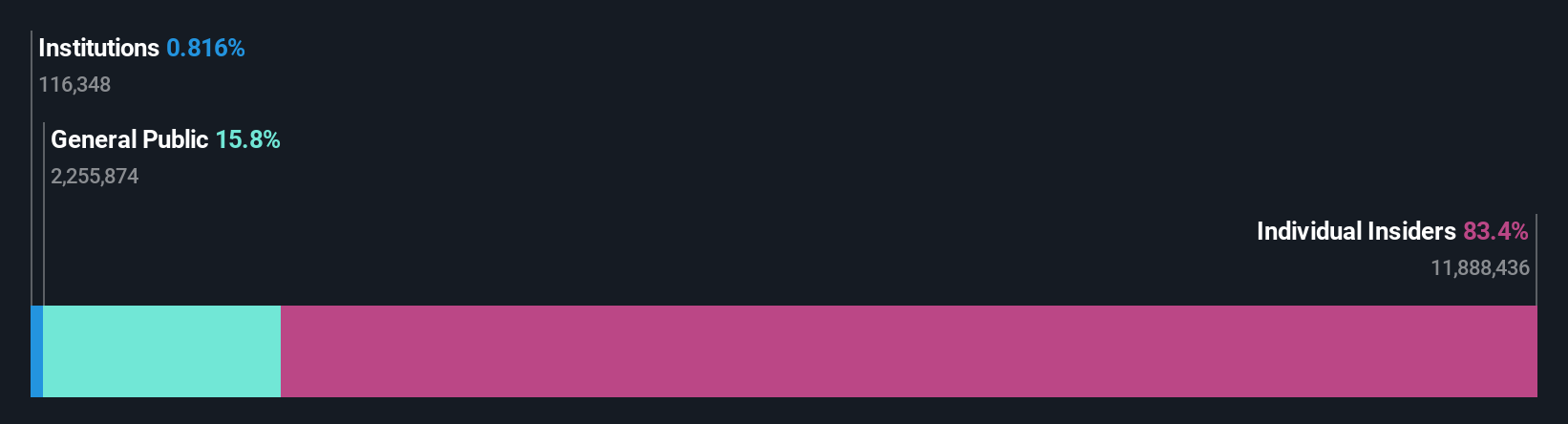
To get a sense of who is truly in control of Dogness (International) Corporation (NASDAQ:DOGZ), it is important to understand the ownership structure of the business. And the group that holds the biggest piece of the pie are individual insiders with 83% ownership. That is, the group stands to benefit the most if the stock rises (or lose the most if there is a downturn).
And last week, insiders endured the biggest losses as the stock fell by 76%.
Let's delve deeper into each type of owner of Dogness (International), beginning with the chart below.
What Does The Lack Of Institutional Ownership Tell Us About Dogness (International)?
Small companies that are not very actively traded often lack institutional investors, but it's less common to see large companies without them.
There are many reasons why a company might not have any institutions on the share registry. It may be hard for institutions to buy large amounts of shares, if liquidity (the amount of shares traded each day) is low. If the company has not needed to raise capital, institutions might lack the opportunity to build a position. It is also possible that fund managers don't own the stock because they aren't convinced it will perform well. Institutional investors may not find the historic growth of the business impressive, or there might be other factors at play. You can see the past revenue performance of Dogness (International), for yourself, below.

We note that hedge funds don't have a meaningful investment in Dogness (International). With a 64% stake, CEO Silong Chen is the largest shareholder. This implies that they possess majority interests and have significant control over the company. Investors usually consider it a good sign when the company leadership has such a significant stake, as this is widely perceived to increase the chance that the management will act in the best interests of the company. The second and third largest shareholders are Yuzhang Zhou and Xuzhong Xu, with an equal amount of shares to their name at 3.5%.
While studying institutional ownership for a company can add value to your research, it is also a good practice to research analyst recommendations to get a deeper understand of a stock's expected performance. We're not picking up on any analyst coverage of the stock at the moment, so the company is unlikely to be widely held.
Insider Ownership Of Dogness (International)
The definition of an insider can differ slightly between different countries, but members of the board of directors always count. Company management run the business, but the CEO will answer to the board, even if he or she is a member of it.
Insider ownership is positive when it signals leadership are thinking like the true owners of the company. However, high insider ownership can also give immense power to a small group within the company. This can be negative in some circumstances.
Our information suggests that insiders own more than half of Dogness (International) Corporation. This gives them effective control of the company. Given it has a market cap of US$162m, that means they have US$135m worth of shares. Most would be pleased to see the board is investing alongside them. You may wish todiscover (for free) if they have been buying or selling.
General Public Ownership
With a 16% ownership, the general public, mostly comprising of individual investors, have some degree of sway over Dogness (International). While this size of ownership may not be enough to sway a policy decision in their favour, they can still make a collective impact on company policies.
Next Steps:
While it is well worth considering the different groups that own a company, there are other factors that are even more important. Take risks for example - Dogness (International) has 2 warning signs we think you should be aware of.
Of course this may not be the best stock to buy. Therefore, you may wish to see our free collection of interesting prospects boasting favorable financials.
NB: Figures in this article are calculated using data from the last twelve months, which refer to the 12-month period ending on the last date of the month the financial statement is dated. This may not be consistent with full year annual report figures.
This article by Simply Wall St is general in nature. We provide commentary based on historical data and analyst forecasts only using an unbiased methodology and our articles are not intended to be financial advice. It does not constitute a recommendation to buy or sell any stock, and does not take account of your objectives, or your financial situation. We aim to bring you long-term focused analysis driven by fundamental data. Note that our analysis may not factor in the latest price-sensitive company announcements or qualitative material. Simply Wall St has no position in any stocks mentioned.