
AI Repricing In Software Puts nCino’s Cloud Banking Story To Test
nCino NCNO | 17.10 | +3.20% |
- Software stocks, including nCino (NasdaqGS:NCNO), are being sold off as investors reassess traditional SaaS models in light of AI related risks and costs.
- Signals from large software and cloud providers about softer demand and potentially higher AI spending are weighing on the sector.
- nCino, focused on cloud banking software, is caught in this wider reset rather than reacting to a single company specific headline.
For nCino, the sector move comes on top of already weak share performance. At a recent price of $18.15, NasdaqGS:NCNO is down 15.0% over the past week, 28.3% over the past month, 26.4% year to date and 44.1% over the past year. Over longer periods, the stock shows a 35.6% decline over three years and 77.3% over five years.
Investors are now weighing how AI related spending and adoption might change the economics for cloud banking platforms like nCino. The current reset in software valuations may encourage readers to pay closer attention to business model resilience, product fit with AI trends and the company’s ability to manage costs as sector expectations evolve.
Stay updated on the most important news stories for nCino by adding it to your watchlist or portfolio. Alternatively, explore our Community to discover new perspectives on nCino.
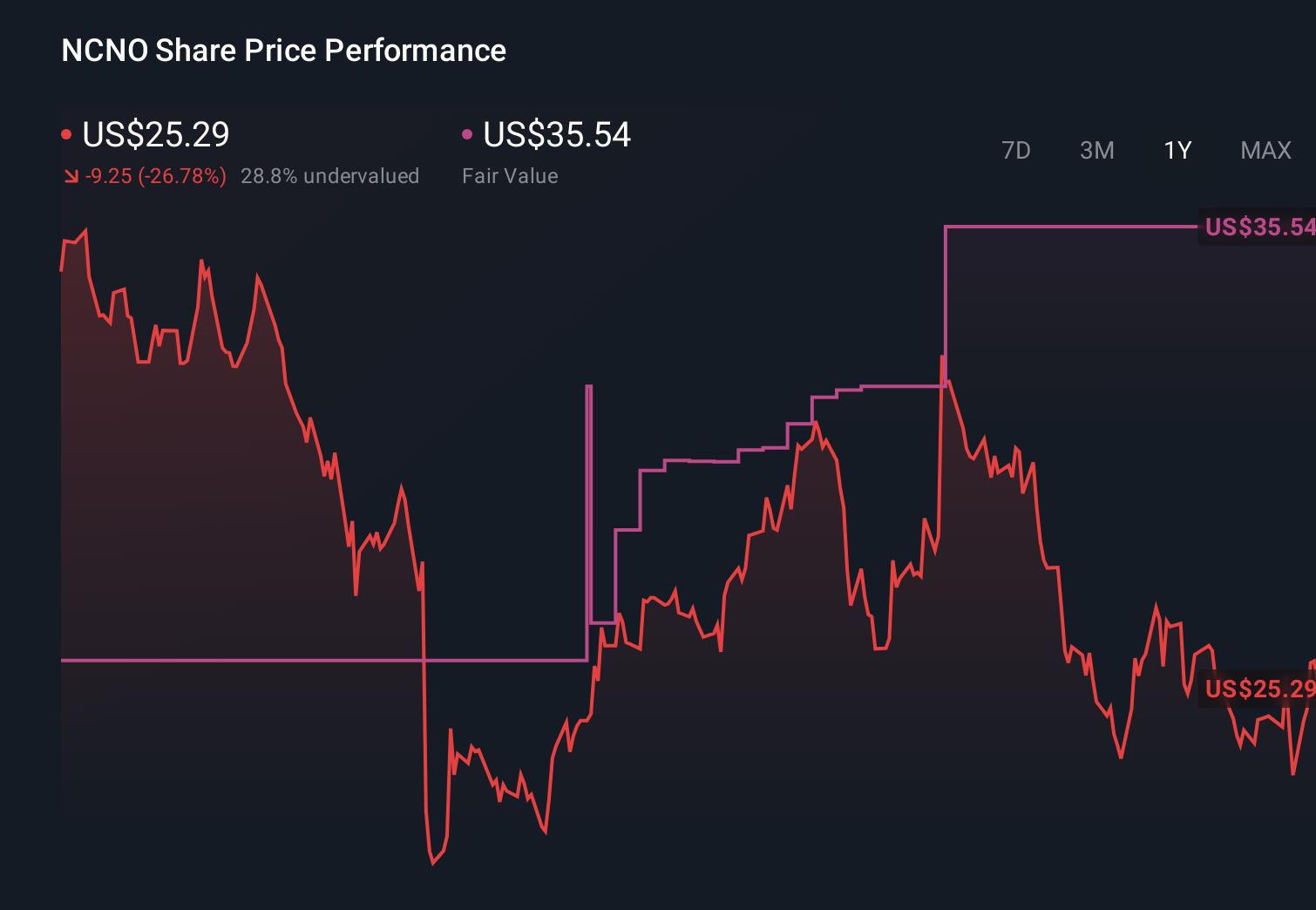
The sector-wide sell-off looks more like a broad reset in how investors view traditional SaaS than a company-specific verdict on nCino. Concerns that AI-related investments could squeeze margins at enterprise software vendors such as SAP, ServiceNow and peers like Salesforce or Adobe are pushing some institutional holders to cut exposure to higher-multiple, recurring-revenue names, and nCino is being caught in that rotation.
How this sell-off fits into the nCino Narrative
The current pullback sits in contrast to the existing narrative around nCino, which highlights AI-driven automation in banking, a broader cloud-native platform and international expansion as long-term drivers. For readers, the tension now is between that story of product expansion and AI use cases on one side, and the market’s short-term concern about AI costs and software spending on the other.
Risks and rewards investors are weighing
- ⚠️ Sector sentiment has turned cautious on enterprise software margins as AI spending and softer cloud backlogs from large vendors raise questions about profitability.
- ⚠️ Analysts have flagged execution risks around international growth, regulatory demands and ongoing investment needs, which could keep earnings pressure in focus during a sell-off.
- 🎁 The existing narrative points to AI-driven banking tools, platform expansion and underpenetrated markets as potential supports for future revenue and earnings.
- 🎁 Some investors may see sector-wide weakness as an opportunity to reassess companies where the product story and long-term adoption case are still intact.
What to watch from here
From here, watch how consistently banks adopt AI-powered features like nCino’s automation tools, and whether management comments line up with concerns about higher AI costs or a slower enterprise spending backdrop. If you want a deeper sense of how different investors are interpreting these cross-currents, check out the community narratives on nCino’s dedicated page and compare this sell-off with the longer-term story being discussed there.
This article by Simply Wall St is general in nature. We provide commentary based on historical data and analyst forecasts only using an unbiased methodology and our articles are not intended to be financial advice. It does not constitute a recommendation to buy or sell any stock, and does not take account of your objectives, or your financial situation. We aim to bring you long-term focused analysis driven by fundamental data. Note that our analysis may not factor in the latest price-sensitive company announcements or qualitative material. Simply Wall St has no position in any stocks mentioned.