
Algorithms > Instincts: How the Quant Queen Hit 43% Returns
Apple Inc. AAPL | 255.92 | +0.11% |
Tesla Motors, Inc. TSLA | 360.59 | -5.42% |
PowerShares QQQ Trust,Series 1 QQQ | 584.98 | +0.11% |
SAUDI ARAMCO 2222.SA | 27.60 | +0.15% |
Tadawul All Shares Index TASI.SA | 11268.38 | -0.07% |

Will the Future Be Dominated by Systematic Methods? "I Think So."
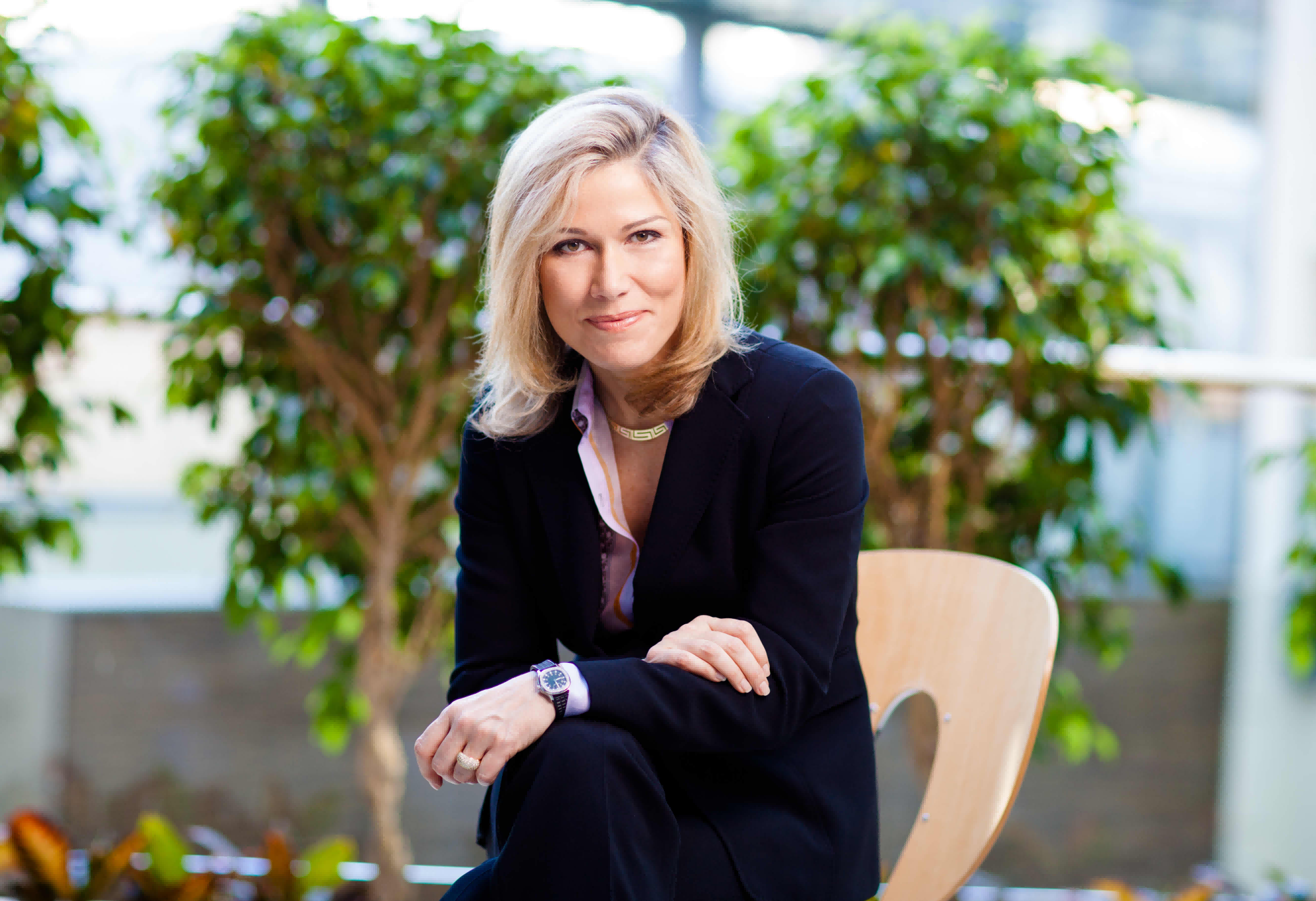
This is the verdict of Leda Braga, widely known as the "Queen of Quants." She isn't merely speculating about the future; she has spent over two decades meticulously carving that future into reality.
From her days as a quantitative researcher at J.P. Morgan, to her role as a core manager at BlueCrest Capital Management, and finally founding Systematica Investments, her mission has remained singular: to transform trading from a realm of "human emotion" into one of "algorithmic discipline."
Her most famous weapon is a strategy many have heard of but few truly understand: Trend Following.
Her Vision of Trend Following: Don't Predict, React
Braga’s definition of trend following is elegantly simple: look at the price, not the narrative; follow the trend, don't guess the direction; use a system to strip away emotion.
If the price is rising, go long. If it is falling, go short. Do not try to call the top or the bottom, and do not attempt to explain "why." This is not intellectual laziness; it is a recognition of reality: the volume of information in the market far exceeds the processing power of the human brain.
Consequently, she outsources the task of "understanding the market" to models, and the task of "executing discipline" to code.
2008: The Battle of Algorithms vs. Human Nature
Her flagship fund, BlueTrend, delivered a stunning 43% return in 2008.
That year, many discretionary traders lost their rhythm amidst the panic. In contrast, trend models capitalized on the extreme volatility, steadily capturing directional moves.
Braga later delivered a classic observation on this period:
"When a trader is forced to stop out, he takes that emotion home with him. A black box system does not."
This isn't cold-bloodedness; it is a competitive edge.
Why Does Trend Following "Look Ordinary" Yet Survive the Longest?
She emphasizes a frequently overlooked fact: Trend following often yields unremarkable Sharpe ratios and winning percentages that aren't particularly pretty. It requires a long cycle of patience.
However, it possesses a characteristic that few other strategies can match: extreme diversification capability.
It can objectively short markets, capture trends across asset classes, and stand on the "right side" of extreme volatility. This makes it incredibly valuable within a portfolio context.
The prerequisite, however, is that investors must truly understand it and allocate positions that match their risk tolerance.
Her Least Favorite Critique: "You're Just Using History to Predict the Future"
When skeptics challenge her, saying, "You are just using historical data to predict the future," Braga’s retort is lethal:
"And what do discretionary traders use? A crystal ball?"
Her core thesis is that investment management is, fundamentally, information management. And algorithms are currently the most efficient method for processing that information.
"Algorithm Aversion": Preferring the Flawed Human
Braga highlights a fascinating phenomenon: Algorithm Aversion.
Research shows that even if an algorithm outperforms humans over the long term, once both sides make the same mistake, people lose trust in the algorithm far faster than they do in the human.
Why? Because we believe humans can reflect and improve.
Braga’s response is straightforward: Algorithms evolve, too. It is simply that our tolerance for algorithmic error is far lower than our tolerance for human failure. She believes that as the world becomes increasingly "algorithmized," this bias will fade.
The Core Philosophy of Systematica: Removing the "Human" from the Decision
At Systematica Investments, she adheres to several non-negotiables:
- Algorithmic Discipline > Human Judgment
- Risk Control > Fantasy of Returns
- Multi-Asset Diversification > Single Bets
- Continuous Iteration via Data & Machine Learning
They trade hundreds of instruments simultaneously, year-round. There are no opinions, only signals.
As she famously stated: "We have no subjective view on the market; it is the algorithms that are truly trading."
Beyond BlueTrend, Systematica has rolled out multiple strategies:
- SAM (Systematica Alternative Markets - Emerging Markets)
- SARP (Alternative Risk Premia)
- China Markets Strategy
- Multi-Strategy Quantitative Portfolios
By 2025, the firm managed approximately $17 billion in assets, even as BlueTrend navigated a challenging 19% drawdown due to geopolitical shocks that year.
Leadership That is as "Counter-Intuitive" as Trend Following
Her leadership style defies the typical Wall Street mold. No one dares to sing at meetings? She sings first. Her commute vehicle of choice? A Ducati motorcycle. She loves data but hates the spotlight.
Yet, in investing, she is supremely restrained, supremely disciplined, and supremely rational.
This is the quintessential quantitative mindset: Life can have personality; trading must not.
Valuable Takeaways for the Reflective Trader
If one were to translate Braga’s philosophy into actionable insights for the individual trader, it would read:
- Stop trying to predict the market.
- Replace gut feelings with rules.
- Accept the "ugly equity curves" inherent in trend following.
- Align your position sizing with your risk tolerance.
- Exile emotion from your system.
- Embrace long-termism over short-term excitement.
Her most profound statement serves as a fitting conclusion:
"Talented people retire. But investment logic expressed in algorithms, formulas, and code exists independently. Even if I disappear tomorrow, everything continues to run."
This is not merely inspirational; it is the ultimate purpose of systematic trading.
When your trading no longer relies on "how you feel today," but rather on a set of reusable, executable, and iterative rules—that is when you have truly entered the world of professional trading.
From a Rio girl who loved numbers to a global quantitative leader overseeing billions, Leda Braga’s story proves one thing: Science, discipline, and innovation can reshape financial markets. She is not just a fund manager; she is a symbol of financial leadership in the algorithmic age.