
American Express Raises Over US$3.5b To Fund Premium Card Expansion
American Express Company AXP | 300.18 | -0.11% |
- American Express completed several large fixed income offerings totaling over $3.5b in recent days.
- The capital raise coincides with a company focus on premium card growth and a shift in marketing toward higher end and younger customers.
- Leadership is emphasizing long term premium positioning while seeking to attract younger, high spend clients.
American Express (NYSE: AXP) is currently trading at $349.63, with the share price up 11.9% over the past year and 193.2% over the past five years. Those returns frame today’s news in the context of a business that has already delivered substantial longer term gains, even as the stock has seen a 6.2% decline over the past month.
For investors, the combination of a fixed income raise exceeding $3.5b and an explicit push toward premium and younger cardholders points to a clear capital and customer focus. The key questions from here are how American Express allocates this new funding and how effectively it converts targeted marketing and product efforts into sustained spending and loyalty among higher value clients.
Stay updated on the most important news stories for American Express by adding it to your watchlist or portfolio. Alternatively, explore our Community to discover new perspectives on American Express.
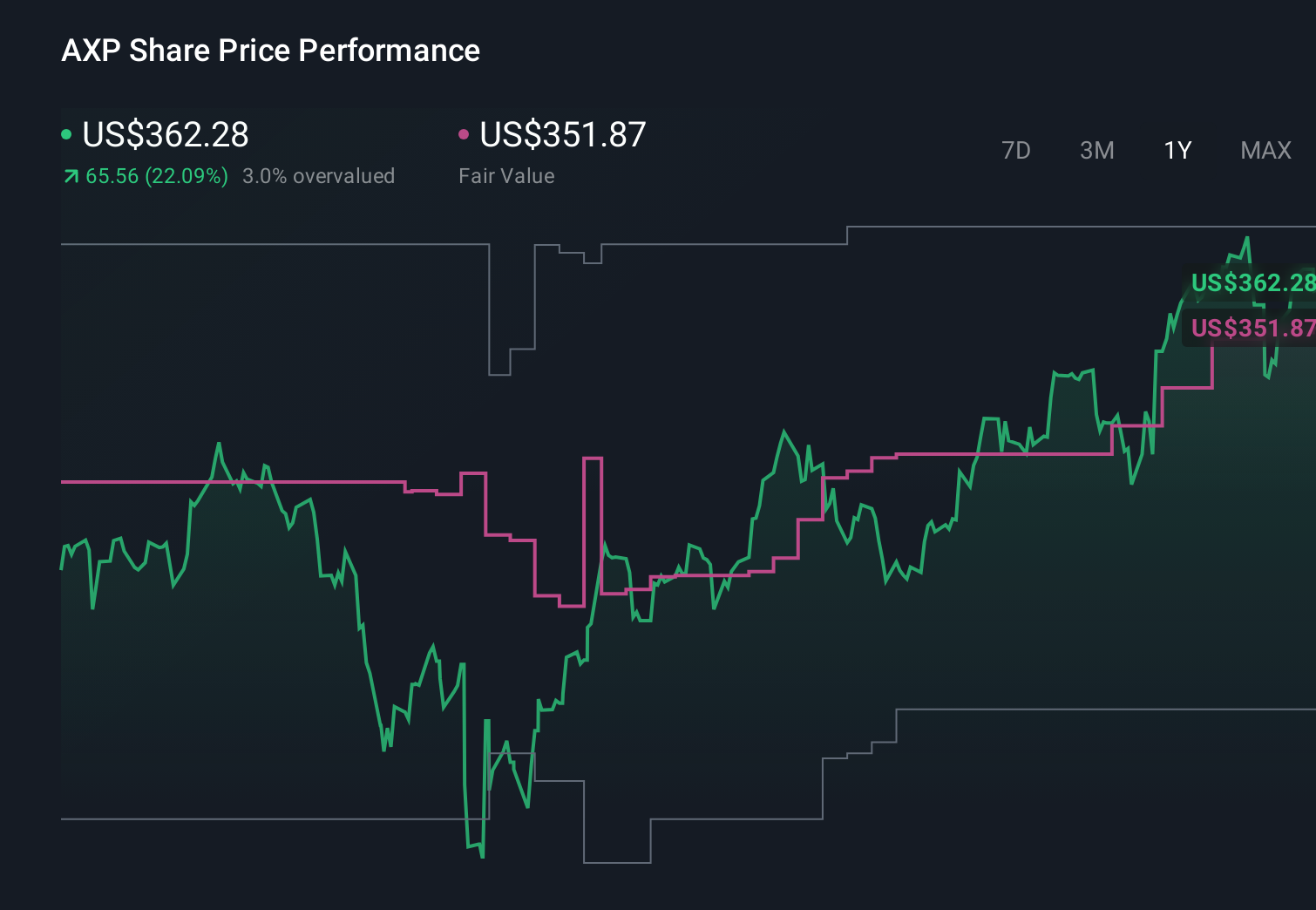
The more than US$3.5b in recent fixed income offerings gives American Express fresh long dated funding in a mix of senior and subordinated notes that run out to 2041, which can support card receivables growth and ongoing investment in rewards and marketing. Because these are variable rate and largely unsecured issues, bond investors are effectively backing the current business model and earnings profile, even as equity investors react to headlines about interest rate caps and sector pressure on card issuers such as JPMorgan Chase and Citi.
How this fits the American Express premium-growth narrative
The new capital raise sits alongside management’s focus on premium cards, younger Millennial and Gen Z customers, and higher luxury spend, which the existing narratives highlight as key to long term earnings stability. For you, this link between funding and premium card acquisition means it is worth watching whether spending patterns and card fee growth continue to line up with the company’s emphasis on affluent, younger cohorts rather than just treating this as a routine balance sheet move.
Risks and rewards investors are weighing
- Fresh term funding across 2029 to 2041 can support card growth and marketing without relying solely on shorter term wholesale markets.
- Earnings growth in 2025 and rising card fee and luxury spending show that the current premium focused model is supporting profitability.
- Variable rate, unsecured debt adds interest cost and refinancing considerations if sector conditions or regulation on credit cards tighten.
- Analyst comments about higher growth costs and possible interest rate caps on cards highlight a risk that returns on this new capital could be pressured.
What to watch next
From here, keep an eye on how American Express balances higher marketing and rewards spending with the cost of this new debt, especially versus peers like JPMorgan Chase and Citi that are also leaning into premium cards. For a broader sense of how other investors are interpreting these trade offs, check out community narratives on the company’s dedicated page at American Express narratives and valuation views from the community.
This article by Simply Wall St is general in nature. We provide commentary based on historical data and analyst forecasts only using an unbiased methodology and our articles are not intended to be financial advice. It does not constitute a recommendation to buy or sell any stock, and does not take account of your objectives, or your financial situation. We aim to bring you long-term focused analysis driven by fundamental data. Note that our analysis may not factor in the latest price-sensitive company announcements or qualitative material. Simply Wall St has no position in any stocks mentioned.