

Applied Materials (AMAT) Stock Trades At A Discount To Fair Value
Applied Materials, Inc. AMAT | 0.00 |
Applied Materials stock has logged very strong multi year gains, yet recent price softness and a mixed valuation score leave investors weighing how much optimism is already reflected in today’s share price. The question is whether the current level still offers attractive long term return potential or now leans closer to fully priced.
- Over the past 5 years, Applied Materials has returned 274.7%, which puts extra focus on whether the current valuation leaves enough room for future gains to justify that track record.
- Expectations for continued demand for Applied Materials equipment in areas like advanced chip manufacturing can support the current share price. At the same time, signs of slower systems shipment growth, as highlighted in recent commentary from Morgan Stanley, may limit how much investors are willing to pay for that growth.
- With a value score of 3, Applied Materials screens as a mixed picture rather than a clear bargain or clear overvaluation on the broader checks.
The issue now is whether the current valuation of Applied Materials offers enough upside potential relative to the risks implied by slower shipment growth and the strong gains already delivered.
Compare Applied Materials' recent surge and softer near term returns with a curated set of 55 AI infrastructure stocks that are also tied to chip demand and broader AI hardware spending.
Is Applied Materials Still Cheap on Earnings?
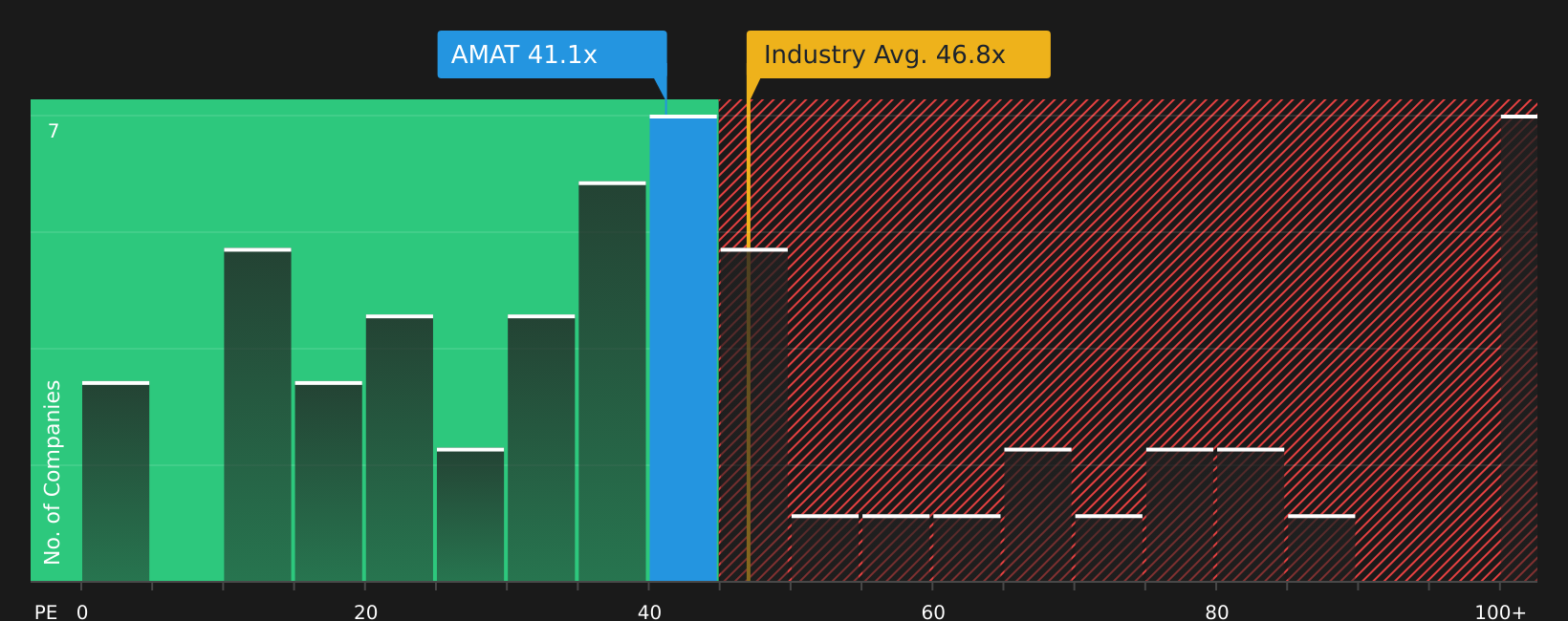
P/E is a useful check for Applied Materials because earnings remain a key focus for how investors value established semiconductor suppliers. The stock currently trades on a P/E of 41.1x, slightly below the Semiconductor industry average of 46.8x and just under the peer average of 43.0x. This puts Applied Materials at a modest discount to many similar stocks on this simple earnings yardstick.
The tailored fair P/E ratio for Applied Materials is 46.2x, which is higher than the current 41.1x multiple. This fair ratio reflects what investors might typically pay for a company with the profile of Applied Materials within the sector. Because Morgan Stanley has highlighted slower systems shipment growth, the current discount to that fair P/E suggests the market is already incorporating some caution.
On balance, Applied Materials stock appears undervalued on its current P/E multiple relative to the fair ratio implied by these broader checks.
The Applied Materials Narrative: What Would Justify Today's Price?
Simply Wall St Narratives pick up where the Applied Materials valuation puzzle leaves off. They spell out what kind of future growth, margins and earnings would need to occur for the stock to be worth materially more or less than it is today, based on frameworks shared on the Community page. Each narrative links a fair value to a clear story about Applied Materials' potential catalysts and risks so you can track over time which version seems to be unfolding.
The community is split on Applied Materials, with one camp leaning into an extended AI equipment cycle and another warning that expectations already look stretched.
Bull case: 24% undervalued
"Structural growth in AI and high-performance computing is reshaping semiconductor demand, driving heavy investments in advanced chip architectures such as gate-all-around transistors, high-bandwidth memory, and advanced packaging..."
Bear case: 22% overvalued
"Trade restrictions and slowed DRAM and ICAPS sales may significantly limit revenue growth, especially from the China market..."
Do you think there's more to the story for Applied Materials? Head over to our Community to see what others are saying!
The Bottom Line
Applied Materials screens as modestly undervalued on current earnings multiples, although the broader checks point to a more balanced picture rather than a clear bargain. The key question is whether demand for its equipment and systems shipment trends stay strong enough to support that earnings base and avoid a meaningful de rating. The crux of the bull versus bear debate is whether current caution around shipment growth proves temporary or signals a longer phase of more restrained orders that would justify the present discount lingering or widening.
This article by Simply Wall St is general in nature. We provide commentary based on historical data and analyst forecasts only using an unbiased methodology and our articles are not intended to be financial advice. It does not constitute a recommendation to buy or sell any stock, and does not take account of your objectives, or your financial situation. We aim to bring you long-term focused analysis driven by fundamental data. Note that our analysis may not factor in the latest price-sensitive company announcements or qualitative material. Simply Wall St has no position in any stocks mentioned.