
Assessing Oceaneering International (OII) Valuation After Recent Share Price Pullback
Oceaneering International, Inc. OII | 37.49 37.49 | +2.46% 0.00% Post |
Event context and recent share performance
Oceaneering International (OII) has attracted fresh attention after a recent share price pullback, with the stock down about 6% over the past day and 3% over the past week.
That short term softness contrasts with a relatively flat move over the past month and strong gains over the past 3 months and year. This has prompted some investors to reassess what is currently priced into the offshore services and robotics specialist.
With the share price at $33.28, the recent 6.1% one day share price decline sits against a 28.7% 90 day share price return and a 65.2% one year total shareholder return, suggesting momentum has been strong even as short term sentiment cools.
If this kind of volatility has you thinking about where else growth and risk might be priced differently, it could be worth scanning for other robotics and automation names via the 30 robotics and automation stocks.
So with Oceaneering International trading at $33.28, a 10.4% intrinsic discount and a price above the average analyst target, are you looking at an undervalued entry point, or a stock where markets already price in future growth?
Most Popular Narrative: 21% Overvalued
With Oceaneering International last closing at $33.28 against a narrative fair value of $27.50, the most followed valuation work suggests the share price sits meaningfully above that estimate, with everything anchored on a 7.47% discount rate and detailed earnings and margin assumptions.
The ongoing global energy transition and intensifying decarbonization efforts continue to limit new offshore oil & gas developments, which threatens Oceaneering's long-term project backlog and could ultimately reduce future revenue growth as the addressable market gradually contracts. Investors may be overestimating the durability of subsea offshore demand, as advancements in the cost and scale of renewable energy sources could accelerate a decline in demand for deepwater oilfield services and subsea solutions, dampening the relevance and growth potential of Oceaneering's legacy offerings, and putting long-term revenue at risk.
Curious what earnings path, revenue run rate, and profit margins are baked into that valuation gap? The key drivers include changing mix across segments, shifting margins, and a richer future earnings multiple that could surprise you once you see the full table of assumptions.
Result: Fair Value of $27.50 (OVERVALUED)
However, if Aerospace and Defense Technologies gathers more multi year contracts, or subsea robotics retains high market share with strong day rates, the bearish case could soften.
Another way to look at value
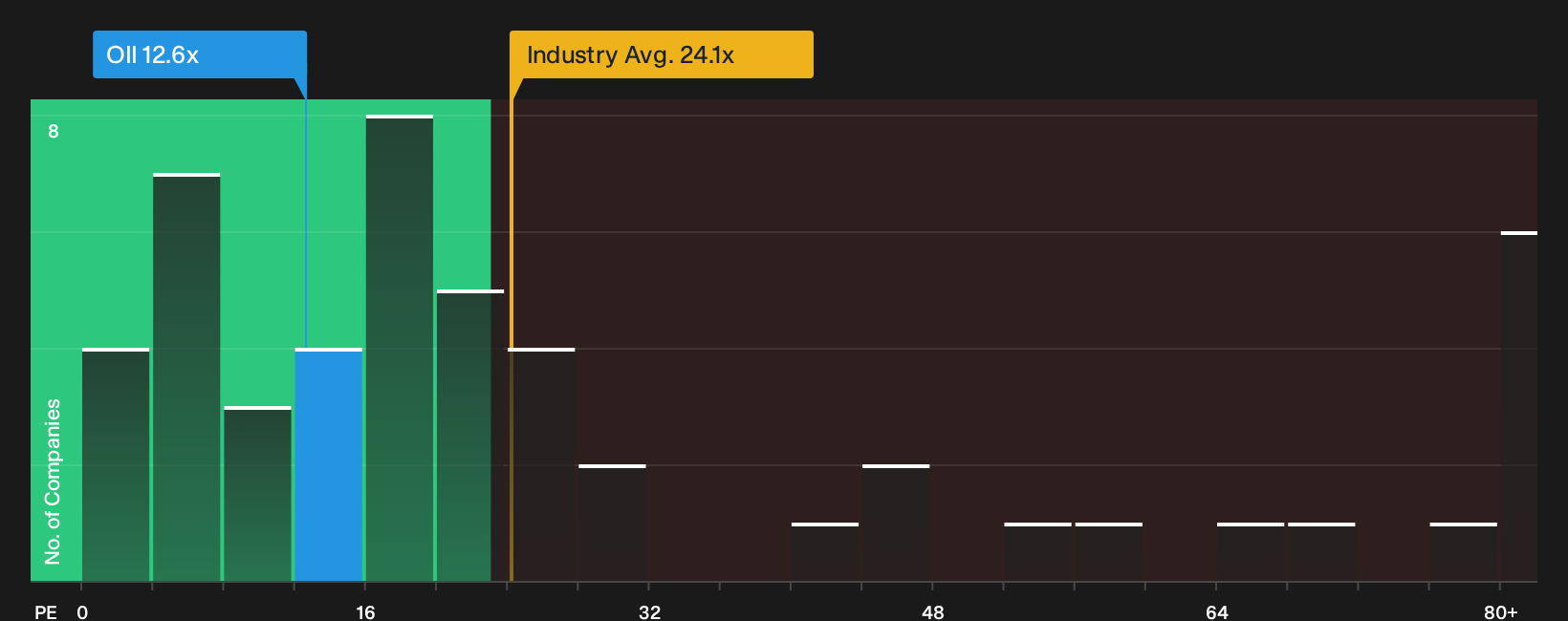
The narrative work points to Oceaneering International being 21% overvalued at $33.28, yet the P/E picture tells a different story. The current P/E of 9.4x sits below both the estimated fair ratio of 10.7x and the US Energy Services industry average of 26.2x. This suggests the market is applying a clear discount to OII. Is that a warning about future earnings, or a potential opportunity if the market ever moves closer to that fair ratio?
Next Steps
Given the mixed signals so far, it makes sense to move fast, review the underlying data yourself, and weigh up the 3 key rewards and 2 important warning signs.
Ready for more investment ideas?
If Oceaneering has sharpened your thinking, do not stop here. Broader opportunities often sit just outside your current watchlist, and you will not want to miss them.
- Target quality at a discount by scanning companies that combine solid fundamentals with attractive pricing using the 48 high quality undervalued stocks.
- Strengthen your income stream by reviewing companies offering higher yields and resilient payouts through the 14 dividend fortresses.
- Sleep easier at night by focusing on companies with robust financials and lower risk profiles using the 70 resilient stocks with low risk scores.
This article by Simply Wall St is general in nature. We provide commentary based on historical data and analyst forecasts only using an unbiased methodology and our articles are not intended to be financial advice. It does not constitute a recommendation to buy or sell any stock, and does not take account of your objectives, or your financial situation. We aim to bring you long-term focused analysis driven by fundamental data. Note that our analysis may not factor in the latest price-sensitive company announcements or qualitative material. Simply Wall St has no position in any stocks mentioned.