

Aurinia Pharmaceuticals (AUPH) Stock Trades Below Fair Value Even After Strong Gains
Aurinia Pharmaceuticals Inc. AUPH | 0.00 |
Aurinia Pharmaceuticals has delivered a 82.4% return over the past three years, which puts fresh attention on whether the current US$16.65 share price still reflects good value or if expectations have already been priced in. Valuation checks currently lean positive, so recent gains raise a fair question about how much upside may be left.
- The 82.4% three year return suggests investors who backed Aurinia Pharmaceuticals over that period have already been rewarded, which can raise the bar for future gains.
- The patent settlement with Teva that pushes potential U.S. generic entry for voclosporin out to at least 2036 may support long term cash flow visibility. At the same time, any future change in patent protection or competitive therapies could weigh on what investors are willing to pay.
- Aurinia Pharmaceuticals scores highly on the broader checks, with the stock screening as undervalued on 5 out of 6 measures on the current valuation summary.
For investors, the debate is whether Aurinia Pharmaceuticals still offers enough valuation upside after its strong multi year run, or if recent gains already reflect the key positives in the story.
Is Aurinia Pharmaceuticals Still Cheap on Earnings?
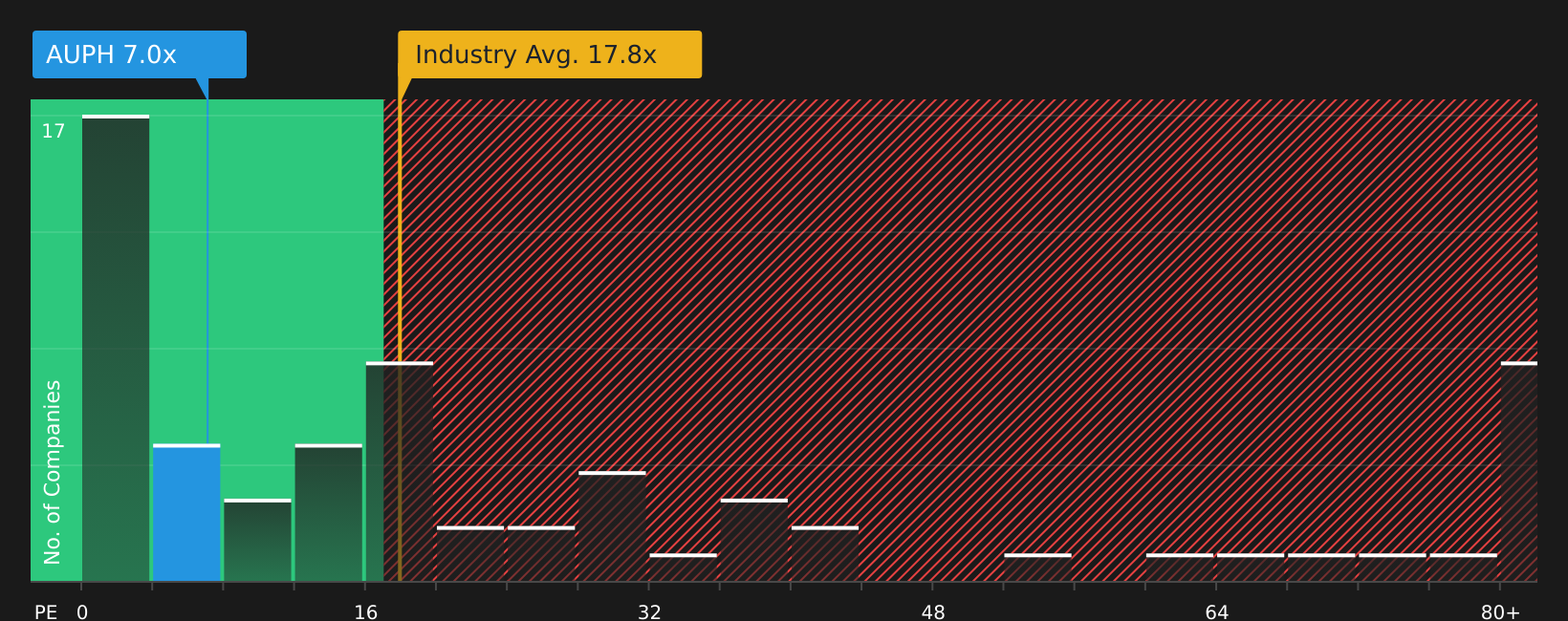
P/E is a useful lens for Aurinia Pharmaceuticals because the company currently reports positive earnings that can anchor the ratio. Right now the stock trades on a P/E of about 7.1x, which is far below the Biotechs industry average of roughly 17.4x and also well under the peer group average of about 38.9x. That places Aurinia at a sizeable discount to many other listed biopharma stocks on this simple earnings yardstick.
The internal fair P/E estimate for Aurinia Pharmaceuticals is about 12.6x, based on its earnings profile, industry, size and risk factors. The current 7.1x sits well under that reference level, which indicates the market is putting a lower value on each dollar of Aurinia earnings than this model implies. Despite the recent patent settlement with Teva that pushed potential U.S. generic entry for voclosporin to at least 2036, the stock still trades on a lower P/E than both the sector and this tailored fair multiple.
On the P/E multiple, Aurinia Pharmaceuticals stock currently appears undervalued relative to both its industry and the modelled fair ratio.
The Aurinia Pharmaceuticals Narrative: What Would Justify Today's Price?
Simply Wall St Narratives for Aurinia Pharmaceuticals pick up where the P/E puzzle leaves off and explain what would need to happen to growth, margins and earnings for the stock to be worth materially more or less than its current price. Each narrative links its number to a clear view of how Aurinia Pharmaceuticals' revenue potential, profitability and risks might change, which you can revisit as new information comes through, and they are available on the company's Community page.
The Aurinia Pharmaceuticals community is split between those who see disciplined execution being underappreciated and those who think key risks are already pushing the valuation close to its limits.
Bull case: 21% undervalued
"For investors who value regime resilience and signal clarity, Aurinia offers exposure to autoimmune therapeutics without the chaos of multi-asset pipelines…"
Bear case: 11% overvalued
"Aurinia's heavy dependence on LUPKYNIS as its sole commercial asset creates an outsized risk, any slowdown in prescription growth, increased competition, or unexpected adverse data could sharply erode top-line revenue and destabilize profits…"
Do you think there's more to the story for Aurinia Pharmaceuticals? Head over to our Community to see what others are saying!
The Bottom Line
Aurinia Pharmaceuticals still screens as undervalued on market multiples, even after a strong three year share price performance. The key question is whether that discount reflects lingering concern about concentration in LUPKYNIS or whether the market is underestimating the resilience of the current business. For you as an investor, everything now turns on whether earnings and cash generation from the existing franchise stay strong enough to support a fuller P/E re rating. That is the crux of whether today’s apparent discount becomes an opportunity or proves to be a value trap.
This article by Simply Wall St is general in nature. We provide commentary based on historical data and analyst forecasts only using an unbiased methodology and our articles are not intended to be financial advice. It does not constitute a recommendation to buy or sell any stock, and does not take account of your objectives, or your financial situation. We aim to bring you long-term focused analysis driven by fundamental data. Note that our analysis may not factor in the latest price-sensitive company announcements or qualitative material. Simply Wall St has no position in any stocks mentioned.