
BCB Bancorp (NASDAQ:BCBP) Has Announced That Its Dividend Will Be Reduced To $0.08
BCB Bancorp, Inc. BCBP | 9.02 | -1.10% |
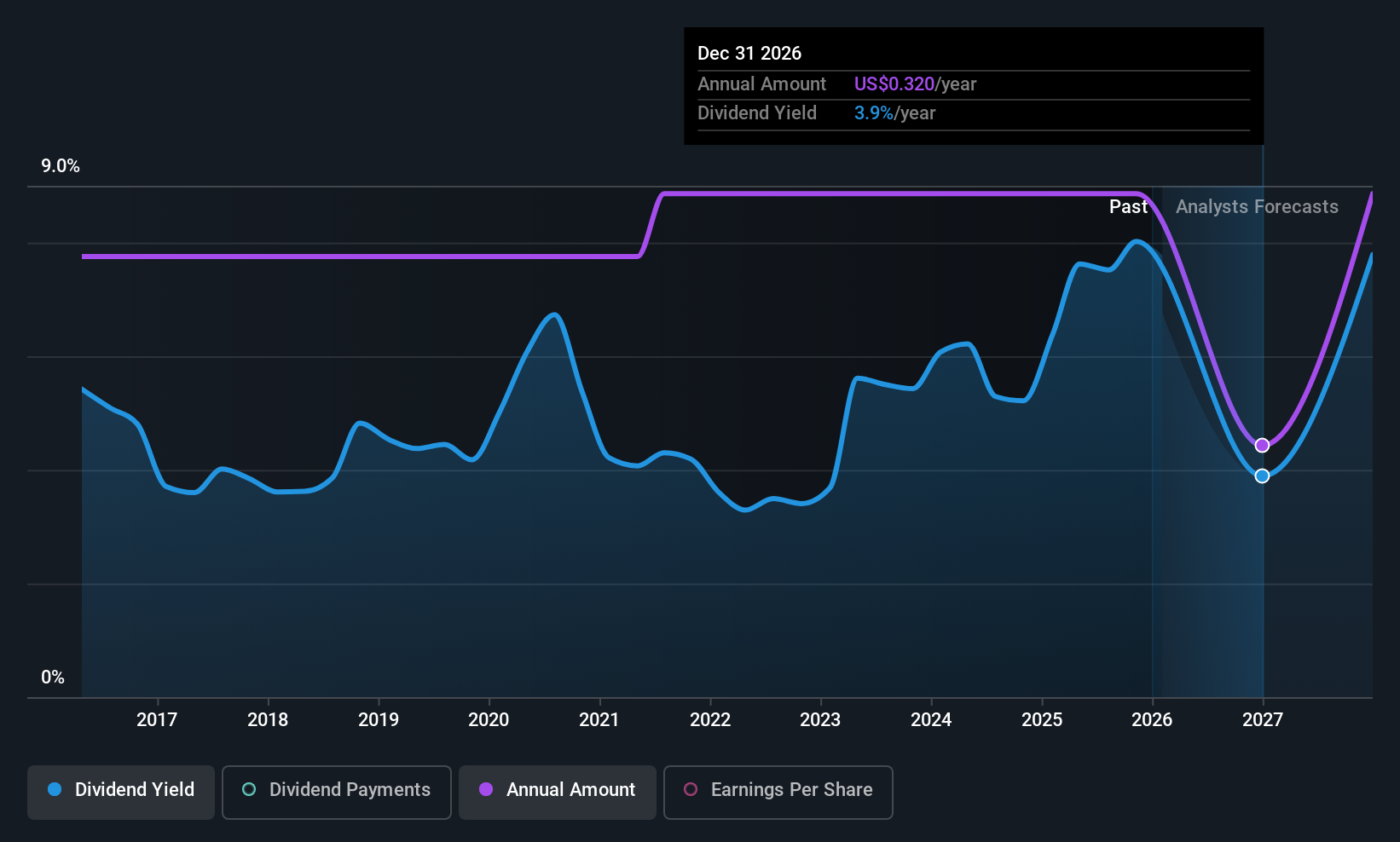
BCB Bancorp, Inc. (NASDAQ:BCBP) is reducing its dividend from last year's comparable payment to $0.08 on the 26th of February. The dividend yield of 3.9% is still a nice boost to shareholder returns, despite the cut.
BCB Bancorp's Payment Expected To Have Solid Earnings Coverage
Impressive dividend yields are good, but this doesn't matter much if the payments can't be sustained.
BCB Bancorp has established itself as a dividend paying company with over 10 years history of distributing earnings to shareholders. But while this history shows that the company was able to sustain its dividend for a decent period of time, its most recent earnings report shows that the company did not make enough earnings to cover its dividend payout. This is an alarming sign that could mean that BCB Bancorp's dividend at its current rate may no longer be sustainable for longer.
According to analysts, EPS should be several times higher in the next 3 years. Additionally, they estimate future payout ratio will be 48% over the same time horizon, which makes us pretty comfortable with the sustainability of the dividend.
Dividend Volatility
Although the company has a long dividend history, it has been cut at least once in the last 10 years. Since 2016, the dividend has gone from $0.56 total annually to $0.32. The dividend has shrunk at around 5.4% a year during that period. A company that decreases its dividend over time generally isn't what we are looking for.
Dividend Growth Potential Is Shaky
With a relatively unstable dividend, and a poor history of shrinking dividends, it's even more important to see if EPS is growing. Over the past five years, it looks as though BCB Bancorp's EPS has declined at around 25% a year. This steep decline can indicate that the business is going through a tough time, which could constrain its ability to pay a larger dividend each year in the future. However, the next year is actually looking up, with earnings set to rise. We would just wait until it becomes a pattern before getting too excited.
The Dividend Could Prove To Be Unreliable
Overall, the dividend looks like it may have been a bit high, which explains why it has now been cut. The payments are bit high to be considered sustainable, and the track record isn't the best. This company is not in the top tier of income providing stocks.
Companies possessing a stable dividend policy will likely enjoy greater investor interest than those suffering from a more inconsistent approach. Meanwhile, despite the importance of dividend payments, they are not the only factors our readers should know when assessing a company. Looking for more high-yielding dividend ideas? Try our collection of strong dividend payers.
This article by Simply Wall St is general in nature. We provide commentary based on historical data and analyst forecasts only using an unbiased methodology and our articles are not intended to be financial advice. It does not constitute a recommendation to buy or sell any stock, and does not take account of your objectives, or your financial situation. We aim to bring you long-term focused analysis driven by fundamental data. Note that our analysis may not factor in the latest price-sensitive company announcements or qualitative material. Simply Wall St has no position in any stocks mentioned.