
Berkshire Hathaway Shifts Leadership As Abel Weighs Cash And Kraft Heinz
Berkshire Hathaway Inc. Class A BRK.A | 716299.99 | +0.01% |
- Berkshire Hathaway (NYSE:BRK.A) announces Warren Buffett's retirement as CEO, with Greg Abel stepping into the role.
- The leadership transition marks a new era for the conglomerate's operating businesses and investment portfolio.
- The company is weighing changes to its holdings, including a potential exit from its Kraft Heinz position and new uses for its large cash balance.
Berkshire Hathaway sits at the center of US corporate life, with insurance, rail, energy, manufacturing, and consumer businesses all under one roof. With Greg Abel now leading, investors are watching how he manages this mix of operating companies alongside a large equity portfolio and cash reserve. The review of the Kraft Heinz stake highlights how capital allocation choices may evolve from here.
For you as an investor, the key questions are how Berkshire deploys its cash, how active it becomes in reshaping its holdings, and what that means for future risk and return. This leadership handover gives you a fresh moment to reassess where Berkshire fits in a portfolio that may already include broad market funds, single stocks, or income focused positions.
Stay updated on the most important news stories for Berkshire Hathaway by adding it to your watchlist or portfolio. Alternatively, explore our Community to discover new perspectives on Berkshire Hathaway.
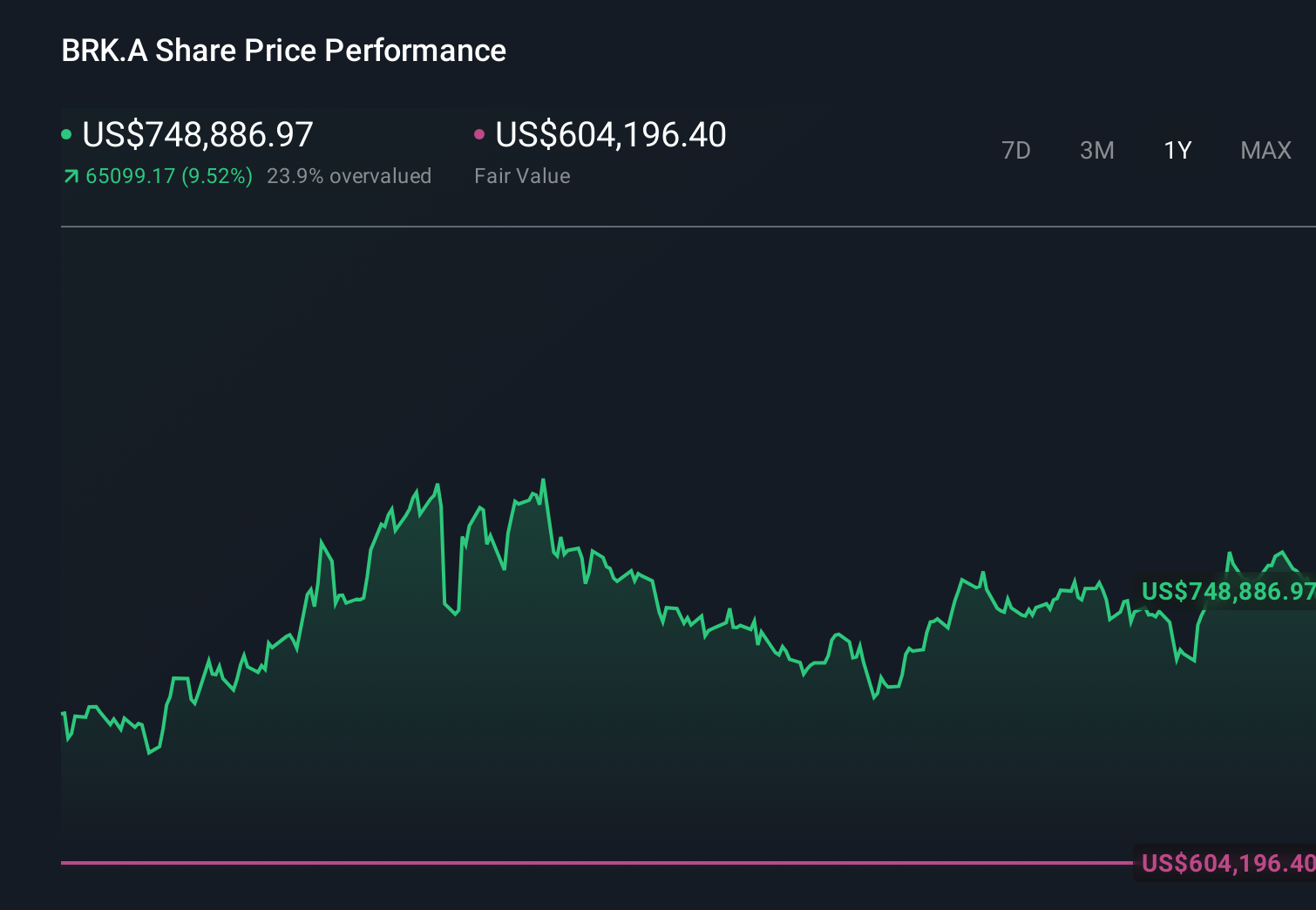
The leadership handover from Warren Buffett to Greg Abel comes with two big levers for Berkshire Hathaway, a potential sale of the long term Kraft Heinz position and a cash pile of about US$381b. For you, the key question is whether Abel keeps Berkshire closer to a steady, cash rich conglomerate or gradually reshapes the equity portfolio, much like the earlier push into the five Japanese trading houses that is now worth close to US$40b on a cost base of US$13.8b.
Berkshire Hathaway narrative, how this leadership shift fits
Existing investor narratives already frame Berkshire as a financially strong, low leverage group with large cash reserves and a disciplined, long term, value focused approach. Abel stepping in as CEO while moving to exit an underperforming Kraft Heinz stake broadly aligns with that story of capital discipline and a preference for businesses with durable economics. At the same time, the diversified mix of insurance, rail, energy, industrials and consumer operations remains at the core.
Risks and rewards investors should weigh now
- ⚠️ Leadership transition risk. Execution under a new CEO may differ from what long time shareholders grew used to under Buffett.
- ⚠️ Portfolio reshaping risk. Selling Kraft Heinz and reallocating US$381b of cash could lead to periods where returns lag if new investments take time to play out.
- 🎁 Large cash reserve. The sizeable cash and Treasury position offers flexibility to pursue acquisitions or equity stakes when conditions are attractive.
- 🎁 Diversified earnings base. A broad set of operating businesses, including insurance peers such as Allianz, plus exposure that sits alongside industrial groups like Union Pacific and energy players like NextEra Energy, provides multiple sources of cash flow.
What to watch next
From here, keep an eye on how quickly Kraft Heinz is reduced or sold, any shifts in big holdings such as the Japanese trading houses, and how much of the cash stockpile is used versus retained as a buffer. If you want to see how other investors are thinking about Berkshire under Abel, check community narratives on its dedicated page at Berkshire Hathaway community narratives.
This article by Simply Wall St is general in nature. We provide commentary based on historical data and analyst forecasts only using an unbiased methodology and our articles are not intended to be financial advice. It does not constitute a recommendation to buy or sell any stock, and does not take account of your objectives, or your financial situation. We aim to bring you long-term focused analysis driven by fundamental data. Note that our analysis may not factor in the latest price-sensitive company announcements or qualitative material. Simply Wall St has no position in any stocks mentioned.