
Berkshire Hathaway’s Next Era With Greg Abel And A US$380b Cash War Chest
Berkshire Hathaway Inc. Class B BRK.B | 477.35 | -0.24% |
- Warren Buffett is retiring as CEO of Berkshire Hathaway, with Greg Abel set to take over leadership.
- The company is reported to be considering a sale of its long held stake in Kraft Heinz.
- Berkshire Hathaway holds a record cash position, with early indications of a shift in how that cash could be deployed, including internationally and in technology sectors.
Berkshire Hathaway (NYSE:BRK.B), recently trading at $503.83 per share, is entering a new chapter as Greg Abel prepares to succeed Warren Buffett as CEO. The stock has returned 6.4% over the past week and 63.3% over 3 years, while the 5 year return sits at 110.0%. Those figures frame a company that has rewarded long term holders and now faces a fresh test of its investment playbook.
The combination of a record cash pile and potential moves such as a Kraft Heinz exit gives Abel considerable flexibility in shaping Berkshire’s next steps. For shareholders, the key questions now are how quickly that capital is redeployed, which sectors and regions it targets, and how closely Abel’s decisions align with the approach that has defined Berkshire for decades.
Stay updated on the most important news stories for Berkshire Hathaway by adding it to your watchlist or portfolio. Alternatively, explore our Community to discover new perspectives on Berkshire Hathaway.
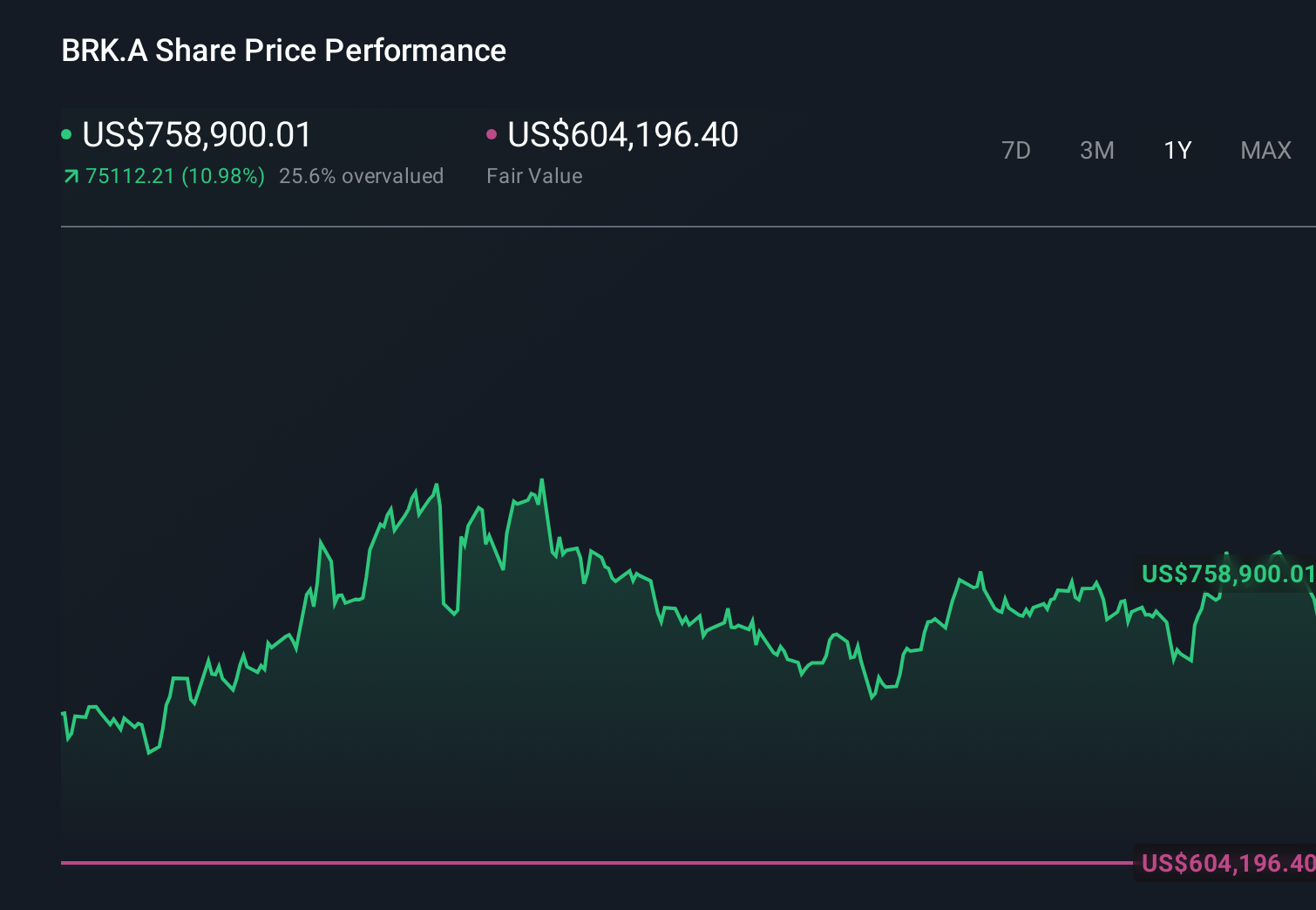
Buffett’s retirement and Abel’s move into the CEO role come at the same time Berkshire is reassessing some long held positions and sitting on more than US$380b of cash. For investors, that mix of leadership change and capital flexibility raises questions about how closely Abel will stick to Buffett’s playbook while reallocating away from holdings like Kraft Heinz and adjusting big equity positions such as Apple and American Express.
Berkshire Hathaway’s evolving narrative without Buffett at the helm
Recent commentary around Berkshire has focused on a company with fundamentally strong operating businesses in insurance, rail and energy, plus a large cash cushion that gives room to pursue new investments or acquisitions. Abel’s willingness to trim or exit legacy stakes and look more internationally, including in technology, suggests the Berkshire story could gradually shift from predominantly U.S. value holdings toward a more diversified global mix, while still rooted in the long term, business first mindset that long time shareholders know.
Key risks and rewards to keep in mind
- Record cash of roughly US$380b provides a sizeable buffer and flexibility to act during market pullbacks or when attractive deals appear.
- A broad set of cash generating businesses, including the world’s largest insurance group by some measures, supports internal capital generation for Abel to redeploy.
- Analysts have flagged 2 key risks, including expectations for a small average earnings decline over the next 3 years and recent pressure on profit margins compared with last year.
- A shift away from long held positions such as Kraft Heinz or a changed stance on Apple could introduce transition risk if new allocations take time to prove themselves.
What to watch as Berkshire’s next chapter unfolds
From here, it is worth tracking how quickly Abel puts Berkshire’s cash to work, whether he leans further into sectors like technology, and how any large portfolio moves compare with peers such as JPMorgan Chase, BlackRock and large insurers that also manage sizeable investment pools. If you want to follow how different investors interpret these changes and what they might mean over the long term, take a moment to check community narratives on Berkshire Hathaway’s dedicated page.
This article by Simply Wall St is general in nature. We provide commentary based on historical data and analyst forecasts only using an unbiased methodology and our articles are not intended to be financial advice. It does not constitute a recommendation to buy or sell any stock, and does not take account of your objectives, or your financial situation. We aim to bring you long-term focused analysis driven by fundamental data. Note that our analysis may not factor in the latest price-sensitive company announcements or qualitative material. Simply Wall St has no position in any stocks mentioned.