
Beyond Meat Lawsuits Put Impairment Timing And Governance Under Scrutiny
Beyond Meat BYND | 0.66 0.66 | +10.63% 0.00% Pre |
- Multiple class action lawsuits have been filed against Beyond Meat, alleging the company made false or misleading statements about the value of its long lived assets.
- Plaintiffs also claim Beyond Meat delayed required SEC filings because of a significant non cash impairment charge.
- The legal actions focus on the company’s financial disclosures and the timing and transparency of its reporting.
For investors watching NasdaqGS:BYND, this legal pressure arrives after a steep share price reset, with the stock at $0.6994 and a 1 year return of 84.1% decline and a 3 year return of 95.7% decline. The 5 year return of 99.5% decline highlights how far sentiment has shifted on a company that once attracted strong enthusiasm in the plant based meat space.
These lawsuits place Beyond Meat’s accounting judgments and disclosure choices under a spotlight, and the outcomes could influence how the company approaches governance and reporting. As the cases progress, investors will likely focus on any new information about asset valuations, impairment timing, and potential changes to internal controls.
Stay updated on the most important news stories for Beyond Meat by adding it to your watchlist or portfolio. Alternatively, explore our Community to discover new perspectives on Beyond Meat.
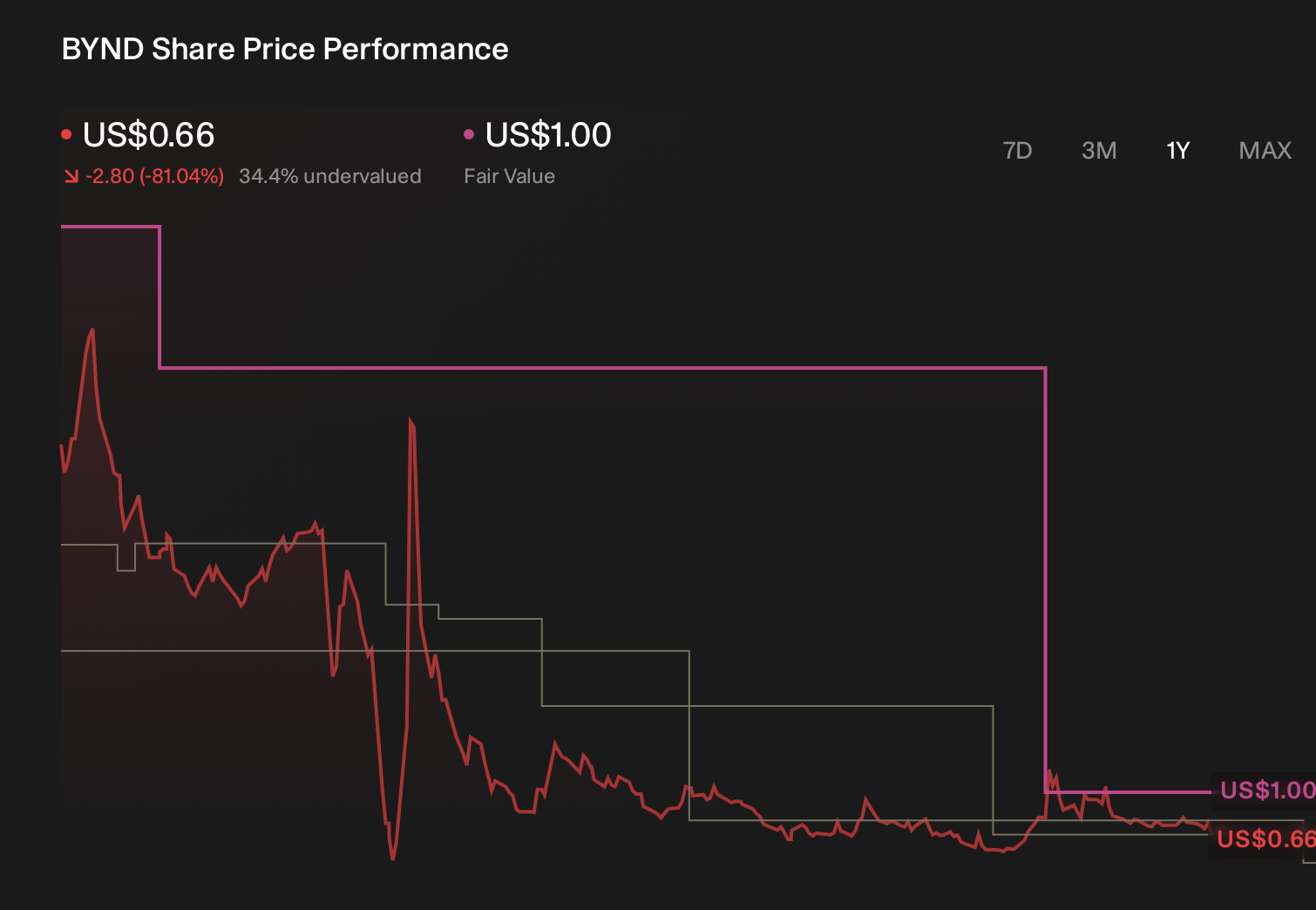
For you as a shareholder or potential investor, the key issue in these lawsuits is not the impairment itself, but what it may say about Beyond Meat’s financial controls and disclosure culture. A US$77.4 million non cash impairment on long lived assets for Q3 2025 and a delayed 10 Q filing both sit at the heart of the allegations that prior statements about asset values and filing timelines were incomplete or misleading. If courts or settlements eventually find fault, Beyond Meat could face financial penalties, higher audit and legal costs, tighter debt covenants, or stricter oversight from regulators and lenders, all of which can weigh on cash flow. Even before any resolution, management attention and resources may be pulled toward legal matters rather than category recovery, new products, or cost savings. On the other hand, a thorough impairment review and clearer asset valuations can leave the balance sheet on a more realistic footing, which some investors see as a necessary clean up when a business has gone through a tough reset.
How This Fits Into The Beyond Meat Narrative
- The focus on long lived assets and manufacturing relates directly to the narrative’s point that Beyond Meat is investing in operations and cost reduction, which depends on accurately sizing and using its asset base.
- The lawsuits challenge the narrative’s emphasis on operational efficiency and a path toward more sustainable margins, because questions over accounting judgments and internal controls can distract management and constrain flexibility.
- The potential legal and regulatory overhang, including possible settlements or ongoing monitoring, is not explicitly reflected in the narrative’s discussion of category demand, pricing, and product expansion, so you may want to factor this additional risk into your own view.
Knowing what a company is worth starts with understanding its story. Check out one of the top narratives in the Simply Wall St Community for Beyond Meat to help decide what it's worth to you.
The Risks and Rewards Investors Should Consider
- ⚠️ Multiple class actions tied to the same US$77.4 million impairment and filing delay raise the risk of fines, settlements, or higher insurance and compliance costs over time.
- ⚠️ Analysts already flag weaknesses such as recurring losses, shareholder dilution, and negative equity, so any additional legal or regulatory burden could strain an already fragile financial position.
- 🎁 The impairment and review process can reset asset values to more realistic levels, which may give you a clearer view of the underlying economics of Beyond Meat’s factories and equipment.
- 🎁 If Beyond Meat tightens controls and disclosure practices in response, the outcome could be more consistent reporting for investors comparing it with peers like Tyson Foods or Kellogg’s plant based offerings.
What To Watch Going Forward
From here, you will want to track a few practical things. First, any updates on the class action timeline, including motions to dismiss, settlements, or regulatory follow up, because those events can affect expected cash outflows and management focus. Second, watch how Beyond Meat talks about its internal controls and impairment testing in future filings and calls, as that will tell you whether these issues are considered contained. Third, place this legal overhang next to operating updates, such as product launches, distribution changes, or further asset write downs, to judge whether the core business is stabilizing while the legal process runs its course.
To ensure you're always in the loop on how the latest news impacts the investment narrative for Beyond Meat, head to the community page for Beyond Meat to never miss an update on the top community narratives.
This article by Simply Wall St is general in nature. We provide commentary based on historical data and analyst forecasts only using an unbiased methodology and our articles are not intended to be financial advice. It does not constitute a recommendation to buy or sell any stock, and does not take account of your objectives, or your financial situation. We aim to bring you long-term focused analysis driven by fundamental data. Note that our analysis may not factor in the latest price-sensitive company announcements or qualitative material. Simply Wall St has no position in any stocks mentioned.