
Buffett Era Ends As Abel Considers Kraft Heinz Exit And Cash Reset
Berkshire Hathaway Inc. Class A BRK.A | 716299.99 | +0.01% |
- Warren Buffett is retiring as CEO of Berkshire Hathaway (NYSE:BRK.A), with Greg Abel set to assume the top role.
- Abel is preparing what could be his first major move by planning to sell Berkshire’s large stake in Kraft Heinz.
- The transition marks a shift from a long Buffett-led era to a new leadership approach at the conglomerate.
Berkshire Hathaway runs a wide mix of businesses, including insurance, railroads, utilities and a large portfolio of public equities. The reported plan to exit Kraft Heinz matters because the position has long been associated with Warren Buffett’s approach to branded consumer stocks. For shareholders, it raises fresh questions about how the company might treat legacy holdings that were built up under the prior CEO.
For you as an investor, the leadership change and potential divestiture are less about a single stock and more about how Berkshire could manage capital and portfolio concentration in the future. As Greg Abel settles into the CEO role, investors will be watching for patterns in future buy, hold or sell decisions to understand how closely the new era tracks with Buffett’s long standing playbook.
Stay updated on the most important news stories for Berkshire Hathaway by adding it to your watchlist or portfolio. Alternatively, explore our Community to discover new perspectives on Berkshire Hathaway.
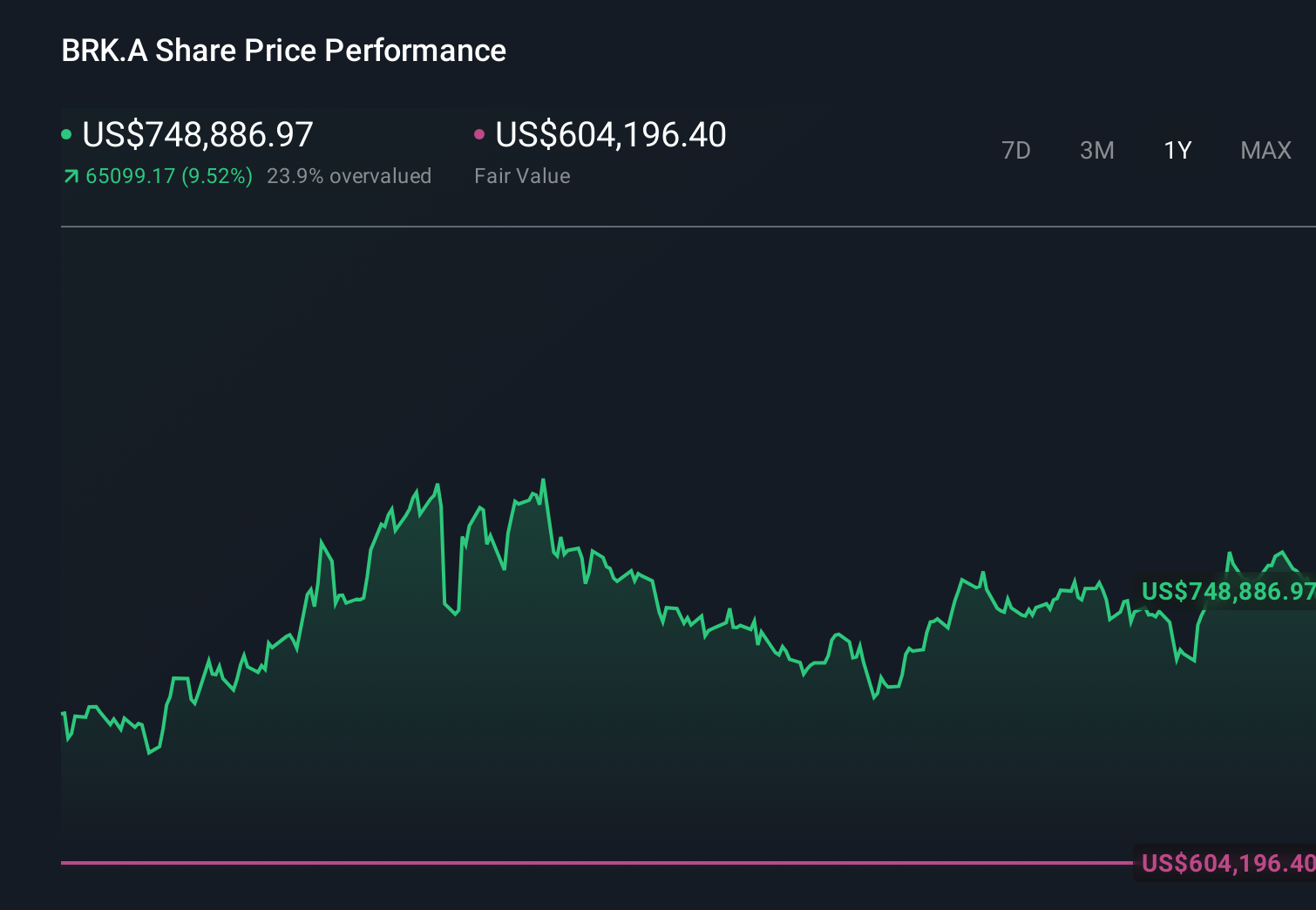
For Berkshire, a potential exit from the 325 million Kraft Heinz shares looks less like a knee jerk reaction and more like a reset of an older branded foods thesis that has been under pressure for years. The earlier US$3.76b writedown, Buffett’s criticism of the proposed split, and the resignation of Berkshire’s representatives from the Kraft Heinz board all point to a cooling conviction that now gives Greg Abel room to clean up a legacy position and decide where Berkshire’s US$380b cash pile is better used.
Berkshire Hathaway narrative, from Buffett’s playbook to Abel’s
This move sits alongside Berkshire’s other recent portfolio shifts, such as cutting the Bank of America stake and exiting Taiwan Semiconductor, and shows that the Buffett era was already becoming more flexible on long held positions before the formal handover. With Berkshire now described as the world’s biggest insurance company and owning sizable assets in rail (alongside Union Pacific and CSX) and energy, a Kraft Heinz sale would underline a tilt away from slower branded food holdings and toward areas where Berkshire has operating control and sector expertise.
Risks and rewards for shareholders
- ⚠️ Concentration risk in the equity portfolio could rise temporarily if proceeds are parked in cash rather than reinvested quickly.
- ⚠️ Execution risk around redeploying such a large position, especially if other holders of consumer staples stocks like Nestlé or PepsiCo reassess their exposure at the same time.
- 🎁 Selling a long struggling investment may reduce future writedown risk and free capital for higher conviction ideas.
- 🎁 Berkshire’s very large cash balance provides flexibility to act on opportunities without needing to raise capital at unfavorable terms.
What to watch next
From here, the key questions are where Abel directs fresh capital, how quickly Kraft Heinz exposure is reduced, and whether Berkshire leans further into core operating businesses or large new equity positions. To track how other investors are thinking about this shift, you can read what they are saying in the community narratives for Berkshire Hathaway and see how sentiment evolves as the new CEO’s decisions come through.
This article by Simply Wall St is general in nature. We provide commentary based on historical data and analyst forecasts only using an unbiased methodology and our articles are not intended to be financial advice. It does not constitute a recommendation to buy or sell any stock, and does not take account of your objectives, or your financial situation. We aim to bring you long-term focused analysis driven by fundamental data. Note that our analysis may not factor in the latest price-sensitive company announcements or qualitative material. Simply Wall St has no position in any stocks mentioned.